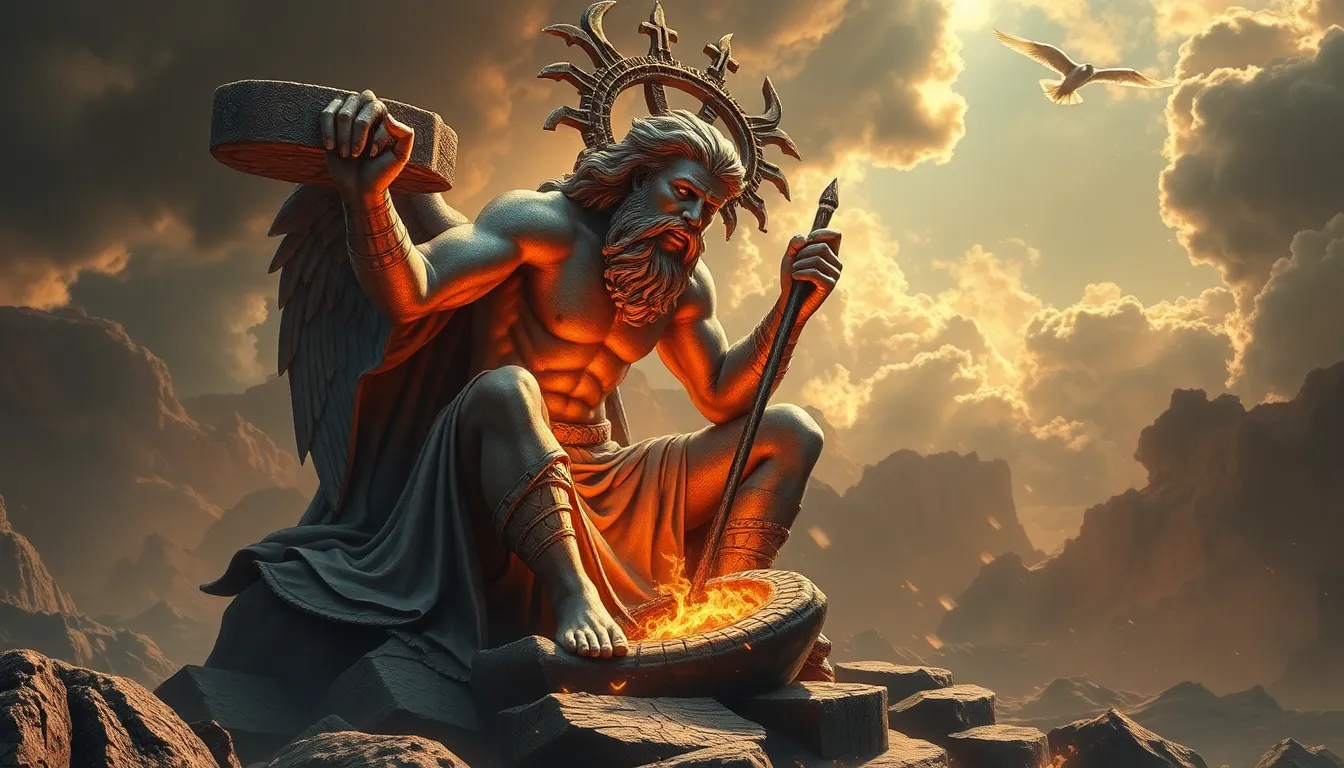
The Price of Knowledge: Sacrifices in the Myths of Prometheus
I. Introduction
In the rich tapestry of Greek mythology, few figures resonate with the themes of knowledge, sacrifice, and defiance as profoundly as Prometheus. Often regarded as a champion of humanity, Prometheus’s story encapsulates the struggle between the pursuit of enlightenment and the dire consequences that can accompany such endeavors. This article aims to explore the intricate layers of Prometheus’s myth, focusing on the central theme of knowledge and the sacrifices made in its name.
II. The Myth of Prometheus: A Brief Overview
The myth of Prometheus dates back to ancient Greece, where he is depicted as a Titan who played a crucial role in the creation of humanity and the bestowal of fire, an emblem of knowledge and civilization.
A. The Creation of Humanity
According to myth, Prometheus, along with his brother Epimetheus, was tasked with the creation of living beings. While Epimetheus distributed various traits among animals, Prometheus took it upon himself to create humans, endowing them with intellect and the ability to reason.
B. The Gift of Fire and Its Significance
Prometheus’s most significant act was stealing fire from the gods and gifting it to humanity. This act symbolized not just the literal flame but the illumination of knowledge, creativity, and progress. Fire, in this context, was a catalyst for civilization, enabling advancements in technology, culture, and society.
C. Consequences of Prometheus’s Actions
However, this benevolent act was met with severe consequences. Zeus, the king of the gods, viewed Prometheus’s gift as a challenge to divine authority and a threat to the established order. As punishment, Prometheus was bound to a rock, where an eagle would eat his liver daily, only for it to regenerate overnight. This torment epitomizes the high cost of defiance in the pursuit of knowledge.
III. The Symbolism of Fire: Knowledge and Enlightenment
Fire, as represented in the myth of Prometheus, extends beyond a physical element; it serves as a profound metaphor for knowledge and enlightenment.
A. Fire as a Metaphor for Knowledge
The act of bringing fire to humanity symbolizes the transfer of knowledge and the enlightenment of the human spirit. It represents the ability to think, create, and innovate, leading to the development of civilization.
B. The Dual Nature of Fire: Creation and Destruction
While fire can illuminate, it can also destroy. This duality reflects the complexities of knowledge itself. Knowledge can lead to great progress, but it can also bring about destruction if misused. This theme of duality is prevalent in various myths and serves as a cautionary tale about the responsibilities that come with enlightenment.
C. Historical Interpretations of Fire in Mythology
- In various cultures, fire has been revered as a gift from the gods, symbolizing life and transformation.
- Myths from diverse traditions often depict fire as a sacred element, essential for human survival and development.
- The myth of Prometheus has inspired numerous interpretations, emphasizing the moral dilemmas surrounding knowledge and power.
IV. The Cost of Knowledge: Punishment and Sacrifice
The pursuit of knowledge, as illustrated by Prometheus’s narrative, is not without its hardships. The myth serves as a poignant reminder of the sacrifices that often accompany the quest for enlightenment.
A. Prometheus’s Eternal Punishment by Zeus
Zeus’s brutal punishment of Prometheus underscores the dangers of defying divine authority. The eternal suffering Prometheus endures is emblematic of the sacrifices individuals may face when challenging societal norms or established beliefs in pursuit of truth.
B. The Role of Sacrifice in the Pursuit of Knowledge
Throughout history, many figures who sought to expand human understanding have faced significant consequences. The sacrifices made by these individuals often include:
- Social ostracism or persecution.
- Loss of personal freedom or dignity.
- Physical suffering or death.
C. The Implications of Suffering for Enlightenment
The myth of Prometheus invites reflection on the nature of suffering in the pursuit of enlightenment. It raises essential questions about the moral implications of knowledge and the ethical responsibilities of those who seek it.
V. The Role of Other Characters: Influence and Consequences
The narrative of Prometheus is not isolated; it intertwines with other significant figures in Greek mythology, each contributing to the overarching themes of knowledge, authority, and consequence.
A. Zeus’s Authority and Fear of Knowledge
Zeus’s reaction to Prometheus’s gift reflects a profound fear of knowledge as a source of potential chaos. He embodies the archetype of authority that seeks to control and limit the spread of enlightenment to maintain power over humanity.
B. The Significance of Pandora and Her Box
Pandora, the first woman created by the gods, plays a crucial role in the mythological narrative surrounding knowledge. Her box, containing all the evils of the world, serves as a metaphor for the unintended consequences that often accompany the pursuit of knowledge. The act of opening the box parallels Prometheus’s gift of fire, signifying the duality of enlightenment.
C. Comparison with Other Mythological Figures
Prometheus’s story can be compared with other mythological figures who faced repercussions for their quest for knowledge or defiance:
- Icarus: His ambition led to his downfall when he flew too close to the sun, illustrating the dangers of hubris.
- Daedalus: The inventor who created the labyrinth, faced exile for his ingenuity and the consequences of his creations.
VI. Themes of Rebellion and Defiance
Prometheus embodies rebellion against divine authority, positioning him as a symbol of defiance in the face of oppression.
A. Prometheus as a Symbol of Resistance Against Divine Authority
By stealing fire, Prometheus challenges the power of Zeus, representing the struggle for freedom and autonomy. His actions resonate with those who seek to challenge the status quo and advocate for change.
B. The Consequences of Challenging the Status Quo
Prometheus’s punishment serves as a warning of the potential repercussions that come with challenging established norms. It raises questions about the price individuals are willing to pay for their beliefs and the extent to which they will go to pursue truth.
C. Modern Interpretations of Rebellion in Pursuit of Knowledge
In contemporary society, the themes of rebellion and defiance in the pursuit of knowledge continue to resonate. Movements advocating for social justice, scientific advancement, and environmental protection often face opposition, reflecting the timeless struggle depicted in Prometheus’s myth.
VII. The Legacy of Prometheus in Modern Context
The myth of Prometheus has left an indelible mark on literature, art, and philosophy, influencing countless generations.
A. Influence on Literature, Art, and Philosophy
Prometheus has inspired numerous works across various genres, from Mary Shelley’s “Frankenstein” to modern plays and films that explore the themes of creation, knowledge, and ethical dilemmas.
B. Parallels in Contemporary Issues of Scientific Advancement
As society grapples with advancements in technology, artificial intelligence, and bioethics, the myth of Prometheus serves as a cautionary tale. It prompts discussions about the moral implications of scientific progress and the responsibilities of innovators.
C. The Ongoing Dialogue About the Ethics of Knowledge
The enduring relevance of Prometheus’s myth invites ongoing dialogue about the ethical considerations surrounding the pursuit of knowledge. It challenges society to reflect on the balance between innovation and responsibility.
VIII. Conclusion
In conclusion, the myth of Prometheus serves as a profound exploration of the themes of knowledge, sacrifice, and rebellion. It highlights the complexities of enlightenment and the costs associated with the pursuit of truth. As we navigate the challenges of modern society, the lessons embedded in Prometheus’s story remain relevant, urging us to consider the ethical implications of our quest for knowledge and the sacrifices we are willing to make in its name.