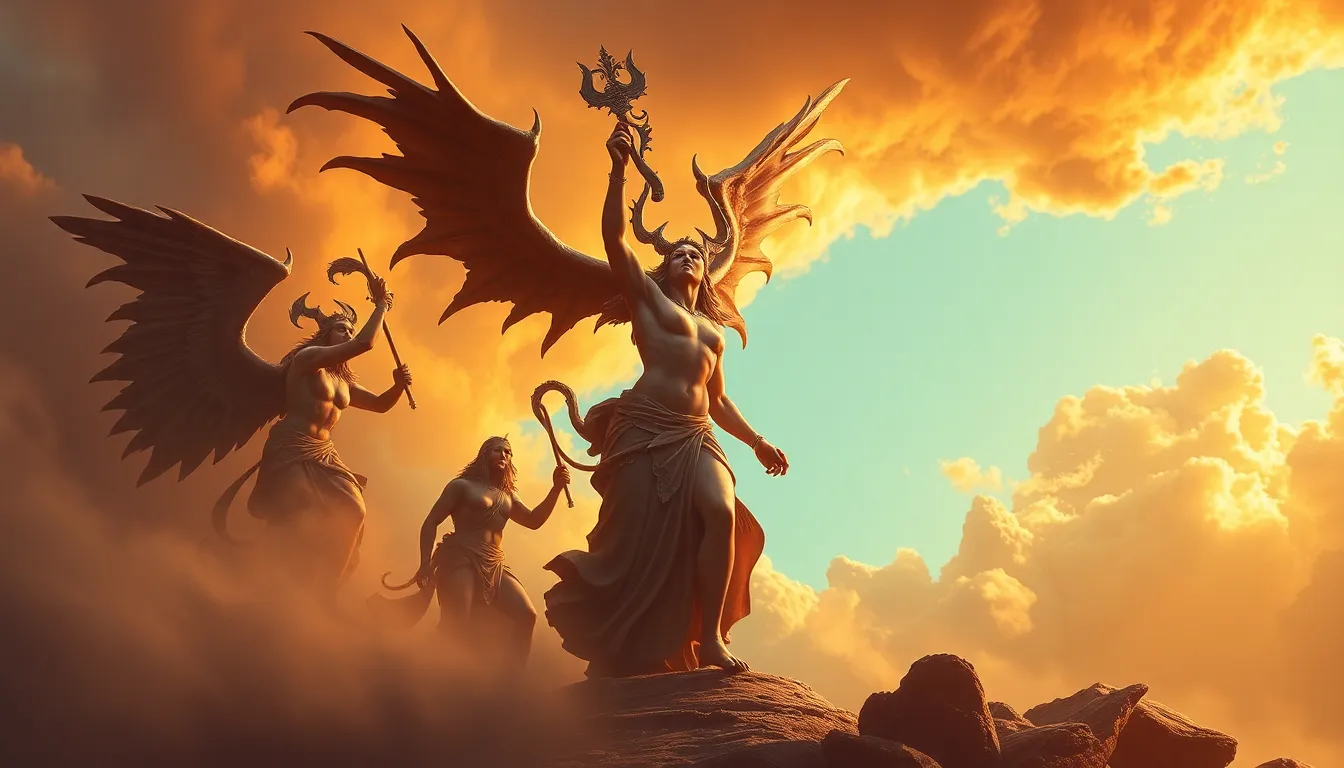
The Realm of the Furies: Wrath and Retribution in Myth
Introduction to the Furies: Guardians of Vengeance
The Furies, known in Greek mythology as the Erinyes, represent a potent manifestation of vengeance and retribution. These formidable deities are often depicted as fierce women who harbored the souls of the wronged, punishing those who committed heinous acts, particularly against family members. Their origins and significance are deeply rooted in ancient texts, where they serve as guardians of moral order, ensuring that justice prevails in the face of human transgressions.
The Furies embody themes of wrath and retribution, acting as a reminder of the consequences of wrongdoing. They are not merely instruments of punishment; they reflect the complexities of justice, showcasing how personal grievances can lead to broader societal implications. Their presence in mythology invites contemplation on the nature of justice, morality, and human emotion.
The Birth of the Furies: From Chaos to Order
The lineage of the Furies is steeped in the primordial chaos that preceded the formation of the world. According to myth, they sprang from the blood of Uranus, the sky god, when he was castrated by his son Cronus. This violent act bore not only the Furies but also an array of other beings that symbolize the darker aspects of existence.
Their emergence from chaos signifies the transition from disorder to an ordered universe where justice must be upheld. The Furies are often linked with other mythological figures such as Nyx, the goddess of night, and Gaea, the Earth, illustrating their deep connection to fundamental forces of nature. They represent the darker facets of the human experience, serving as a counterbalance to the more benevolent deities in the Greek pantheon.
Characteristics and Symbolism of the Furies
The Furies are typically described as having serpentine hair, bloodshot eyes, and a fearsome demeanor. Their appearance is designed to instill terror, reflecting their role as enforcers of justice. They wield weapons such as whips or torches, symbolizing their relentless pursuit of those who have wronged others. This physicality embodies the raw emotion of wrath and serves as a visual representation of the consequences of immoral actions.
- Physical Attributes: Serpent hair, bloodshot eyes, and dark attire.
- Symbolism: Their fearsome appearance represents the inevitability of punishment for wrongdoing.
- Psychological Representation: The Furies reflect the internal struggle with anger and the desire for revenge.
In addition to their physical characteristics, the Furies symbolize the psychological aspects of wrath. They embody the darker emotions that can consume individuals when they feel wronged. Their actions serve as a reminder of the destructive potential of unchecked anger and the importance of finding a balance between vengeance and forgiveness.
The Furies in Greek Mythology: Agents of Justice
One of the most notable myths involving the Furies is the story of Orestes, who avenged his father Agamemnon’s murder by killing his mother, Clytemnestra. This act of vengeance triggered the pursuit of Orestes by the Furies, who sought to punish him for his matricide. The myth illustrates the complex interplay between justice and vengeance, as Orestes grapples with his guilt and the relentless pursuit of the Furies.
The Furies played a crucial role in the divine justice system of Ancient Greece, serving as a bridge between mortal actions and divine retribution. They ensured that justice was served, but their pursuit of vengeance often led to a cycle of violence, raising questions about the nature of justice itself. This balance between vengeance and justice is a central theme in many Greek tragedies, where characters must confront the repercussions of their actions.
Cultural Interpretations of the Furies Across Civilizations
The concept of vengeful spirits or deities is not unique to Greek mythology. Many cultures have figures that embody similar themes of wrath and retribution. For instance, the Norse Valkyries select the slain in battle, guiding them to the afterlife, while the Hindu goddess Kali represents destruction and transformation.
- Erinyies: The Roman equivalent of the Furies, embodying vengeance and retribution.
- Valkyries: Norse figures who choose those who may die or live in battle.
- Kali: Hindu goddess associated with destruction, time, and change.
These figures, while differing in specific attributes and cultural contexts, share the universal themes of wrath and retribution. They reflect societal values related to justice and moral order, illustrating how cultures interpret the consequences of human actions and the need for balance in the face of wrongdoing.
The Furies and the Human Psyche: Wrath as a Moral Compass
The Furies serve as a powerful metaphor for the human psyche, particularly in how we process feelings of anger and the desire for retribution. In literature and art, they have been interpreted as representations of the inner turmoil that arises from injustice. Their presence in narratives is often linked to the dual nature of wrath, which can be both destructive and constructive.
On one hand, wrath can lead to violent retribution and perpetuate cycles of vengeance. On the other hand, it can also prompt individuals to seek justice and advocate for change. The Furies embody this struggle, showcasing the complexities of human emotion and the moral dilemmas associated with anger.
In contemporary discussions, the Furies can be seen as a reflection of the ongoing tension between vengeance and forgiveness. Their stories challenge us to consider the implications of our actions and the importance of addressing grievances in a constructive manner.
Modern Adaptations and Representations of the Furies
The influence of the Furies extends beyond ancient texts, permeating modern literature, film, and art. Contemporary adaptations often reinterpret their themes, exploring the nuances of justice and morality in today’s society. For instance, the Furies have appeared in works such as Aeschylus’ “Oresteia,” where their role evolves from avengers to agents of reconciliation.
In film and television, the Furies have been reimagined as characters that navigate the complexities of vengeance and justice. Their stories resonate with modern audiences, prompting discussions on the relevance of these ancient themes in our current world. The Furies serve as a reminder of the ongoing struggles related to moral dilemmas, societal justice, and the consequences of our actions.
Conclusion: The Lasting Legacy of the Furies in Myth and Humanity
The Furies hold a significant place in mythological narratives, symbolizing the intricate dance between wrath and retribution. Their impact extends beyond ancient Greece, influencing contemporary discussions on justice, morality, and the human experience. As guardians of vengeance, they remind us of the consequences of our actions and the importance of addressing grievances in a balanced manner.
In reflecting on the legacy of the Furies, we recognize that the themes of wrath and retribution remain relevant in today’s society. As we navigate our own moral dilemmas, the lessons of the Furies encourage us to find a path that balances vengeance with justice, fostering understanding and forgiveness in the face of wrongdoing.