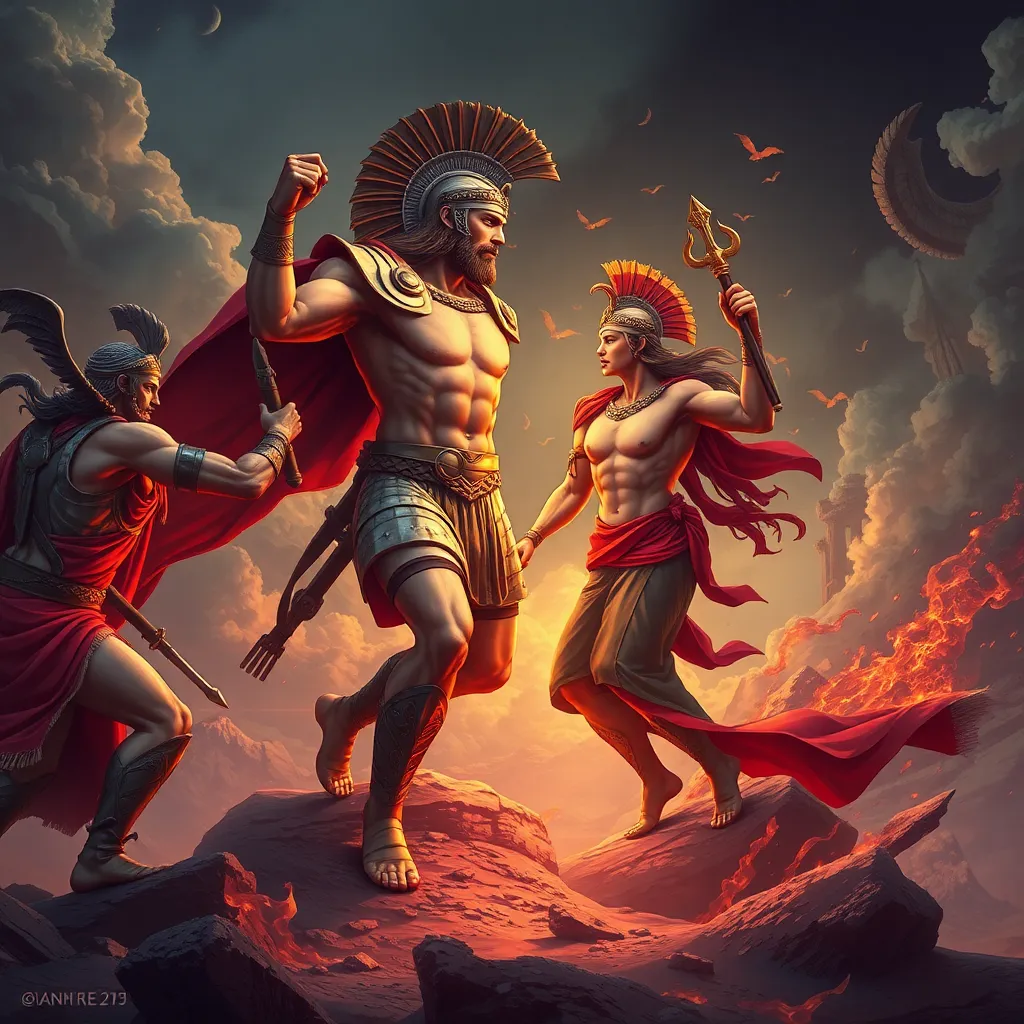
The Relationship Between Achilles and His Enemies
I. Introduction
Achilles, one of the most iconic figures in Greek mythology, is renowned for his unmatched prowess as a warrior and his pivotal role in the Trojan War. His relationships with his enemies, particularly Hector and Agamemnon, are crucial to understanding his character and motivations. This article aims to explore the complex dynamics between Achilles and his adversaries, shedding light on the significance of honor, pride, and vulnerability in his interactions.
II. Achilles in the Context of the Trojan War
The Trojan War, a legendary conflict between the city of Troy and the Greek states, serves as the backdrop for Achilles’ story. The war is often depicted as a result of the abduction of Helen, the wife of Menelaus, by Paris of Troy. This event sparked a massive coalition of Greek forces, with Achilles emerging as their greatest warrior.
- Background on the Trojan War: The war lasted ten years, characterized by numerous battles and heroic feats.
- Achilles as a key warrior for the Greeks: Known for his invincibility, Achilles was a central figure in the Greek army, leading the Myrmidons.
- Initial perspectives on his enemies: Achilles viewed his enemies not just as foes, but as embodiments of honor and pride that challenged his own legacy.
III. The Nature of Conflict: Achilles and Hector
The rivalry between Achilles and Hector is one of the most profound aspects of the Trojan War. Hector, the noble Trojan prince, represents the antithesis of Achilles’ rage and vengeance.
- The rivalry between Achilles and Hector: Their personal conflict is rooted in differing values and destinies, culminating in Hector’s death at Achilles’ hands.
- Key battles and confrontations: The pivotal moment occurs in Book 22 of the Iliad, where the two engage in a fierce duel that symbolizes the greater struggle between the Greeks and Trojans.
- The personal and symbolic significance of their conflict: Their fight reflects the themes of fate, honor, and the tragic costs of war.
IV. The Role of Honor and Pride
Honor and pride are fundamental concepts in Greek culture, deeply influencing Achilles’ relationships with his enemies.
- The concept of honor in Greek culture: Honor (timē) was paramount; warriors were expected to achieve glory through bravery in battle.
- How Achilles’ pride shapes his relationships with enemies: Achilles’ immense pride often leads him to view his enemies as obstacles to his personal glory.
- The consequences of pride on the battlefield: His pride results in significant consequences, such as his withdrawal from battle, which prolongs the war and leads to the deaths of many.
V. The Impact of Agamemnon on Achilles’ Enemies
One of the most critical conflicts in the Iliad is that between Achilles and Agamemnon, the leader of the Greek forces.
- The conflict between Achilles and Agamemnon: This feud arises over the taking of Briseis, a war prize of Achilles, which ignites his fury and leads to his temporary withdrawal from the war.
- How this dispute affects Achilles’ approach to his enemies: Achilles’ anger towards Agamemnon shifts his focus from the Trojan enemy to his Greek leader, altering his role in the war.
- The broader implications for Greek forces: Achilles’ absence weakens the Greek side, showcasing how internal conflicts can impact warfare.
VI. Achilles’ Vulnerability and Humanization of the Enemy
Despite his status as a near-invincible warrior, Achilles displays moments of vulnerability that humanize him and affect his relationships with his enemies.
- Moments of vulnerability in Achilles’ character: His grief over Patroclus’ death reveals a deeply emotional side, contrasting with his fierce warrior persona.
- How his enemies, particularly Hector, are portrayed with depth: Hector is shown as a devoted family man, a quality that adds complexity to his character and makes his fate tragic.
- The interplay between heroism and mortality: Achilles’ acknowledgment of mortality ultimately leads to a deeper understanding of his enemies as individuals with their own struggles.
VII. The Legacy of Achilles’ Relationships with His Enemies
The relationships Achilles forms with his enemies have left a lasting impact on literature and culture, shaping the archetype of the tragic hero.
- The lasting impact on literature and culture: Achilles’ story has inspired countless adaptations and interpretations across various art forms.
- Comparisons with other heroic figures: His complex relationships can be contrasted with other heroes like Odysseus, who navigates conflict with cunning rather than brute strength.
- Lessons learned from Achilles’ conflicts: The narrative conveys profound lessons on the costs of pride, the nature of honor, and the humanity present in all warriors.
VIII. Conclusion
In summary, the relationships between Achilles and his enemies are multifaceted and deeply intertwined with themes of honor, pride, and vulnerability. Achilles stands out not only for his martial prowess but also for the emotional depth and complexity he brings to his interactions. Reflecting on these relationships provides insight into the intricacies of warfare and the human condition, establishing Achilles as a truly multifaceted character in Greek mythology.