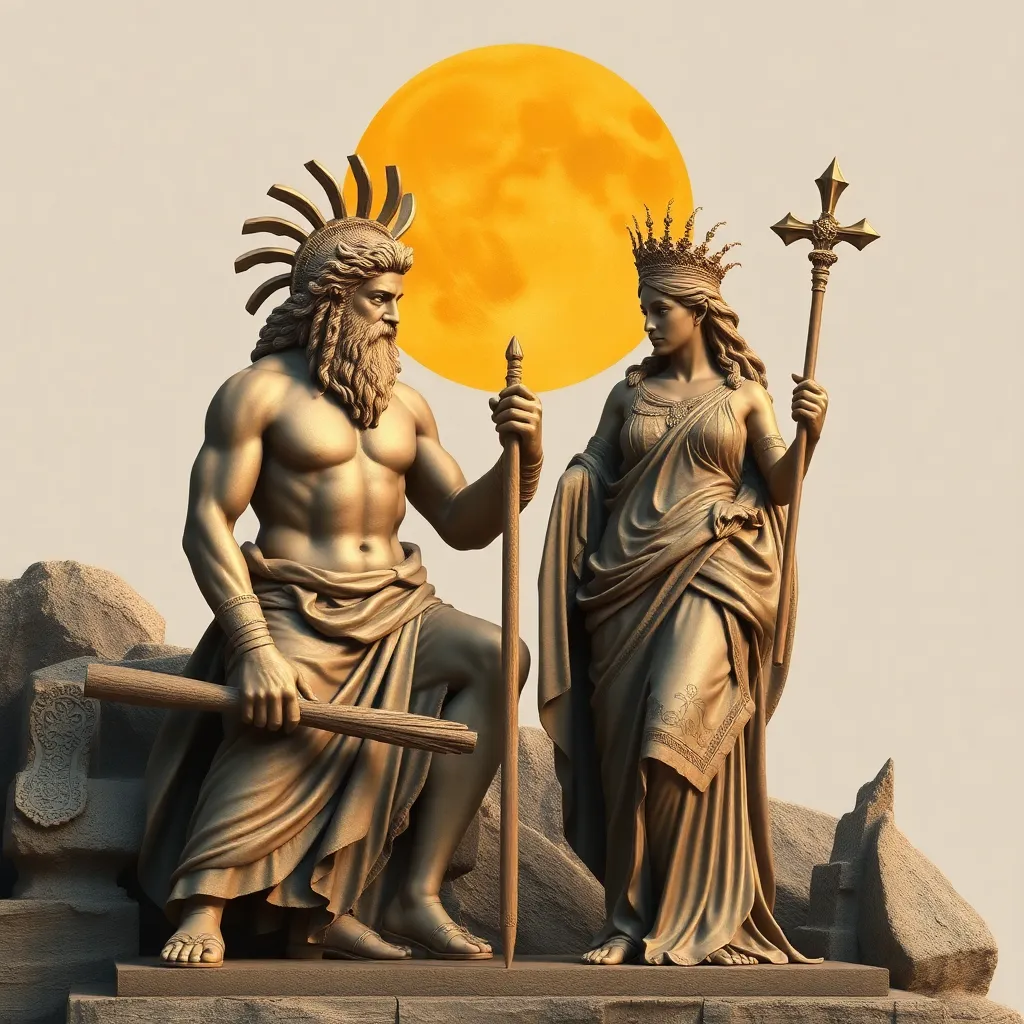
The Relationship Between Hephaestus and Athena: Craftsmanship and Wisdom
I. Introduction
In the rich tapestry of Greek mythology, Hephaestus and Athena stand out as two of the most revered deities, each embodying unique and essential qualities that contributed to the ancient Greek worldview. Hephaestus, known as the god of fire and craftsmanship, represents the creative and technical aspects of human endeavor, while Athena, the goddess of wisdom and warfare, embodies strategic thought and intellectual prowess. Together, they symbolize the harmonious balance between skill and knowledge, both of which were held in high esteem in ancient Greek culture.
This article aims to explore the intricate relationship between Hephaestus and Athena, highlighting their individual attributes, the intersection of their domains, and the enduring legacy of their partnership in both ancient and contemporary contexts.
II. Hephaestus: The God of Fire and Craftsmanship
Hephaestus is often depicted as a figure of resilience and creativity. His origins are marked by a unique narrative: born to Hera, he was cast out of Olympus due to his physical imperfections. Despite this, he became the master craftsman of the gods, known for his skill in metallurgy, sculpting, and engineering.
His attributes include:
- Fire: Symbolizing both destruction and transformation.
- Tools: Often depicted with a hammer, anvil, and tongs.
- Workshops: Known for his divine forge, located under volcanoes.
Hephaestus’s role in mythology extends beyond mere craftsmanship; he created magnificent artifacts for the gods, such as:
- The shield of Achilles
- The armor of Heracles
- The famous automatons that served the gods
His significance as a craftsman is not merely about creation; it reflects the ancient Greek belief in the importance of manual skill and artistry as vital components of civilization.
III. Athena: The Goddess of Wisdom and Warfare
Athena is celebrated as one of the most complex and revered figures in Greek mythology. Born fully armored from the forehead of Zeus, she embodies both the warrior spirit and the intellect of strategy and wisdom. Unlike Ares, the god of war, who represents chaos and bloodshed, Athena symbolizes the disciplined and strategic aspects of warfare.
Key attributes of Athena include:
- Wisdom: Known as the goddess of wisdom, she guided heroes with her insights.
- Warfare: A protector of cities and a strategist in battle.
- Craftsmanship: Patroness of various crafts, particularly weaving and pottery.
Athena’s dual role as a warrior and a wise guide reflects the ancient Greek ideal of arete, or excellence, which encompasses both intellectual and physical prowess. Her wisdom was paramount in ancient Greek society, where strategic thought was essential for success in both war and governance.
IV. The Intersection of Craftsmanship and Wisdom
The relationship between Hephaestus and Athena is characterized by a complementary nature, where craftsmanship and wisdom enhance and support each other. The act of creation often requires not just skill but also foresight and understanding, illustrating how these two domains overlap.
Examples of this intersection include:
- Craftsmanship requires foresight: Artisans must envision the final product before they can create it.
- Wisdom enhances craftsmanship: Knowledge of materials and techniques leads to superior creations.
Throughout mythology, their partnership symbolizes the ideal collaboration between technical skill and intellectual insight, reinforcing the notion that true mastery in any field is achieved through the union of these two qualities.
V. Myths Highlighting Their Relationship
Numerous myths illustrate the interactions and collaborative efforts between Hephaestus and Athena. One notable myth involves the creation of the Aegis, a protective cloak that Athena wears into battle, crafted by Hephaestus himself. This collaboration not only showcases their skills but also emphasizes the importance of protection and wisdom in warfare.
Another significant story is the tale of Arachne, a talented mortal weaver who dared to challenge Athena. In this myth, Athena ultimately wins the contest, but she acknowledges Arachne’s skill, which was enhanced by the technical knowledge that Hephaestus represents. This story serves as a reminder of the importance of humility and respect for the craft.
Through these myths, we can draw lessons about the value of collaboration, respect for expertise, and the balance between confidence and humility in the pursuit of excellence.
VI. Symbolism of Their Partnership
The partnership between Hephaestus and Athena has been symbolically represented in various forms of art and literature throughout history. They are often depicted together in ancient pottery, frescoes, and sculptures, where their attributes are visually contrasted yet harmoniously combined.
The significance of their partnership in ancient Greek values can be seen in the following ways:
- Representation of balance: Their union symbolizes the balance between intellect and skill.
- Cultural ideals: They embody the Greek ideals of arete and the importance of both mental and physical prowess.
- Inspiration for creators: Their relationship inspires artists and craftsmen to strive for excellence in their work.
In modern interpretations, this partnership continues to resonate, as creators and thinkers draw inspiration from their attributes, illustrating the timeless nature of their combined legacy.
VII. Influence on Contemporary Thought
The legacy of Hephaestus and Athena extends beyond ancient mythology, influencing modern symbolism and thought. Their attributes are relevant today, as we still value the combination of craftsmanship and wisdom in various fields, such as:
- Art and design: The balance of creativity and technical skill is essential in contemporary artistic endeavors.
- Science and technology: Innovation often arises from a blend of knowledge and practical application.
- Education: The cultivation of both intellectual and practical skills is vital for personal and societal growth.
Their stories continue to inspire current artistic and intellectual pursuits, reminding us that the journey towards excellence is enhanced by collaboration and the integration of diverse skills.
VIII. Conclusion
In conclusion, the relationship between Hephaestus and Athena serves as a powerful reminder of the significance of craftsmanship and wisdom in both ancient and modern contexts. Their partnership exemplifies the ideal balance between skill and intellect, highlighting the importance of both in the pursuit of excellence.
As we reflect on their enduring legacy, we are invited to explore further the themes present in Greek mythology, and consider how these ancient stories continue to inform our understanding of creativity, knowledge, and the human experience.