The Representation of Cerberus in Ancient Greek Literature
I. Introduction
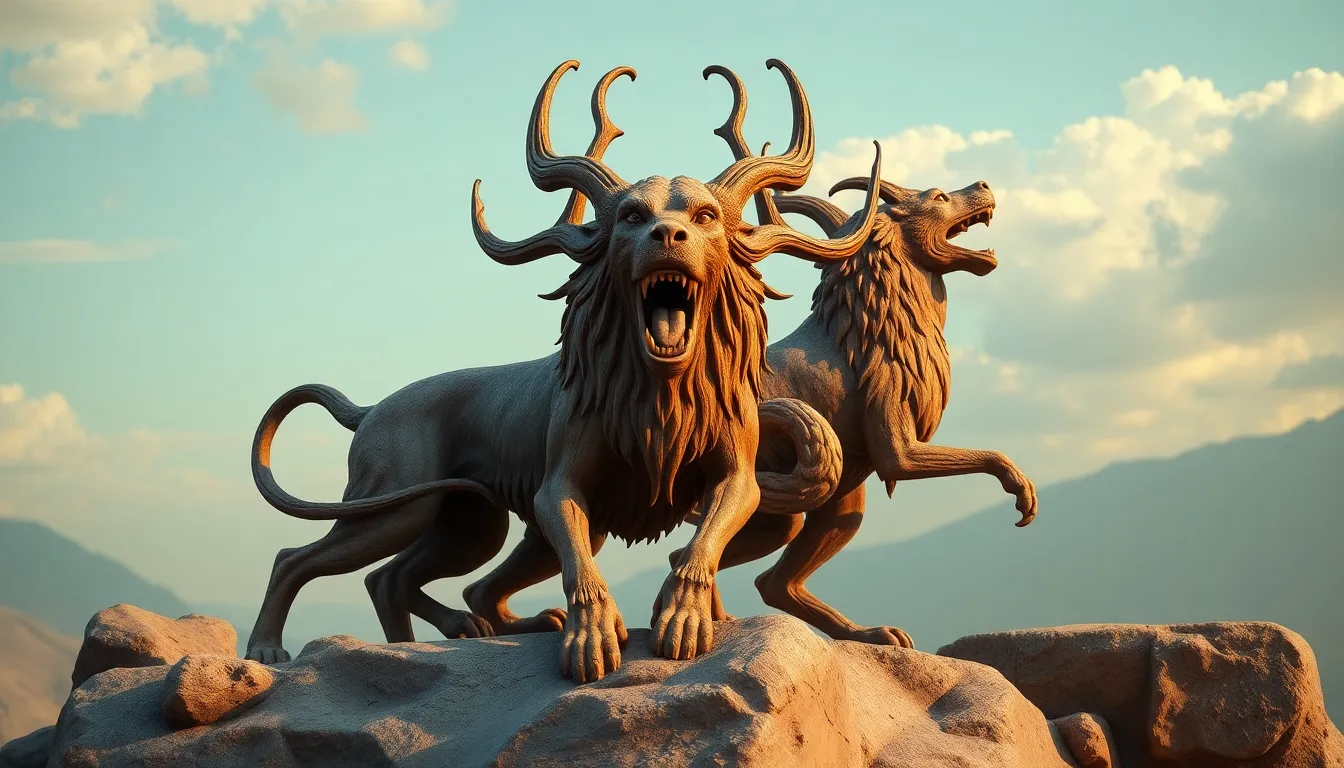
In the vast tapestry of Greek mythology, few figures are as evocative and symbolic as Cerberus, the three-headed dog that guards the gates of the Underworld. This fearsome creature, often depicted as a monstrous guardian, embodies the themes of death, transition, and the inescapability of fate. Cerberus not only serves a crucial role in mythological narratives but also holds a significant place in ancient Greek literature, where he is portrayed in various contexts, each adding layers to his character. This article aims to explore the multifaceted representation of Cerberus across different genres of ancient Greek literature, examining his origins, roles, and the symbolic meanings associated with him.
II. Mythological Origins of Cerberus
The origins of Cerberus are steeped in mythological intrigue. He is commonly described as the offspring of Typhon and Echidna, two of the most fearsome creatures in Greek mythology. Typhon, a monstrous giant, represents chaos and destruction, while Echidna, often referred to as the “Mother of Monsters,” is said to have borne many of the mythological beasts that plagued humanity.
As the guardian of the Underworld, Cerberus plays a pivotal role in maintaining the boundaries between the living and the dead. His primary function is to prevent the escape of souls from Hades and to ensure that the living do not intrude upon the domain of the deceased. The symbolism of Cerberus’s three heads is particularly significant; they represent the past, present, and future, encapsulating the totality of existence and the inevitability of death.
III. Cerberus in Early Greek Texts
Cerberus appears prominently in some of the earliest Greek texts, particularly in the epic poems attributed to Homer.
A. References in Homeric epics
1. The Iliad: While not a central figure in this epic, Cerberus is mentioned in the context of the Underworld, symbolizing the ultimate fate that awaits all heroes and mortals alike.
2. The Odyssey: Cerberus is more vividly depicted in this epic, where Odysseus encounters him while journeying to the Underworld. His three heads are described in detail, emphasizing his terrifying nature and reinforcing the theme of the inescapable afterlife.
B. Depictions in Hesiod’s works
In Hesiod’s Theogony, Cerberus is described in relation to his monstrous lineage, further cementing his role as a significant figure in the mythological hierarchy. Hesiod’s portrayal adds depth to Cerberus’s character, highlighting his terrifying yet essential function in the mythological narrative.
C. Role in the context of Greek cosmology
Cerberus’s presence in these early texts establishes him as a crucial element of Greek cosmology, representing the boundary between life and death, and the inevitable fate that awaits all mortals.
IV. Cerberus in Classical Literature
As Greek literature evolved, so too did the representations of Cerberus. His character became a focal point in both tragedies and comedies, reflecting the complexities of human emotions and existential themes.
A. Representations in tragedies and comedies
In tragic works, Cerberus often symbolizes the darker aspects of human nature, fear, and the inevitability of death. In comedies, however, he is sometimes portrayed with a touch of humor, serving as a foil to more serious themes.
B. Cerberus in the works of playwrights like Euripides and Aeschylus
Both Euripides and Aeschylus incorporate Cerberus into their works, using him to explore themes of fate, justice, and the human condition. In Aeschylus’s Oresteia, Cerberus serves as a reminder of the consequences of one’s actions and the inescapable nature of justice.
C. Analysis of character dynamics involving Cerberus
- In Euripides’s Heracles, Cerberus is central to the hero’s tasks, representing both a challenge and a form of redemption.
- The interactions between Cerberus and the heroes often highlight the tension between human ambition and the constraints imposed by fate.
V. Cerberus in Philosophy and Allegory
Beyond literature, Cerberus also finds a place in philosophical discourse and allegorical interpretations. His character serves as a rich symbol for various philosophical concepts.
A. Philosophical interpretations of Cerberus
Some philosophers interpret Cerberus as a representation of the human psyche, with each head symbolizing different aspects of human thought and emotion—rationality, desire, and instinct.
B. Allegorical meanings in the works of Plato and others
In the works of Plato, Cerberus can be seen as an allegory for the journey of the soul, navigating the realms of knowledge, ignorance, and the afterlife. His three heads can represent the trichotomy of the soul in Platonic philosophy.
C. Cerberus as a symbol of boundaries and transitions
Cerberus epitomizes the boundaries between life and death, the known and the unknown, making him a powerful symbol of transition and transformation in philosophical thought.
VI. Artistic Representations of Cerberus
The literary descriptions of Cerberus have significantly influenced his portrayal in ancient art, where he is depicted in various forms across pottery, sculpture, and other mediums.
A. Cerberus in ancient pottery and sculpture
Cerberus appears frequently in ancient Greek pottery, often illustrated alongside heroes in scenes depicting mythological narratives. Sculptures also capture his fearsome visage, showcasing his three heads and serpentine tail.
B. Influence of literary descriptions on visual art
The vivid literary descriptions of Cerberus have inspired artists to create compelling images that convey his terrifying nature, reflecting the impact of literature on visual representations.
C. The evolution of Cerberus’s image in later periods
As the centuries progressed, Cerberus’s image evolved, adapting to the cultural contexts and artistic styles of different eras, yet retaining his core symbolism as the guardian of the Underworld.
VII. Cerberus in Later Literature and Adaptations
The legacy of Cerberus extends beyond ancient Greece, influencing Roman literature and modern adaptations.
A. Influence on Roman writers and poets
Roman authors, such as Virgil, incorporated Cerberus into their works, often portraying him as a fearsome yet tragic figure, emphasizing the continuity of mythological themes across cultures.
B. Cerberus in modern adaptations and interpretations
In contemporary literature, Cerberus has been reimagined in various forms, from children’s stories to modern fantasy novels, illustrating his enduring appeal and adaptability.
C. The enduring legacy of Cerberus in literature
Cerberus continues to symbolize the complexities of life, death, and the human experience, making him a timeless figure in the literary canon.
VIII. Conclusion
Cerberus, with his multifaceted representation in ancient Greek literature, serves as a powerful symbol of the human condition and the inevitability of death. Through his various portrayals, we gain insight into the fears, hopes, and existential questions that have preoccupied humanity for centuries. The impact of Cerberus transcends his mythological origins, influencing artistic expressions, philosophical thought, and modern interpretations. Studying figures like Cerberus not only enriches our understanding of ancient narratives but also invites reflection on the timeless themes that resonate across cultures and epochs.