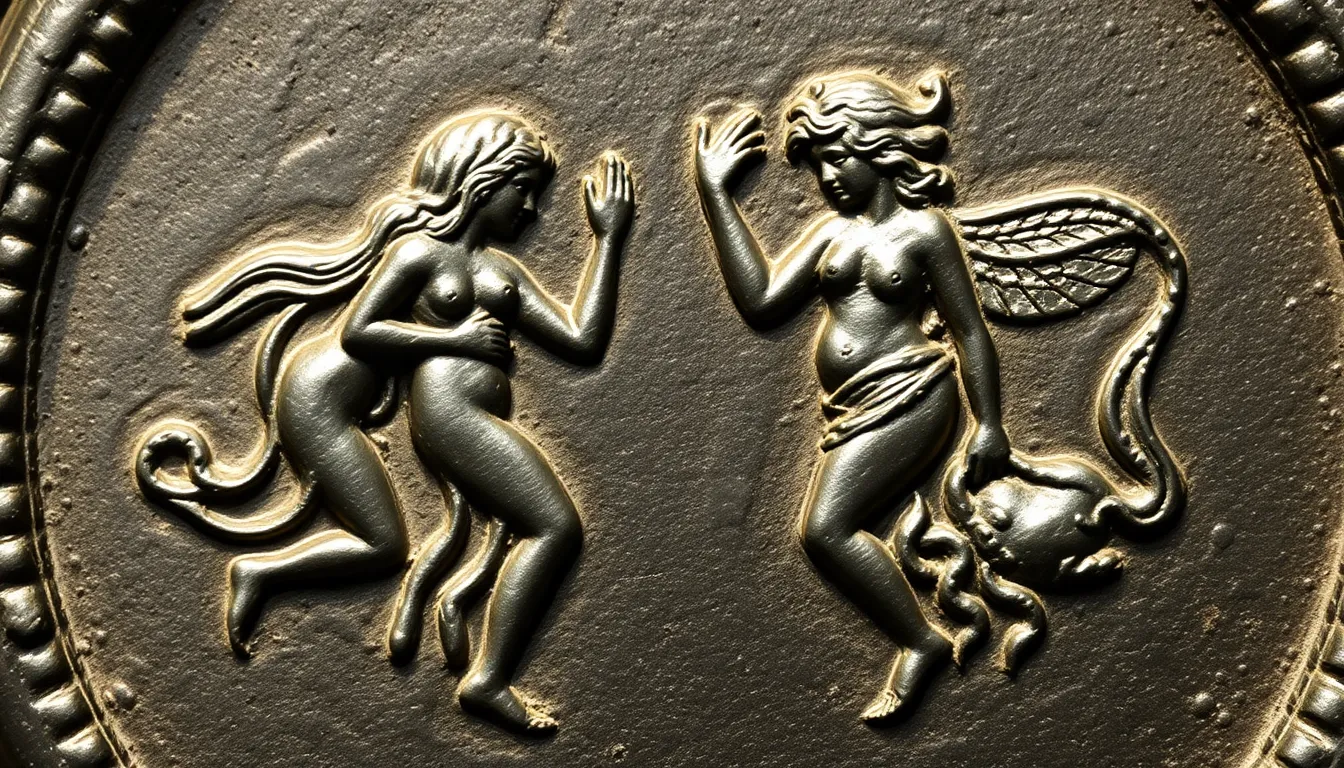
The Representation of Nymphs in Ancient Greek Coinage
I. Introduction
In ancient Greek mythology, nymphs are often depicted as beautiful, graceful female spirits associated with nature. They embody the essence of the natural world—ranging from the water nymphs known as Naiads to the tree nymphs called Dryads. These divine beings not only played a critical role in myths and legends but also held significant cultural importance in ancient Greek society.
Coinage, as a medium of trade and a form of art, was vital in ancient Greece. It served as a means of economic exchange and a canvas for expressing cultural values and beliefs. Coins often depicted deities, heroes, and symbols that held significance for the issuing city-state, making them an essential part of both commerce and identity.
This article explores the representation of nymphs in ancient Greek coinage, examining their symbolism, the historical context of coins, and the lasting legacy of these representations in contemporary culture.
II. Historical Context of Greek Coinage
The emergence of coinage in ancient Greece can be traced back to the 7th century BCE, with the introduction of minted coins facilitating trade and commerce throughout the region. Coins were primarily made of silver, gold, or bronze, and each city-state developed its unique practices regarding coin production and design.
The role of coinage in the economy was profound. Coins standardized trade, allowing for easier exchange of goods and services. They bore images that reflected the values, beliefs, and identities of their respective city-states, making them more than just currency but also a form of propaganda and cultural expression.
Different city-states, such as Athens, Corinth, and Rhodes, had their distinctive styles and practices regarding coinage. This diversity reflected local customs and the particular significance of certain deities, including nymphs, which were often depicted to symbolize local patronage or natural resources.
III. Symbolism of Nymphs in Greek Culture
Nymphs hold a special place in Greek mythology as nature deities, often associated with specific elements of the natural world. Their associations include:
- Water: Naiads, the water nymphs, symbolize rivers, springs, and lakes.
- Trees: Dryads are the spirits of trees, symbolizing growth and fertility.
- Fertility: Nymphs were often invoked in agricultural rites, representing the fertility of the earth.
Culturally, nymphs were significant in mythology and art, often depicted in sculptures, pottery, and paintings. They exemplified beauty, grace, and the allure of nature, inspiring countless works of art throughout ancient Greece.
In religious practices, nymphs were revered in local cults and rituals. Offerings were made to them to ensure bountiful harvests or safe passage across bodies of water, highlighting their integral role in the daily lives of the ancient Greeks.
IV. Nymphs on Ancient Greek Coins
Nymphs frequently appeared on ancient Greek coins, showcasing various depictions and artistic styles. Common representations included:
- Nymphs standing beside or in water, symbolizing their connection to aquatic environments.
- Nymphs holding attributes such as wreaths or flowers, emphasizing their association with fertility.
- Stylized images of nymphs that reflect the artistic conventions of the city-state.
The representation of nymphs varied significantly across different city-states. For instance, coins from Corinth often featured nymphs in elaborate poses, while those from Athens might depict a more classical and serene image. This variation reflects local artistic trends and the cultural importance of the depicted nymphs.
The iconography associated with specific nymphs also conveyed deeper meanings, such as the nymph of a local river embodying the city-state’s identity or the nymph representing agricultural abundance tied to the region’s fertility.
V. Case Studies of Notable Coins Featuring Nymphs
Notable coins from key city-states provide insights into the significance of nymphs in ancient Greek coinage. For example:
- Athens: The Athenian coins often featured nymphs alongside the goddess Athena, representing the protection of the city and its resources.
- Corinth: Coins from Corinth depicted nymphs in intricate designs that celebrated the city’s maritime trade and connection to the sea.
- Rhodes: Rhodian coins showcased nymphs associated with the sun and navigation, reflecting the island’s importance as a trading hub.
Each of these examples highlights how nymphs were integral to local identity and commerce. The coins served not only as currency but also as a means of reinforcing civic pride and the divine connection to nature.
VI. Influence of Nymphs on Coin Design
The imagery of nymphs in coinage evolved over time, reflecting changes in artistic styles and socio-political contexts. Initially, nymphs were depicted in a more naturalistic manner, but as time progressed, their representations became more stylized.
When comparing nymphs to other mythological figures in Greek coinage, such as gods and heroes, it becomes evident that nymphs often conveyed different messages. While gods represented overarching power and authority, nymphs symbolized local identity and connection to nature.
Nymphs also played a role in conveying political messages. By featuring nymphs on coins, city-states could emphasize their connection to the land and its resources, asserting their identity and autonomy in a competitive political landscape.
VII. Modern Interpretation and Legacy
In contemporary culture, there has been a resurgence of interest in nymphs and ancient coinage. This fascination is reflected in modern art, literature, and numismatics, where scholars and enthusiasts study these ancient artifacts to glean insights into Greek mythology and society.
The influence of nymphs extends into popular culture, where they appear in various forms, from literature to films, often representing the enchanting and mysterious aspects of nature. Their legacy continues to inspire artists and creators, bridging the gap between ancient and modern interpretations of beauty and nature.
Preservation and study of ancient coin collections have become essential for understanding historical contexts and cultural significance. Museums and collectors strive to maintain these artifacts, ensuring that the legacy of nymphs and their representations in coinage endure for future generations.
VIII. Conclusion
In summary, the representation of nymphs in ancient Greek coinage serves as a fascinating intersection of mythology, culture, and economics. These divine beings, associated with nature and fertility, were not only integral to Greek mythology but also played a crucial role in the identity of various city-states.
The findings presented highlight the importance of nymphs in ancient Greek society, showcasing their influence on art, religious practices, and daily life. The study of nymphs in coinage offers valuable insights into the values and beliefs of the ancient Greeks, enriching our understanding of their complex world.
As we reflect on the legacy of nymphs and their portrayal in ancient coinage, we gain a deeper appreciation for the intricate relationship between mythology and society in ancient Greece, a relationship that continues to captivate and inspire today.