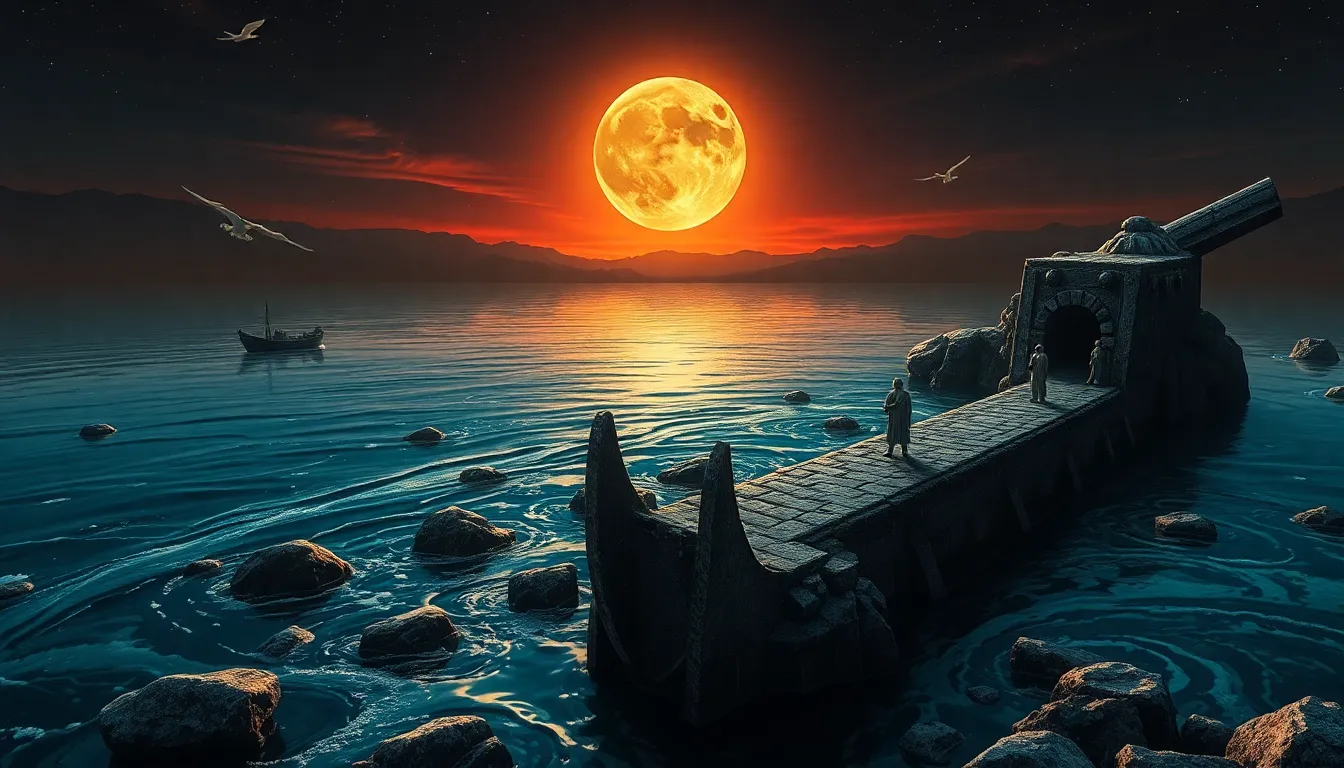
The River Styx: A Symbol of Fear and Respect in Ancient Greece
I. Introduction
The River Styx, often depicted as a dark and foreboding body of water, holds a significant place in Greek mythology. As a boundary between the realm of the living and the dead, the Styx embodies complex themes of fear, respect, and the afterlife. Its importance extends beyond mere myth, serving as a cultural symbol that has influenced various aspects of ancient Greek society and beyond. This article delves into the mythological origins, cultural significance, and lasting legacy of the River Styx.
II. The Mythological Origins of the River Styx
A. The role of the Styx in Greek creation myths
The River Styx is deeply rooted in Greek mythology, often cited as one of the first rivers to emerge during the creation of the world. According to Hesiod’s “Theogony,” the Styx was born from the primordial waters and was one of the rivers that encircled the Earth. In this context, it symbolizes both the beginning of life and the inevitability of death.

B. The connection to the goddess Styx and her significance
The river is personified by the goddess Styx, who represents the fierce and unyielding nature of death. Styx, the daughter of the Titans Oceanus and Tethys, played a pivotal role in the Titanomachy, the war between the Titans and the Olympians. Her allegiance to Zeus, which she honored by aiding him with her waters during the war, highlights the river’s significance in both myth and the divine hierarchy.
C. The River Styx in the context of the Underworld
In the Underworld, the Styx serves as a critical boundary, separating the world of the living from the realm of the dead. Souls of the deceased are required to cross this river to enter the afterlife, making it a crucial element in the journey of the soul. The river’s dark waters symbolize the unknown and the finality of death.
III. The Styx as a Barrier Between Worlds
A. Description of the Styx as a boundary between the living and the dead
The River Styx is often described as a murky, dark waterway that instills fear in the hearts of mortals. Its treacherous waters are not merely a physical barrier; they represent the ultimate separation from life. Ancient Greeks believed that the river’s waters had the power to bind oaths and curses, reinforcing its status as a formidable boundary.
B. The significance of crossing the river
Crossing the Styx was no simple task. The dead had to pay Charon, the ferryman, to transport them across the river. This act of crossing was laden with significance, symbolizing the final transition from the world of the living to the world of the dead. It was a passage that demanded respect and fear, as it marked the point of no return.
C. Charon, the ferryman: his role and symbolism
Charon, the grim ferryman of the Styx, is a vital figure in the mythology surrounding the river. He is often depicted as a gaunt, silent figure who transports souls across the river for a fee, traditionally a coin placed in the mouth of the deceased. His role emphasizes several themes:
- The inevitability of death: Charon’s presence serves as a reminder that all must face death.
- The importance of burial rites: A proper burial ensured that one could pay Charon and avoid wandering the shores of the Styx.
- Fear of the unknown: Charon’s silent demeanor and the dark waters of the Styx evoke a sense of dread.
IV. Fear and Respect: The Dual Nature of the Styx
A. Fear associated with death and the afterlife
The River Styx embodies the fear of death and the unknown that permeates human existence. In ancient Greek culture, death was not seen as a transition to a peaceful afterlife but rather as a significant and often frightening separation from the living world. The river’s dark waters were thought to hold the souls of the restless, further enhancing the fear associated with crossing it.
B. Respect for the river as a powerful and sacred entity
Despite the fear it instilled, the Styx was also an object of reverence. The ancient Greeks understood the river as a powerful entity that demanded respect. It played a crucial role in their beliefs about the afterlife, and rituals often revolved around appeasing the spirits associated with the Styx.
C. Rituals and practices surrounding the Styx in ancient Greek culture
Various rituals and practices were established to honor the River Styx and its associated deities. These practices included:
- Offering coins: Coins were placed in the mouths of the deceased as payment to Charon.
- Ritual sacrifices: Animals were sacrificed at the river’s banks to appease the spirits and ensure safe passage.
- Prayers and invocations: Families would invoke the river’s name in prayers to protect their loved ones in the afterlife.
V. Literary References to the River Styx
A. The Styx in Homer’s “The Iliad” and “The Odyssey”
The River Styx makes notable appearances in Homer’s epics, “The Iliad” and “The Odyssey.” In “The Iliad,” Achilles famously dips himself into the river to become invulnerable, with the Styx representing a powerful force that even the gods respect. In “The Odyssey,” the river serves as part of Odysseus’s journey to the Underworld, emphasizing its role as a boundary between life and death.
B. Depictions in other classical texts and their interpretations
Beyond Homer, the Styx is referenced in various classical texts, including the works of Virgil and Ovid. These authors explored its symbolic meanings, often portraying the Styx as a place of fear and reverence, where the consequences of one’s actions in life are meted out in the afterlife.
C. The Styx in later literary works and its lasting influence
The influence of the River Styx extends into later literary works, where it is often used as a metaphor for boundaries and transitions. It appears in Dante’s “Inferno,” where it serves as a barrier to the underworld, and has inspired countless modern adaptations in literature, film, and art.
VI. The River Styx in Art and Iconography
A. Artistic representations of the Styx in ancient Greek pottery and sculptures
The River Styx has been a popular subject in ancient Greek art, often depicted in pottery and sculptures. Artists would represent Charon, the ferryman, alongside the dark waters of the Styx, capturing the somber nature of this mythological river. These works served as both artistic expressions and reminders of the beliefs surrounding death and the afterlife.
B. The influence of the Styx on Renaissance and modern art
During the Renaissance, the River Styx continued to inspire artists who were drawn to its themes of mortality and the afterlife. The river’s imagery has persisted in modern art, where it is often used to symbolize the crossing from life to death or to evoke feelings of dread and reverence.
C. Symbolic interpretations in visual culture
In contemporary visual culture, the Styx is frequently referenced as a metaphor for boundaries, transitions, and the passage of time. Its dark waters serve as a powerful symbol of the unknown, making it a compelling subject in various forms of art and media.
VII. The Legacy of the River Styx in Modern Culture
A. References to the Styx in contemporary literature and media
The River Styx continues to be referenced in contemporary literature, films, and television shows. It often serves as a powerful symbol of death and the afterlife, appearing in works that explore themes of mortality, such as Neil Gaiman’s “American Gods” and the popular animated series “Hercules.”
B. The river as a metaphor in modern discourse
In modern discourse, the Styx is often used metaphorically to describe situations where one must confront difficult choices or transitions. Phrases like “crossing the Styx” have entered popular vernacular, symbolizing the moment of facing death or significant life changes.
C. How the legacy of the Styx continues to evoke fear