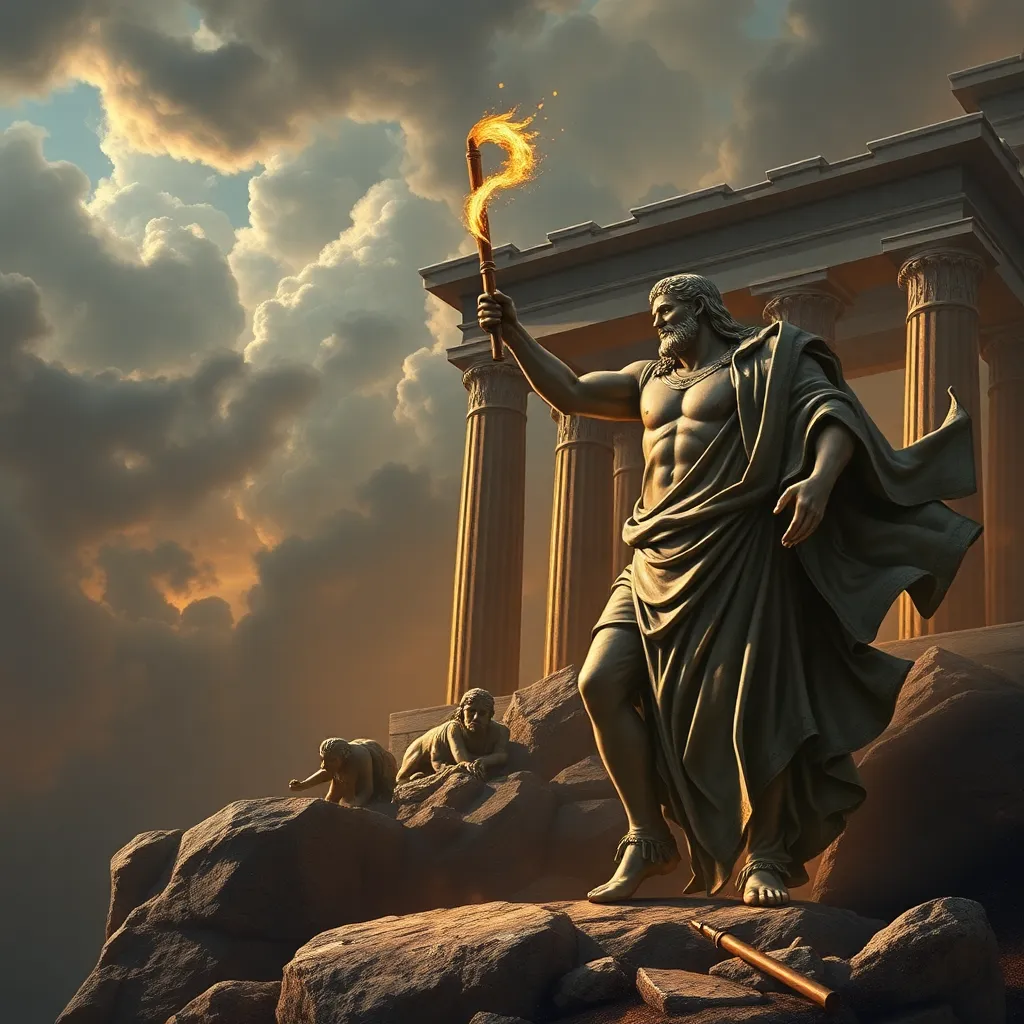
The Role of Fate vs. Free Will in the Lives of Greek Heroes
I. Introduction
In Greek mythology, the concepts of fate and free will are pivotal in shaping the narratives of its heroes. Fate refers to the predetermined course of events that is often believed to be beyond human control, while free will signifies the ability of individuals to make choices and take actions that influence their destinies. This duality is a central theme in Greek literature, as it raises profound questions about the nature of heroism, morality, and the human condition.
Throughout myths, Greek heroes are often confronted with the tension between these two forces, leading to dramatic and tragic outcomes. This article will explore the interplay of fate and free will through the stories of key Greek heroes, including Achilles, Oedipus, and Heracles.
II. The Concept of Fate in Greek Mythology
In Greek mythology, the Moirai, or Fates, are the three goddesses who control human destiny. Clotho spins the thread of life, Lachesis measures its length, and Atropos cuts it, determining the moment of death. This triad embodies the belief that fate is an inescapable force that governs the lives of mortals, including the most illustrious heroes.
- Clotho: The spinner of the thread of life.
- Lachesis: The measurer of the thread’s length.
- Atropos: The cutter of the thread, representing death.
Many myths illustrate predetermined destinies. For instance, the story of Perseus foretells his birth leading to the death of his grandfather, King Acrisius. Despite efforts to avoid this fate, the prophecy comes to pass, showcasing the inevitability of fate in the lives of heroes.
The presence of fate in heroic narratives often creates a sense of inevitability, as characters grapple with their destinies, only to find that their struggles are ultimately futile against the will of the Fates.
III. The Nature of Free Will in Greek Heroic Narratives
While fate is a dominant theme, free will plays a crucial role in the narratives of Greek heroes. Free will allows individuals to make choices that can alter their paths, even within the confines of their fated destinies.
Heroes often face critical decisions that reflect their character and values. For example:
- The choice to fight bravely or retreat in battle.
- The decision to pursue personal desires against societal expectations.
- The willingness to sacrifice for others or to seek personal glory.
However, the tension between personal choice and divine influence is a recurring theme. Many heroes act under the guidance or manipulation of gods, leading to questions about the extent of their autonomy.
IV. Case Study: Achilles
Achilles is one of the most prominent heroes in Greek mythology, particularly in Homer’s “Iliad.” His narrative is steeped in the tension between fate and free will. According to prophecy, Achilles is fated to die young, either in battle or by an early death. Despite this, he makes conscious choices that influence his legacy, displaying remarkable agency in his actions on the battlefield.
During the Trojan War, Achilles chooses to withdraw from battle due to a personal slight from Agamemnon, showcasing his pride and willfulness. This choice has significant consequences, leading to the death of his friend Patroclus and ultimately forcing him back into combat.
The interplay of fate and free will in Achilles’ story emphasizes how his choices, driven by emotion and honor, shape not only his personal narrative but also the fate of others around him, highlighting the complexity of heroism.
V. Case Study: Oedipus
The story of Oedipus, as depicted in Sophocles’ “Oedipus Rex,” serves as a powerful exploration of fate and free will. Oedipus is prophesied to kill his father and marry his mother, a fate he desperately attempts to escape. His journey is marked by a series of choices that ultimately lead him to fulfill the prophecy.
Despite his efforts to avoid his destined outcome—leaving Corinth to evade fate—he unknowingly encounters his father, King Laius, on the road and kills him in a fit of rage. Later, he marries Jocasta, his biological mother, fulfilling the tragic prophecy.
Oedipus’ tale illustrates the interplay of fate and free will, as his attempts to assert control over his destiny ironically lead him to the very fate he sought to avoid. His story raises deep philosophical questions about the nature of human agency and the limits of choice.
VI. Case Study: Heracles
Heracles, known for his incredible strength and heroic feats, also exemplifies the struggle between fate and free will. The hero’s labors, imposed by Hera as punishment for his madness, reflect the role of fate in his life. Each labor serves as a trial that tests his strength, character, and resolve.
However, within these challenges, Heracles exercises his free will to make choices that define his legacy. For example:
- He chooses to undertake the Twelve Labors as a means of redemption.
- He often faces moral dilemmas, such as sparing his enemies or seeking vengeance.
Heracles’ choices, in conjunction with the challenges set by fate, showcase the hero’s struggle for autonomy and the complexities of his character, ultimately leading to his apotheosis and recognition as a hero among gods and men.
VII. The Philosophical Implications of Fate vs. Free Will
The tension between fate and free will has been a subject of philosophical debate since ancient times. Schools such as Stoicism and Epicureanism offer different perspectives on these concepts:
- Stoicism: Stoics believed in accepting fate as a part of the natural order while emphasizing the importance of self-control and virtue in one’s choices.
- Epicureanism: Epicureans proposed that while fate plays a role, individuals have the agency to pursue happiness through rational choices.
These philosophies underscore the complexity of human experience, suggesting that while fate may set the stage, it is the actions and choices of individuals that define their moral and heroic standing.
VIII. Conclusion
The relationship between fate and free will in Greek heroic narratives is intricate and multifaceted. Heroes like Achilles, Oedipus, and Heracles illustrate the struggle between these forces, revealing how their choices interact with predetermined destinies.
These themes resonate not only in ancient literature but also in modern society, prompting reflections on the nature of human experience, moral responsibility, and the quest for autonomy. The duality of fate and free will continues to shape our understanding of heroism and the human condition, reminding us that while we may navigate our paths, the threads of destiny are often woven into the fabric of our lives.