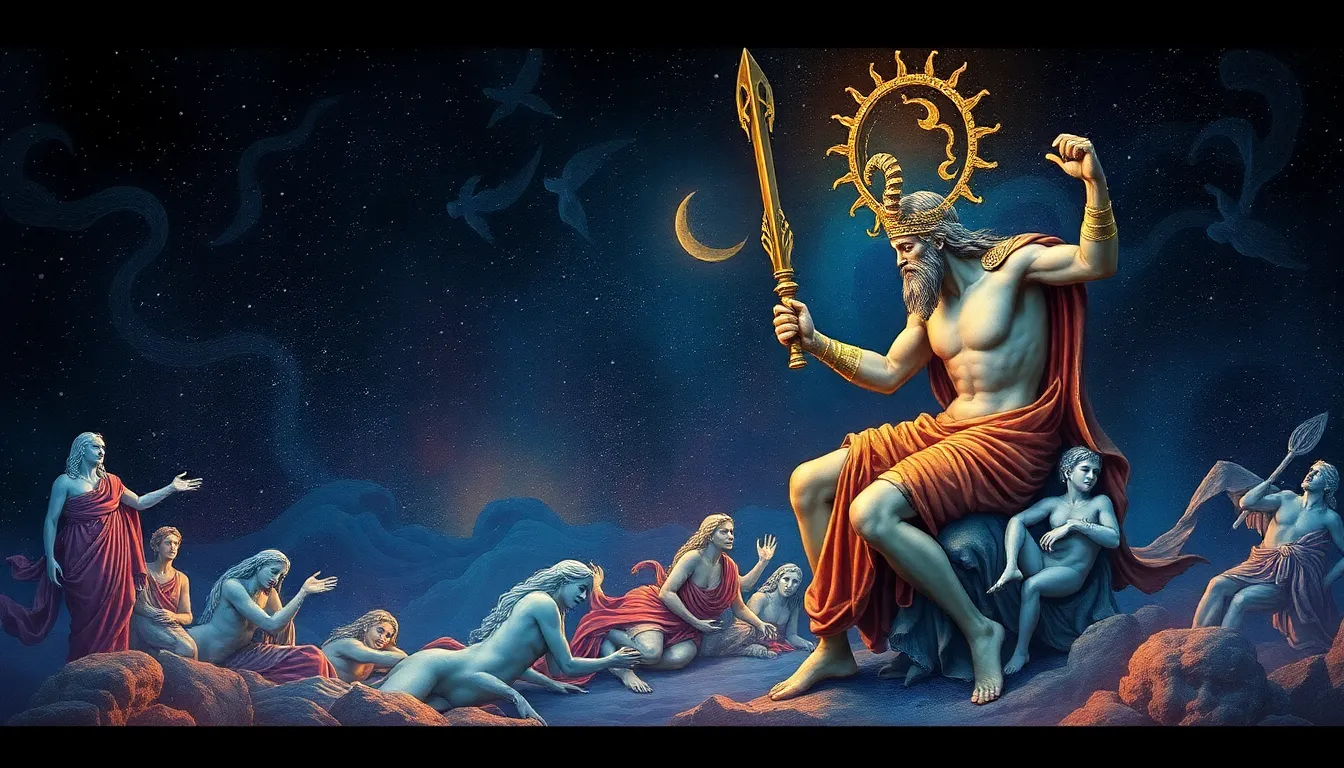
The Role of Gender in Hesiod’s Myths: A Critical Analysis
I. Introduction
Hesiod, a pivotal figure in ancient Greek literature, is celebrated for his contributions to the understanding of mythology and the cosmos. His works, particularly “Theogony” and “Works and Days,” offer critical insight into the mythological narratives that shaped Greek culture. Through his writings, Hesiod not only provided a genealogical account of the gods but also reflected the societal norms and gender dynamics of his time.
This article aims to explore the intricacies of gender roles in Hesiod’s works. By examining the representation of both male and female characters, we can unveil the underlying themes and societal implications of these narratives. Understanding these dynamics is essential for comprehending the broader context of gender relations in ancient Greece and their lasting impact on literature and culture.
II. Hesiod’s Context: Historical and Cultural Background
To fully appreciate Hesiod’s portrayal of gender, it is crucial to understand the socio-political climate of ancient Greece. The 8th century BCE, when Hesiod lived, was a time of significant transformation, marked by the transition from tribal societies to more complex city-states.
The role of mythology during this period was profound; it not only provided explanations for natural phenomena but also served to reinforce societal norms, including those pertaining to gender. Myths were instrumental in shaping the expectations and roles assigned to men and women, often reflecting the patriarchal values prevalent in Greek society.
Hesiod’s own life experiences, as a farmer and a participant in the socio-political landscape, influenced his writings. His perspective on labor, justice, and the divine often intersects with the portrayal of gender, providing a nuanced understanding of the roles men and women played in the ancient world.
III. Key Myths and Their Gender Representations
Hesiod’s major works contain various myths that highlight gender representations. Understanding these myths is crucial for analyzing the implications of gender roles in his narratives.
A. Examination of “Theogony” and its portrayal of divine genders
“Theogony” presents a rich tapestry of gods and goddesses, illustrating a complex hierarchy. The male figures, such as Zeus, often represent authority and power, while female deities like Gaia and Rhea embody the earth and fertility. This divine duality reflects the gender dynamics of Hesiod’s society, where male dominance is mirrored in the cosmic order.
B. Analysis of “Works and Days” and the depiction of male and female roles
In “Works and Days,” Hesiod contrasts the lives of men and women through the lens of labor and domesticity. Men are depicted as laborers and providers, embodying strength and resilience, while women are often relegated to roles centered around the household. This dichotomy underscores the societal expectations placed on each gender, reinforcing traditional roles that prioritize male authority.
C. Myth of Pandora as a central narrative in gender discourse
The myth of Pandora is particularly significant in discussions of gender. Created by the gods as a punishment for Prometheus’s theft of fire, Pandora embodies both beauty and danger. She is often viewed as the source of humanity’s woes, highlighting a troubling narrative where female creation leads to male suffering. This myth encapsulates the duality of women as both creators and bearers of consequence, shaping perceptions of femininity in Hesiod’s time.
IV. The Male Perspective: Authority and Power
Male characters in Hesiod’s myths are predominantly portrayed as figures of authority and power. This section delves into the characteristics and implications of masculinity in his narratives.
A. Exploration of male characters and their characteristics
Characters such as Zeus, Prometheus, and Cronus exemplify traits of strength, intelligence, and dominance. They often engage in battles for power, reflecting the societal valorization of male prowess. The emphasis on male strength and cunning serves to reinforce the notion of masculinity as inherently superior.
B. The portrayal of masculinity and its societal implications
The representation of masculinity in Hesiod’s works carries significant societal implications. The valorization of male strength often translates into societal norms that prioritize male authority in both the public and private spheres. This creates a framework where male dominance is not only accepted but expected, perpetuating a cycle of gender inequality.
C. Hesiod’s depiction of male dominance in the mythological hierarchy
In the mythological hierarchy established by Hesiod, male figures occupy the highest echelons. The gods, such as Zeus, wield ultimate power, while female deities, despite their importance, are often subservient or play secondary roles. This hierarchy reinforces the patriarchal structure of both divine and human realms, reflecting the gender dynamics of ancient Greek society.
V. The Female Archetype: Creation and Consequence
Contrasting the male perspective, female figures in Hesiod’s myths represent a complex interplay of creation and consequence. This section explores the roles and symbolism of women in his narratives.
A. Analysis of female figures in Hesiod’s myths
Women in Hesiod’s myths, such as Gaia, Hesiod’s personification of the earth, and Pandora, encapsulate a duality that is both revered and feared. They are essential to the continuity of life yet often associated with chaos and misfortune. This complexity highlights the multifaceted nature of femininity in Hesiod’s thought.
B. The duality of women as creators and bearers of consequence
The duality of female figures is particularly evident in the myth of Pandora, who, while created as a beautiful being, ultimately unleashes chaos upon humanity. This narrative serves as a cautionary tale, reinforcing the idea that female creation can lead to dire consequences. Such portrayals perpetuate a view of women as both vital to existence and dangerous to societal order.
C. The significance of Pandora as a symbol of femininity
Pandora’s myth serves as a critical focal point for understanding femininity in Hesiod’s works. As the first woman, she embodies the complexities of womanhood—beauty intertwined with peril. Her narrative speaks to the fears and anxieties surrounding female agency, positioning her as a symbol of the inherent contradictions in gender roles.
VI. Gender Dynamics: Conflict and Cooperation
The interplay between male and female characters in Hesiod’s myths often reveals a dynamic of conflict and cooperation. This section examines these relationships and their implications.
A. Instances of conflict between male and female characters
Throughout Hesiod’s myths, conflicts arise between male and female figures, often rooted in power struggles. For instance, Zeus’s control over the other gods can lead to tensions with female deities who challenge his authority, reflecting the larger societal conflicts between genders.
B. Analysis of cooperation and mutual dependency in myths
Despite instances of conflict, there are also narratives that highlight cooperation and mutual dependency. For example, the relationship between Gaia and Uranus demonstrates how male and female forces can work together to create order and life. This duality underscores the complexities of gender dynamics, suggesting that while conflicts exist, there are also moments of synergy.
C. Implications of these dynamics for understanding gender relations
The interplay of conflict and cooperation in Hesiod’s myths offers valuable insight into the understanding of gender relations in ancient Greece. It suggests that while patriarchal structures imposed limitations on women, there were also spaces for collaboration and mutual respect. This complexity enriches our interpretation of gender dynamics in classical literature.
VII. Critical Reception and Interpretations
The reception of Hesiod’s works and their interpretations have evolved over time, particularly concerning gender roles. This section explores historical and contemporary perspectives on gender in Hesiod’s narratives.
A. Historical interpretations of gender in Hesiod’s works
Historically, interpretations of Hesiod’s gender representations have often aligned with the prevailing patriarchal values of society. Scholars have frequently viewed his depictions of women through a lens that reinforced traditional gender roles, overlooking the complexities within his narratives.
B. Contemporary feminist readings and critiques
In recent years, feminist readings of Hesiod’s works have emerged, challenging the traditional interpretations. Scholars have argued for a more nuanced understanding of female figures, emphasizing their agency and the societal implications