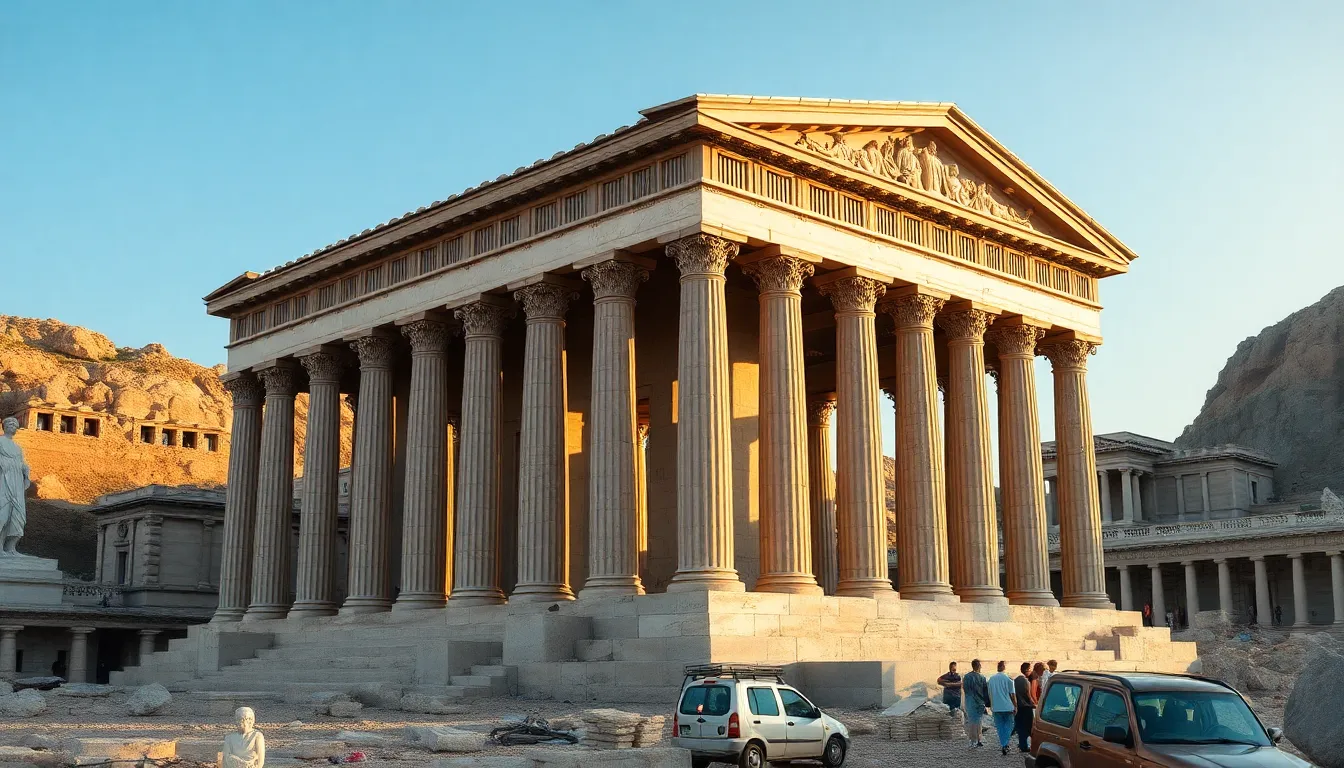
The Role of Greek Myths in Shaping Today’s Artistic Expression
I. Introduction
Greek mythology, rich in tales of gods, heroes, and mythical creatures, has been a cornerstone of Western literature and art for centuries. The historical significance of these myths is profound, as they not only provided explanations for natural phenomena and human behavior in ancient Greece but also served as a means of cultural identity and moral guidance.
In contemporary times, Greek myths continue to resonate, inspiring artists across various mediums. From literature and visual arts to performing arts and popular culture, the themes and narratives of these ancient stories remain relevant. This article aims to explore the influence of Greek myths on modern artistic expression, highlighting their enduring legacy and impact.
II. The Origins of Greek Myths
Greek mythology has its roots in the oral traditions of ancient Greece, evolving over centuries through storytelling, poetry, and religious practices. The myths often reflect the values, fears, and aspirations of the Greek people, providing insight into their worldview.
A. Brief history of Greek mythology
The origins of Greek mythology can be traced back to the Mycenaean period (circa 1600-1100 BCE), with later developments during the Archaic and Classical periods. These myths were recorded in epic poems such as Homer’s “Iliad” and “Odyssey,” as well as Hesiod’s “Theogony.”
B. Key themes and archetypes present in Greek myths
Greek myths are characterized by recurring themes and archetypes, including:
- Heroism and the hero’s journey
- The duality of human nature
- The conflict between fate and free will
- Love, jealousy, and revenge
- The struggle against chaos and disorder
C. The cultural and philosophical context of ancient Greece
The cultural context of ancient Greece, with its emphasis on philosophy, democracy, and humanism, played a significant role in shaping these myths. Philosophers like Plato and Aristotle explored the moral and ethical implications of these tales, further embedding them into the fabric of Greek culture.
III. Greek Myths in Literature
Greek mythology has long served as a rich source of inspiration for writers, influencing countless works across genres. Modern literature often reinterprets these ancient stories, bringing new perspectives and insights.
A. Adaptations of Greek myths in modern literature
Many contemporary authors have adapted Greek myths, often resulting in innovative retellings that explore themes of identity, power, and transformation. These adaptations allow readers to engage with age-old narratives in fresh ways.
B. Influence on storytelling techniques and character development
Greek mythology has influenced storytelling techniques, particularly in the development of complex characters and intricate plots. Modern authors draw on archetypes like the hero, the trickster, and the tragic figure to create compelling narratives.
C. Case studies: notable works inspired by Greek mythology
One notable work is Madeline Miller’s “Circe,” which reimagines the life of the enchantress from Homer’s “Odyssey.” Through Circe’s perspective, the novel explores themes of power, isolation, and self-discovery, demonstrating how ancient myths can be reinterpreted to resonate with contemporary readers.
IV. Greek Myths in Visual Arts
The influence of Greek mythology extends into the realm of visual arts, where artists have found inspiration in the dramatic narratives and vivid imagery of these ancient tales.
A. Exploration of classical and contemporary visual interpretations
From classical sculptures to modern paintings, Greek myths have been depicted in various artistic forms. The aesthetic beauty of these myths has inspired artists to capture their essence through visual representation.
B. Analysis of artists influenced by Greek mythology
Many renowned artists have drawn from Greek mythology, including:
- Pablo Picasso: His works often reflect mythological themes, blending classical elements with modernist techniques.
- Sandro Botticelli: His painting “The Birth of Venus” is a quintessential representation of mythological beauty and love.
C. The impact of mythology on modern art movements
Greek mythology has also influenced modern art movements, particularly Surrealism. Artists like Salvador Dalí and Max Ernst utilized mythological symbols to explore the subconscious and challenge perceptions of reality.
V. Greek Myths in Performing Arts
The performing arts, including theater and dance, have a long-standing relationship with Greek mythology. Ancient plays often drew upon mythological themes, and this tradition continues in contemporary adaptations.
A. The incorporation of Greek myths in theater and dance
Modern theater often incorporates Greek myths, using them as a foundation for exploring complex human emotions and societal issues. Dance performances also utilize mythological narratives to convey deeper meanings through movement.
B. Modern adaptations of ancient plays
Adaptations of ancient plays, such as Sophocles’ “Oedipus Rex,” have been reimagined in various contexts, allowing audiences to engage with the timeless themes of fate and tragedy in new ways.
C. The role of myths in shaping contemporary performance art
Contemporary performance art often draws on mythological themes to challenge societal norms and provoke thought. Artists use these narratives to explore identity, power dynamics, and the human experience.
VI. Greek Myths in Popular Culture
In recent years, Greek mythology has made a resurgence in popular culture, finding its way into films, television shows, graphic novels, and video games.
A. Representation of Greek mythology in film and television
Films such as “Clash of the Titans” and television series like “Xena: Warrior Princess” have brought Greek myths to the forefront of popular culture, appealing to a wide audience and sparking interest in these ancient stories.
B. The resurgence of myths in graphic novels and video games
Graphic novels like “Percy Jackson & The Olympians” and video games such as “God of War” have introduced Greek myths to younger generations, blending storytelling with interactive experiences.
C. The influence of popular culture on public perception of Greek myths
The portrayal of Greek myths in popular culture has shaped public perception, often emphasizing action and adventure while sometimes oversimplifying complex narratives. This accessibility can lead to a renewed interest in the original myths.
VII. The Psychological and Symbolic Significance of Myths
Greek myths hold psychological and symbolic significance, offering insights into human behavior and societal values. The archetypes present in these stories continue to resonate in modern psychology.
A. Understanding archetypes and their relevance in modern psychology
Psychologist Carl Jung identified archetypes as universal symbols that resonate across cultures. Greek myths provide a rich tapestry of archetypes, such as the hero, the mother, and the trickster, which can be explored in contemporary psychological contexts.
B. The role of myths in addressing contemporary issues and human experiences
Greek myths address universal themes such as love, loss, conflict, and redemption, making them relevant to contemporary human experiences. Artists and psychologists alike utilize these narratives to explore complex emotions and societal challenges.
C. How artists utilize these symbols to convey deeper meanings
Artists often draw upon the symbolic nature of Greek myths to convey deeper meanings in their work. By incorporating mythological elements, they can explore themes of identity, power, and the human condition, inviting audiences to engage with these concepts on a profound level.
VIII. Conclusion
The enduring influence of Greek myths on artistic expression is a testament to their richness and complexity. From literature and visual arts to performing arts and popular culture, these ancient stories continue to inspire and resonate with contemporary audiences.
As artists explore and reinterpret Greek mythology, they breathe new life into these timeless narratives, ensuring their relevance for future generations.