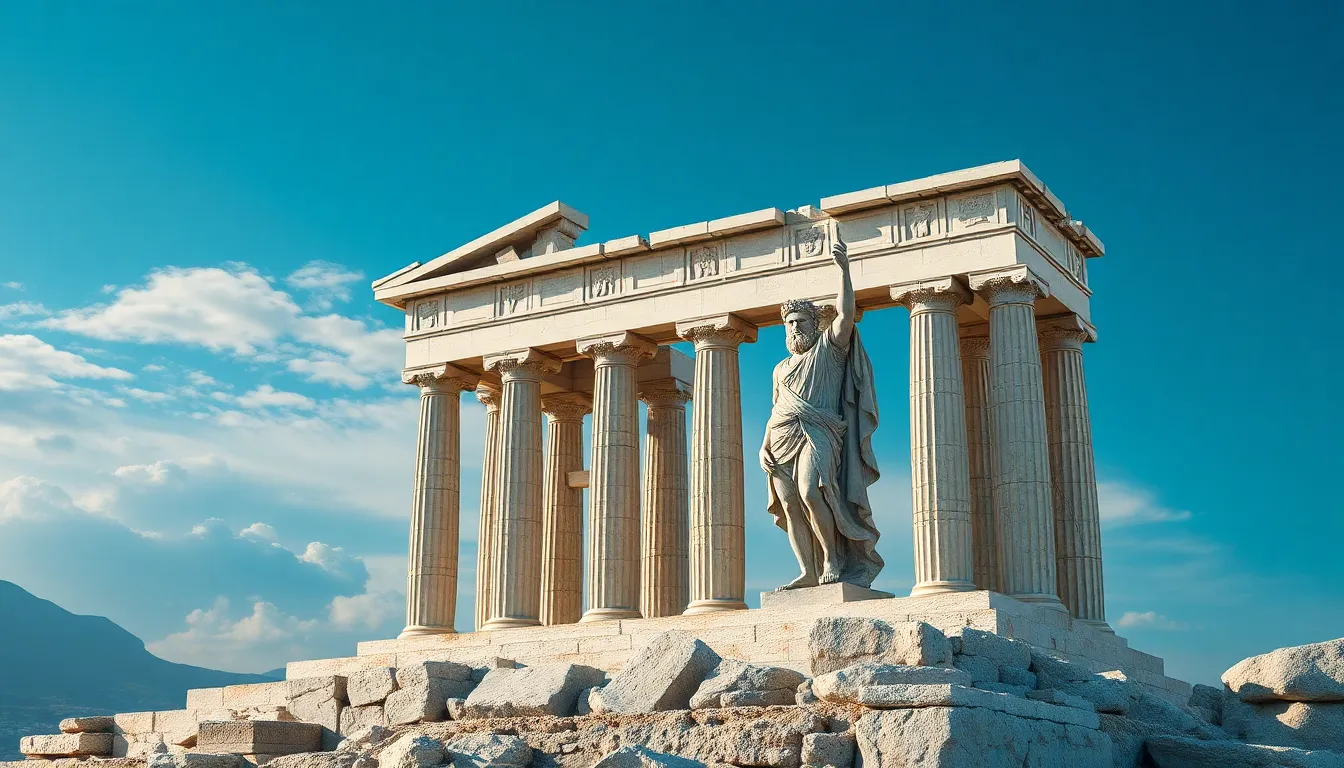
The Role of Greek Myths in Shaping Today’s Social Narratives
I. Introduction
Greek mythology, a rich tapestry of stories and characters, has been a vital component of Western culture for centuries. These myths served not only as entertainment but also as profound reflections of human nature, morality, and the complexities of life. From the tales of gods and goddesses to the struggles of heroes and mortals, Greek mythology has shaped our understanding of the world in multiple ways.
In contemporary society, the influence of these ancient tales persists, manifesting in various forms of storytelling, social values, and cultural commentary. This article aims to explore the enduring significance of Greek myths, examining how they continue to shape modern social narratives and influence our collective consciousness.
II. The Foundation of Greek Myths
A. Brief history and origins of Greek mythology
Greek mythology can be traced back to the ancient Greek civilization, with roots that extend to the oral traditions of storytelling. These myths were passed down through generations, eventually becoming recorded in texts such as Homer’s “Iliad” and “Odyssey,” and Hesiod’s “Theogony.” The myths served to explain natural phenomena, human emotions, and the mysteries of existence.
B. Key themes and archetypes in Greek myths
Central themes in Greek mythology include heroism, fate, love, revenge, and the struggle between good and evil. Archetypes such as the hero, the mentor, the trickster, and the femme fatale emerge consistently throughout these stories. These archetypes not only define characters but also encapsulate universal human experiences and emotions.
C. The role of mythology in ancient Greek society
Mythology was integral to ancient Greek society, influencing religion, arts, and daily life. Festivals, such as the Olympic Games, were dedicated to the gods, and myths were recited in theater performances that explored moral dilemmas and human flaws. The myths provided a shared cultural framework, reinforcing social norms and values.
III. Greek Myths as Archetypes in Modern Storytelling
A. Common archetypes derived from Greek myths
Greek myths have given rise to a plethora of archetypes that permeate modern storytelling. Some common archetypes include:
- The Hero: Figures like Odysseus or Heracles exemplify the hero’s journey, facing trials and transformations.
- The Mentor: Characters such as Chiron provide guidance and wisdom to the hero.
- The Villain: Figures like Medusa or Hades represent the darker aspects of human nature.
- The Quest: Many narratives revolve around a hero’s quest for identity, love, or redemption.
B. Examples of contemporary literature, film, and media that draw from these archetypes
Modern literature and media frequently reference Greek myths, often reinventing these archetypes for new audiences. Notable examples include:
- “Harry Potter” series by J.K. Rowling: The hero’s journey is evident in Harry’s quest against Voldemort, paralleling many classic mythological tales.
- “Percy Jackson & The Olympians” by Rick Riordan: This series directly incorporates Greek mythology into a contemporary setting, appealing to young readers.
- Films like “Wonder Woman”: The character of Diana draws heavily from the mythological figure of the Amazons, showcasing strength and empowerment.
C. Analysis of how these archetypes resonate with modern audiences
These archetypes resonate with modern audiences because they encapsulate universal themes of struggle, triumph, and moral complexity. In an age where individuals seek connection to their own experiences, the timeless aspects of Greek myths provide a framework for understanding personal and societal challenges. The hero’s journey, in particular, speaks to the innate desire for growth and self-discovery.
IV. Moral Lessons and Social Values Within Greek Myths
A. Exploration of the morals and ethics depicted in Greek myths
Greek myths are rich in moral lessons, often reflecting the ethical standards of ancient Greek society. Many stories illustrate the consequences of hubris, the importance of humility, and the value of wisdom. For example, the tale of Icarus warns against the dangers of overambition, while the story of King Midas serves as a cautionary tale about greed.
B. Comparison of ancient values to contemporary social issues
While the context may differ, many of the values depicted in Greek myths resonate with current social issues. Themes of justice, power dynamics, and the struggle for identity remain relevant today. For instance, the myth of Prometheus, who defied the gods to bring fire to humanity, parallels modern discussions about rebellion against oppressive systems and the fight for social justice.
C. The role of myths in shaping collective morality and ethical frameworks
Myths serve as a narrative foundation for collective morality, shaping societal values over time. They provide frameworks for understanding complex ethical dilemmas and guide behavior through cautionary tales. By reflecting on these ancient narratives, modern society can better navigate contemporary moral challenges and foster a deeper understanding of ethical principles.
V. Feminine Archetypes and Gender Narratives
A. Examination of female figures in Greek mythology
Greek mythology features a plethora of powerful female figures, each embodying various aspects of femininity. Notable characters include:
- Athena: The goddess of wisdom and warfare, representing intelligence and strategy.
- Persephone: The queen of the underworld, symbolizing transformation and duality.
- Artemis: The goddess of the hunt, embodying independence and strength.
B. Impact of these figures on modern feminist discourse and gender roles
The female figures of Greek mythology have significantly influenced modern feminist discourse. Characters like Athena and Artemis challenge traditional gender roles, showcasing strength, independence, and intelligence. They serve as symbols for contemporary movements advocating for women’s rights and gender equality, inspiring new interpretations of femininity.
C. How reinterpretations of these characters influence contemporary narratives
Modern reinterpretations of female mythological figures often focus on empowerment and agency. For example, in recent adaptations, Persephone is portrayed not just as a victim of abduction but as a powerful figure who embraces her duality. These narratives encourage a reevaluation of gender roles and highlight the complexities of women’s experiences, contributing to a richer discourse surrounding femininity in today’s society.
VI. Greek Myths in Political and Social Commentary
A. Use of Greek mythology in political rhetoric and satire
Greek mythology has long served as a source of political commentary and satire. Politicians and writers often draw parallels between contemporary events and mythological tales to critique power structures and societal norms. For instance, references to figures like Narcissus or Oedipus are frequently used to highlight issues of vanity and familial conflict in political contexts.
B. Case studies of modern political movements inspired by mythological themes
Several modern political movements have drawn inspiration from Greek myths. Examples include:
- The #MeToo Movement: Echoes the story of women like Medusa, who faced victimization and transformation, resonating with narratives of empowerment and justice.
- Environmental Activism: Figures like Gaia, the personification of the Earth, inspire movements advocating for ecological preservation and sustainability.
C. Analysis of myths as tools for social critique and reflection
Myths serve as powerful tools for social critique, allowing individuals to reflect on contemporary issues through the lens of ancient narratives. By examining these stories, society can gain insights into human behavior, power dynamics, and the ethical challenges that persist across time. The allegorical nature of myths enables a deeper understanding of societal flaws and encourages introspection and dialogue.
VII. The Global Influence of Greek Myths
A. Cross-cultural adaptations and interpretations of Greek myths
<