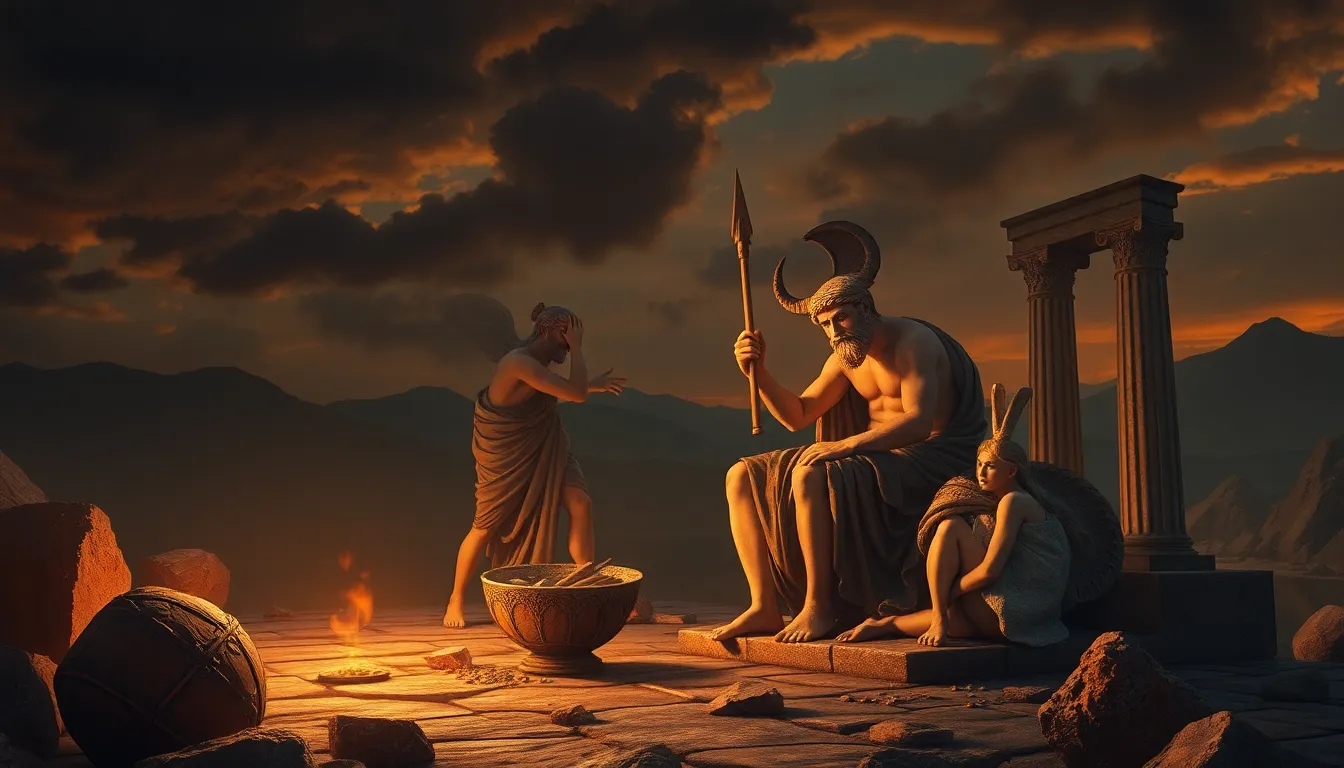
The Role of Myth in Shaping Greek Concepts of Sacrifice
I. Introduction
Myth, in ancient Greek culture, serves as a fundamental narrative form that encapsulates the beliefs, values, and practices of the society. It provides explanations for natural phenomena, human behavior, and the origins of customs. Myths were not merely stories; they were integral to the Greek understanding of the world and their place within it.
Among these stories, the concept of sacrifice holds a significant place in Greek society. Sacrifice was a crucial means of communication between humans and the divine, deeply woven into the fabric of religious practice and community life. It encompassed a variety of offerings, from animals to grains, and even humans in certain dire circumstances.
This article explores how Greek myths have influenced and shaped the understanding of sacrifice, highlighting the historical context, major myths, their symbolism, and the philosophical interpretations that have emerged from these narratives.
II. Historical Context of Sacrifice in Ancient Greece
The importance of sacrifice in Greek religion and society cannot be overstated. It was a means of establishing a relationship with the gods, seeking their favor, and ensuring the welfare of the community. Sacrifices were performed during festivals, private rituals, and communal gatherings, reinforcing social bonds and cultural identity.
There were various types of sacrifices in ancient Greece, including:
- Animal Sacrifice: This was the most common form, involving the offering of livestock such as sheep, goats, and bulls. The animals were often ritually killed, and their meat shared among the community.
- Grain Offerings: These offerings included the presentation of bread and other agricultural products, symbolizing gratitude and dependence on the earth.
- Human Sacrifice: Although rare and often surrounded by myth, human sacrifices did occur, typically in extreme circumstances, as seen in certain myths.
The ritual significance of sacrifice was not merely about the act itself; it was also about the communal aspects that brought people together. The act of sacrificing was often accompanied by prayers, hymns, and feasting, reinforcing social cohesion.
III. Major Myths Involving Sacrifice
Several myths illustrate the role of sacrifice in Greek culture, each revealing deeper insights into societal values and beliefs.
A. The Myth of Prometheus and the Sacrifice of Fire
In the myth of Prometheus, the Titan defies the gods by stealing fire from Olympus and giving it to humanity. This act of sacrifice is significant as it represents the struggle for knowledge and the spirit of rebellion against divine authority. Prometheus’s punishment by Zeus, who has him bound to a rock where an eagle eats his liver daily, reflects the severe consequences of defying the gods.
B. The Story of Iphigenia and the Trials of Agamemnon
The tale of Iphigenia, the daughter of Agamemnon, highlights the tragic nature of sacrifice. Agamemnon must sacrifice his daughter to appease the goddess Artemis and ensure safe passage for his fleet to Troy. This story evokes themes of duty, loyalty, and the moral dilemmas inherent in sacrifice, showcasing how personal loss is often intertwined with communal responsibility.
C. The Tale of the Minotaur and the Athenian Sacrifices
The story of the Minotaur involves the Athenian practice of sending seven young men and seven young women as sacrifices to the creature dwelling in the labyrinth of Crete. This myth symbolizes the themes of fear, redemption, and the struggle against tyranny. The eventual slaying of the Minotaur by Theseus represents triumph over chaos and the restoration of order.
IV. Symbolism of Sacrifice in Greek Myths
Greek myths imbue sacrifice with profound symbolism, connecting the act to greater existential themes.
A. The Role of Blood and Offerings in Connecting to the Divine
Blood, as a fundamental element of sacrifice, symbolizes life and the connection between humans and gods. Offerings made to the deities were seen as a way to nourish and sustain them, reinforcing the idea that the divine and mortal realms are interdependent.
B. Sacrifice as a Means of Appeasing Gods and Ensuring Favor
In Greek thought, sacrifices were often viewed as necessary to appease the gods. Rituals were performed to seek favor in times of war, famine, or personal distress, illustrating the reliance on divine intervention in human affairs.
C. The Dichotomy of Sacrifice: Life-Giving vs. Life-Taking
Sacrifice in Greek mythology embodies a duality. While it often involves the taking of life, it is also seen as a means of ensuring life and prosperity for the community. This paradox reflects the complexities of human existence and the delicate balance between mortality and divinity.
V. Influence of Myths on Ritual Practices
The interconnection between myth and ritual is evident in the structure and execution of sacrificial practices in ancient Greece.
A. How Myths Shaped the Structure of Sacrificial Rituals
Myths provided a narrative framework that shaped the rituals surrounding sacrifice. The stories of gods and heroes influenced the timing, nature, and context of sacrifices, ensuring that rituals were imbued with meaning and tradition.
B. The Integration of Mythic Narratives into Public Ceremonies
Public ceremonies often included performances of mythic stories, reinforcing the cultural relevance of sacrifice. These narratives were recited or dramatized during festivals, linking the community to its heroic past and divine ancestry.
C. The Impact of Mythological Figures on the Choice of Offerings
Different deities required different types of offerings, as dictated by myth. For example, Demeter was honored with grain offerings, while Zeus might require the sacrifice of a bull. The myths surrounding these figures informed the choices made during rituals, ensuring that offerings were appropriate and respectful.
VI. Philosophical Interpretations of Sacrifice in Myths
Greek philosophers have engaged with the concept of sacrifice, offering various interpretations that reflect moral and ethical dilemmas.
A. Theoretical Perspectives from Ancient Philosophers (e.g., Plato, Aristotle)
Plato and Aristotle viewed sacrifice through the lens of ethics and morality. For Plato, sacrifice was a form of giving that reflects the relationship between the individual and the greater good, while Aristotle emphasized the importance of virtue in the act of giving.
B. Myth as a Reflection of Moral and Ethical Dilemmas
Many myths present characters facing moral choices regarding sacrifice, prompting audiences to reflect on their values. The story of Iphigenia, for example, raises questions about parental duty versus civic responsibility, illustrating the complexities of ethical decision-making.
C. The Role of Sacrifice in the Pursuit of Virtue and Justice
In seeking justice and virtue, sacrifice is often portrayed as a necessary component. The act of giving up something valuable for the sake of others reinforces the idea that true virtue often requires personal cost, a theme prevalent in Greek ethical thought.
VII. The Legacy of Mythological Sacrifice in Later Cultures
The influence of Greek concepts of sacrifice extends beyond ancient Greece, impacting later cultures and religious practices.
A. Influence on Roman and Later Western Concepts of Sacrifice
The Romans adopted many aspects of Greek religion, including sacrificial practices, shaping their own rituals and beliefs. The themes of sacrifice continued to resonate in Western religious traditions, influencing Christian theology and practices regarding atonement and redemption.
B. The Persistence of Greek Myth in Religious Practices
Many elements of Greek mythology have persisted in religious practices through the centuries. Festivals, rituals, and even the moral lessons embedded in myths have influenced various cultural expressions, from literature to art.
C. Modern Interpretations and Adaptations of These Myths
Today, Greek myths continue to inspire contemporary interpretations and adaptations, reflecting ongoing interest in the themes of sacrifice, morality, and the human condition. Films, literature, and art often revisit these myths, highlighting their relevance in modern discussions about ethics and society.
VIII. Conclusion
In summary, the intricate relationship between myth and sacrifice in ancient Greek culture reveals much about their spirituality and ethical understanding. Myths not only shaped the practices of sacrifice but also provided profound insights into the human experience, morality, and the divine.
The enduring significance of these themes invites us to reflect on our own values and the ways in which narratives shape our understanding of sacrifice and community. Ultimately, the exploration of Greek mythology offers a rich tapestry