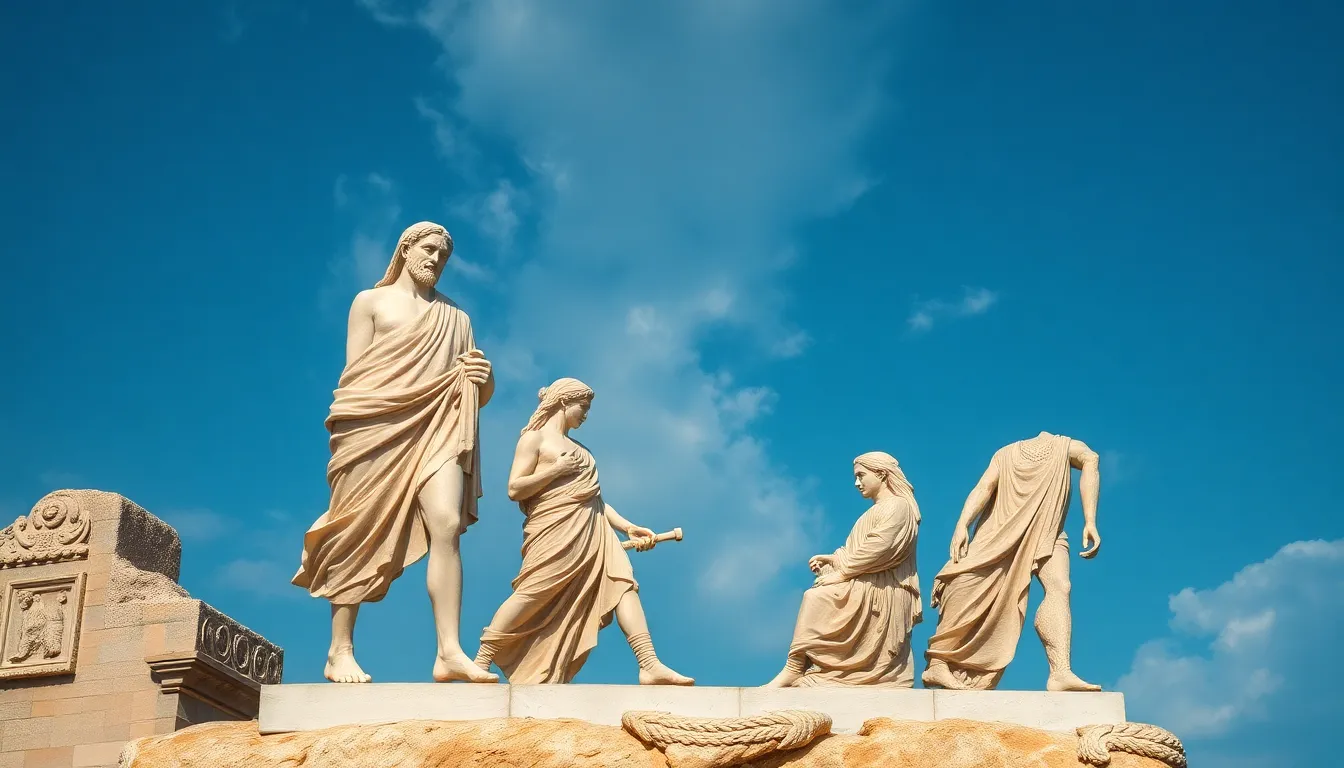
The Role of Myth in Shaping Greek Concepts of Virtue
I. Introduction
In ancient Greek culture, the concept of virtue was multifaceted and deeply ingrained in the societal fabric. Virtue, or “areté,” broadly referred to excellence in character and action, encompassing moral integrity, bravery, and wisdom. It was considered essential for achieving a good life and fulfilling one’s potential.
Myths played a crucial role in shaping Greek society by providing narratives that conveyed moral lessons, cultural values, and societal norms. These stories, populated by gods, heroes, and mythical creatures, served not only as entertainment but also as vehicles for imparting ethical teachings and exemplifying virtues.
This article aims to explore how Greek myths influenced the understanding and practice of virtue in ancient Greece, examining their historical context, philosophical implications, and lasting legacy.
II. Historical Context of Greek Myths
The origins of Greek mythology can be traced back to the Minoan and Mycenaean civilizations, with stories evolving over centuries through oral tradition before being documented by writers such as Homer and Hesiod in the 8th and 7th centuries BCE.
Mythology was intricately linked to religion in ancient Greece, as myths explained the actions and characteristics of deities, provided justification for rituals, and illustrated the relationship between mortals and the divine. Key sources of Greek myths include:
- Homer: His epics, “The Iliad” and “The Odyssey,” are foundational texts that encapsulate heroic ideals and virtues.
- Hesiod: His works, such as “Theogony” and “Works and Days,” outline the origins of the gods and present moral guidance for daily life.
Over time, these myths were woven into the cultural identity of the Greek people, influencing their understanding of the world and their place within it.
III. The Concept of Virtue in Ancient Greece
Virtue in ancient Greece was not a singular notion but rather a collection of ethical ideals. Three primary types of virtue can be identified:
- Areté: Often translated as “excellence,” it signifies the fulfillment of purpose or function; it was highly prized in warriors and leaders.
- Dikaiosynē: This term translates to “justice,” embodying fairness and moral righteousness in one’s actions.
- Phronesis: Known as “practical wisdom,” it refers to the ability to make sound judgments and decisions in the pursuit of the good life.
The philosophical discourse surrounding virtue began with figures like Socrates, who emphasized the importance of self-knowledge and moral integrity. Plato expanded on these ideas, proposing that virtue is intrinsically linked to knowledge and that the ideal state is achieved when individuals practice their virtues harmoniously. Aristotle further refined these concepts, categorizing virtues into moral and intellectual and emphasizing the importance of moderation.
In everyday life, virtue was perceived as essential for social cohesion and personal success, with citizens expected to embody these ideals in their conduct and interactions.
IV. Myths as Moral Frameworks
Greek myths serve as moral frameworks that illustrate virtues through the narratives of gods and heroes. For example:
- Hercules: His twelve labors symbolize courage, strength, and perseverance in overcoming adversity. Each labor presents moral challenges that require not only physical strength but also cleverness and resilience.
- Odysseus: The hero of “The Odyssey,” Odysseus exemplifies cunning, loyalty, and the virtue of hubris contrasted with humility. His journey home from the Trojan War is fraught with moral dilemmas that test his character and virtues.
The journeys of these heroes convey important moral lessons, reinforcing societal values such as bravery, intelligence, and the pursuit of justice. Myths also reflect the consequences of failing to uphold these virtues, often resulting in tragic outcomes for both mortals and immortals alike.
V. The Interplay Between Myth and Philosophy
Philosophical ideas in ancient Greece were often influenced by mythological narratives. Philosophers like Plato critiqued certain myths for promoting immoral behavior or inappropriate portrayals of the gods. In his “Allegory of the Cave,” Plato used myth as a metaphor for enlightenment, illustrating the journey toward knowledge and the importance of understanding higher truths.
Despite critiques, there was a synthesis of myth and philosophy in the exploration of virtue. Philosophers utilized myths to illustrate complex ideas about morality, ethics, and the nature of the good life. For instance, Aristotle’s “Nicomachean Ethics” draws on mythological examples to clarify concepts of virtue and ethical living.
VI. Gender and Virtue in Greek Mythology
The examination of female figures in Greek mythology reveals a complex relationship between gender and virtue. Many female characters embody specific virtues, but their portrayals often reflect the cultural implications of gender roles:
- Athena: The goddess of wisdom and warfare, represents strategic thinking and courage, often depicted as a protector of heroes.
- Penelope: The virtuous wife of Odysseus, symbolizes loyalty, patience, and fidelity, showcasing the traditional feminine virtues expected of women.
Conversely, other female figures, such as Medusa or Pandora, are portrayed as embodiments of chaos and temptation, reflecting societal anxieties regarding female power and morality. The contrasting virtues exhibited by male and female characters reveal underlying gender biases in the understanding of virtue in ancient Greece.
VII. Legacy of Greek Myths on Modern Concepts of Virtue
The influence of Greek myths persists in contemporary moral discussions. Many modern ethical frameworks still draw on the virtues exemplified by ancient heroes and gods. For example:
- The concept of “heroism” in contemporary culture often mirrors the ideals found in myths, with figures like Hercules serving as inspiration for modern definitions of bravery and perseverance.
- Philosophical debates about virtue ethics continue to reflect the foundational ideas established by Aristotle and Plato, emphasizing character and moral integrity.
In comparing ancient Greek concepts of virtue with modern perspectives, it is evident that while societal norms have evolved, the core values of courage, justice, and wisdom remain relevant. Myths continue to serve as powerful narratives that shape our understanding of ethical behavior and moral ideals today.
VIII. Conclusion
In summary, Greek myths have played an indispensable role in shaping concepts of virtue in ancient Greek culture. Through the exploration of heroic narratives, philosophical discourse, and the examination of gender roles, it becomes clear that these myths provided a moral framework that influenced ethical thought.
The enduring power of myth lies in its ability to convey complex moral lessons and ideals that resonate across time and cultures. As we reflect on the legacies of these ancient stories, we recognize the profound impact they have on our contemporary understanding of virtue and morality.