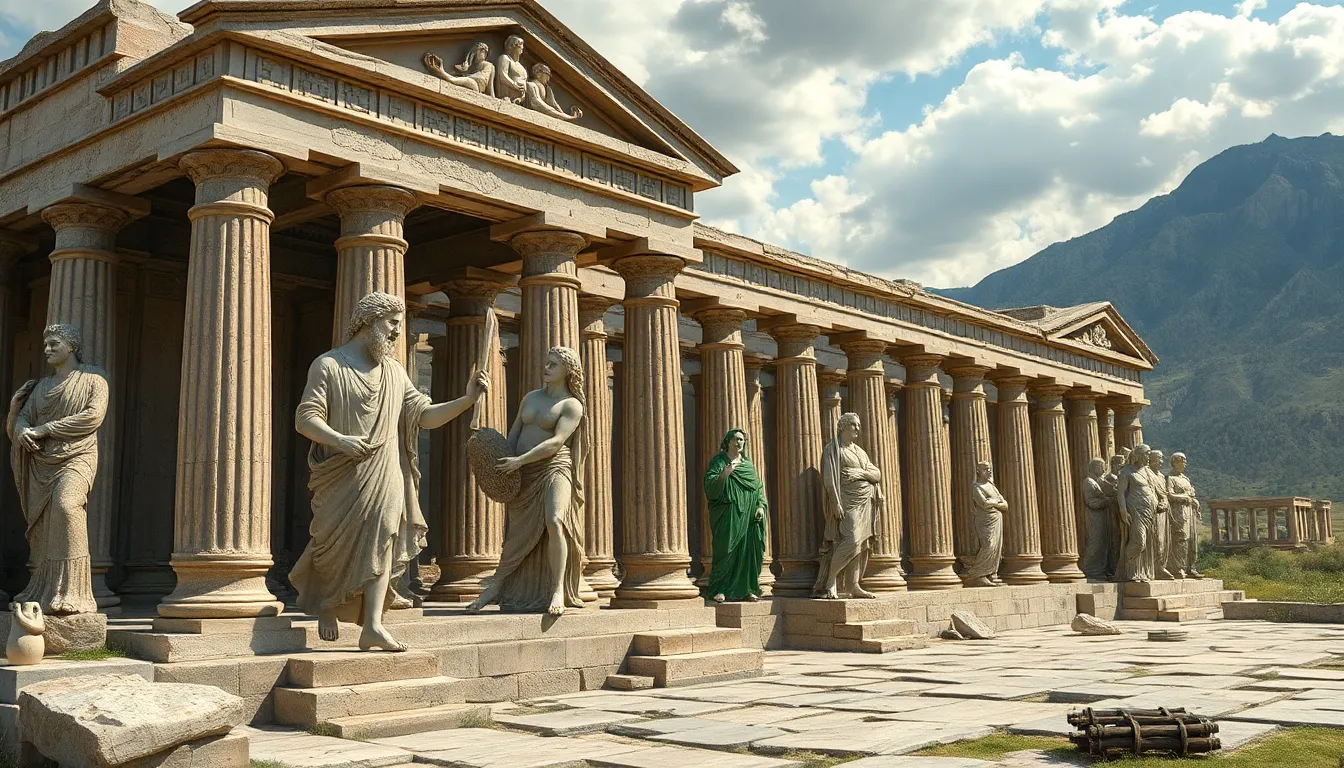
The Role of Myth in Understanding Greek Concepts of Community
I. Introduction
Mythology has always played a pivotal role in shaping cultures, providing a framework through which communities understand their world and their place within it. In ancient Greece, myths were more than mere stories; they were complex narratives that encapsulated the values, beliefs, and social norms of the time. They served as a means of communication and education, helping individuals make sense of their experiences and their communal identity.
Greek concepts of community were multifaceted, encompassing family ties, civic duty, and shared traditions. The city-state, or polis, was the focal point of social life, where individuals found their identity and sense of belonging. This article aims to explore the interplay between myth and community in ancient Greece, illustrating how myths not only reflected but also shaped communal values and identities.
II. Historical Context of Greek Myths
The origins of Greek mythology are deeply rooted in the ancient Near Eastern and Aegean traditions, evolving over centuries to form a rich tapestry of narratives. Greek myths were not static; they adapted to the changing social and political landscapes of the Greek world.
Major sources of Greek myths include renowned poets such as Homer and Hesiod. Homer’s epics, the “Iliad” and the “Odyssey,” provide insights into heroic values and the human experience, while Hesiod’s “Theogony” offers a genealogy of the gods, establishing the divine order that influenced Greek thought.
The role of oral tradition in shaping communal identity cannot be overstated. Myths were passed down through generations, often altered to reflect contemporary values and concerns. This oral transmission fostered a collective memory, binding communities together through shared stories and experiences.
III. Myths as a Reflection of Community Values
Greek myths serve as a mirror reflecting the core values of ancient Greek society. Key values such as honor, loyalty, and kinship are prevalent throughout these stories, illustrating what was deemed important in the everyday lives of the Greeks.
The role of heroic myths in defining communal expectations is significant. Heroes like Hercules and Theseus exemplified the ideals of strength, bravery, and virtue that were integral to Greek identity. Their stories not only entertained but also provided models of behavior for community members to emulate.
- Hercules: Known for his twelve labors, Hercules represents the struggle against adversity and the importance of perseverance. His myth highlights the value of courage and the communal effort in overcoming challenges.
- Theseus: The mythical king of Athens, Theseus embodies the qualities of wisdom and justice. His adventures, including the slaying of the Minotaur, underscore the importance of leadership and civic responsibility.
IV. Myths and Social Cohesion
Myths fostered a sense of belonging among community members, contributing to social cohesion. They provided a shared narrative that connected individuals to their heritage and to each other. The communal retelling of myths during gatherings helped to reinforce bonds among members.
Rituals and festivals played a crucial role in reinforcing these communal bonds through myth. Events like the Panathenaic Festival in Athens celebrated the goddess Athena and included athletic competitions, sacrifices, and cultural performances, all centered around mythological themes.
Examples of myth-based celebrations in ancient Greek society:
- The Eleusinian Mysteries: A series of initiation ceremonies held in honor of Demeter and Persephone, symbolizing the cycle of life and death.
- The Dionysia: A festival that celebrated the god Dionysus, featuring dramatic performances that often drew on mythological themes.
V. Myths and Political Identity
The relationship between myth and city-state identity is profound. Myths were often utilized as tools for legitimizing political power and governance, intertwining the divine with the earthly. City-states like Athens and Sparta cultivated distinct mythologies that reflected their unique values and social structures.
In Athens, myths emphasizing democracy and intellectual achievement were prominent, often glorifying the city’s patron goddess, Athena. Conversely, Sparta’s mythology focused on militaristic values and communal discipline, celebrating heroes who embodied these traits.
Case studies: Athens vs. Sparta
- Athens: Myths surrounding Athena, the goddess of wisdom, reinforced civic pride and the importance of education and strategy in governance.
- Sparta: Myths about the hero Lycurgus, who established the Spartan way of life, highlighted the significance of discipline, loyalty, and martial prowess.
VI. The Role of Myth in Conflict and Resolution
Greek myths often explained and justified conflicts within and between communities. They provided narratives that helped to rationalize the reasons for wars, such as the famous tales surrounding the Trojan War. Myths served as a means of understanding the complexities of human behavior, fate, and divine intervention.
Moreover, myths also played a crucial role in conflict resolution and reconciliation. The stories of gods and heroes often illustrated the importance of forgiveness, compromise, and the restoration of harmony among communities.
Notable examples: The Trojan War and its aftermath
- The Trojan War, instigated by the abduction of Helen, serves as a mythological backdrop for exploring themes of honor, revenge, and the consequences of conflict.
- The aftermath of the war, including the return of Odysseus, emphasizes the values of loyalty, perseverance, and the eventual return to peace within the community.
VII. Contemporary Interpretations of Greek Myths
Modern scholarship continues to explore the relevance of Greek myths in understanding community dynamics. Scholars analyze how these ancient narratives inform contemporary concepts of identity, belonging, and social structure.
The impact of Greek myths extends beyond academia; they have been adapted in literature, film, and art, illustrating their enduring influence. Contemporary works often revisit these themes, reinterpreting the ancient stories to resonate with modern audiences.
Examples of adaptations in literature, film, and art:
- Literature: Novels such as Madeline Miller’s “Circe” and “The Song of Achilles” reimagine the lives of mythological figures, exploring themes of love, power, and identity.
- Film: Movies like “Troy” and “Clash of the Titans” bring Greek myths to life, albeit with artistic liberties, often focusing on the heroic aspects of the narratives.
- Art: Modern artists frequently draw inspiration from Greek mythology, creating works that reflect contemporary issues while rooted in ancient stories.
VIII. Conclusion
In summary, the exploration of Greek mythology reveals its profound role in shaping the concepts of community in ancient Greece. Myths not only reflected the values and beliefs of the society but also actively participated in the construction of communal identity and social cohesion.
The lasting impact of Greek mythology is evident in modern communities, where collective narratives continue to shape identities and foster connections among individuals. As we reflect on the significance of myth, we recognize its enduring power in shaping our understanding of ourselves and our shared human experience.
Ultimately, the examination of Greek myths underscores their relevance in contemporary society, reminding us that narratives—whether ancient or modern—remain vital in defining who we are as a community.