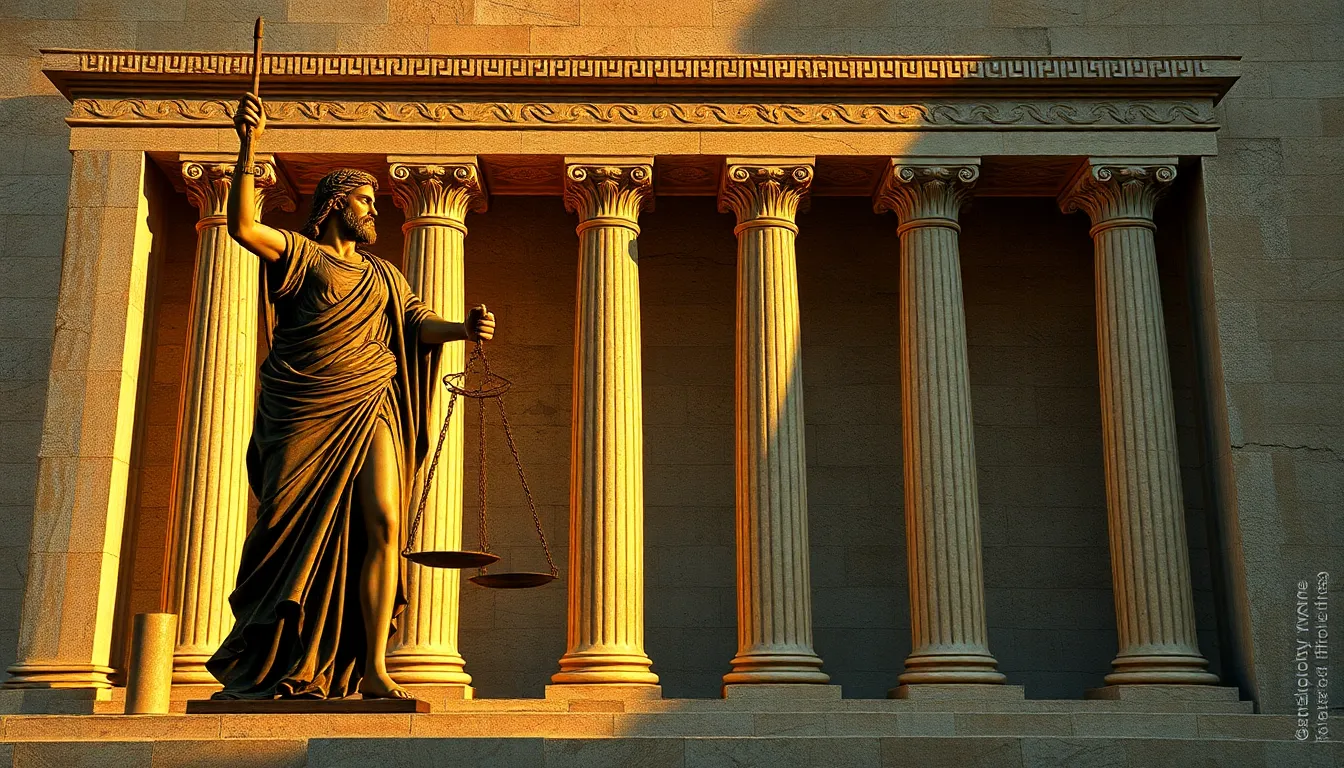
The Role of Myth in Understanding Greek Concepts of Justice
I. Introduction
Justice in ancient Greek society was a multifaceted concept, deeply intertwined with the values, laws, and myths of the time. It encompassed not only legal fairness but also moral righteousness and social harmony. In this context, myths served as powerful narratives that conveyed moral lessons and societal ideals, helping to shape the cultural understanding of justice.
This article aims to explore the interplay between myth and concepts of justice in ancient Greece, revealing how these narratives influenced ethical thought and legal practices in one of the world’s foundational cultures.
II. Historical Context of Justice in Ancient Greece
The evolution of justice in ancient Greece can be traced from the pre-Homeric period through the classical age, reflecting significant societal changes. Initially, justice was often seen through the lens of personal retribution and communal consensus, gradually developing into more formalized systems of law.
Key points regarding the historical context of justice include:
- Pre-Homeric Justice: Focused on tribal customs and informal agreements.
- Homeric Justice: Illustrated through epics like the Iliad and the Odyssey, where honor and revenge play crucial roles.
- Classical Justice: Emergence of democratic principles in city-states like Athens, leading to codified laws and public trials.
Throughout these periods, mythology played a vital role in shaping the values associated with justice. Myths served as allegorical tales that reflected societal norms and the consequences of moral choices.
III. Key Myths Illustrating Greek Concepts of Justice
Several key myths encapsulate the Greek understanding of justice, illustrating themes of punishment, retribution, and moral dilemmas:

A. The Myth of Prometheus: Justice and Punishment
Prometheus, the Titan who defied Zeus by stealing fire and giving it to humanity, embodies the theme of justice through punishment. His act was seen as both a gift to mankind and a challenge to divine authority. As a consequence, Prometheus was condemned to eternal torment.
- Divine Retribution: Prometheus’ punishment illustrates the concept that defying the gods results in severe consequences.
- Human Suffering: His actions raise questions about the nature of justice: is the punishment just if it leads to greater human benefit?
B. The Story of Orestes: Retributive Justice and Moral Dilemmas
The tale of Orestes, who avenged his father Agamemnon’s murder by killing his mother Clytemnestra, highlights the complexities of retributive justice. Orestes faces moral dilemmas as he is pursued by the Furies for his crime.
- Cycle of Revenge: The story underscores the dangers of unchecked vengeance.
- Moral Ambiguity: Orestes’ actions raise questions about the morality of justice and the consequences of revenge.
C. The Judgement of Paris: The Concept of Fairness and Choice
The Judgement of Paris involves the Trojan prince deciding which goddess—Hera, Athena, or Aphrodite—should receive the golden apple labeled “to the fairest.” This myth explores themes of fairness, choice, and the subjective nature of justice.
- Beauty and Value: The choices made by Paris reflect societal views on beauty and worth.
- Consequences: His decision leads to the Trojan War, illustrating how choices can have far-reaching implications.
IV. The Function of Myth in Legal and Moral Education
Myths served as essential tools in ancient Greek society for teaching ethics and morality. They were woven into the fabric of legal discourse and public education, helping to instill values in citizens.
A. Myths as Tools for Teaching Ethics and Morality
Through storytelling, myths conveyed moral lessons that were crucial for the education of young citizens. These narratives provided examples of virtuous behavior and the consequences of immoral actions.
B. The Use of Storytelling in Legal Discourse
In legal contexts, myths were often referenced to illustrate points and persuade audiences. They provided a shared cultural framework through which legal arguments could be understood.
C. Influence of Myth on Public Perception of Justice
The narratives within myths shaped public perceptions of what constituted justice, influencing how citizens viewed laws and their enforcement.
V. The Gods and Justice: Divine Influence in Human Affairs
In ancient Greece, justice was often seen as a divine concern, with gods actively involved in human affairs.
A. Role of Deities like Themis and Dike in Justice
Themis, the goddess of divine law and order, and Dike, the goddess of justice, symbolize the moral order of the universe. They were often depicted as guiding principles for human behavior.
B. Myths Portraying Divine Intervention in Human Justice
Many myths illustrate how the gods intervened in human matters to restore justice or punish wrongdoing, reinforcing the belief in divine oversight in mortal affairs.
C. The Relationship Between Divine Justice and Human Law
The interplay between divine justice and human law highlights the belief that human laws should reflect higher moral truths dictated by the gods.
VI. Philosophical Interpretations of Justice in Greek Myths
Philosophers such as Plato and Aristotle provided critical interpretations of justice, contrasting mythological narratives with rational thought.
A. Contributions of Philosophers like Plato and Aristotle
Plato’s works often critique the moral lessons of myths, proposing a more structured approach to justice based on reason and the ideal forms. Aristotle, on the other hand, examined justice in the context of virtue ethics, emphasizing the importance of character.
B. Analysis of Myths Through the Lens of Philosophical Thought
Philosophical analysis offers a deeper understanding of the myths, questioning their teachings and exploring the implications of their moral lessons on justice.
C. The Tension Between Mythological and Rational Approaches to Justice
This tension illustrates the evolution of justice from mythological explanations to more empirical and rational frameworks, shaping modern legal systems.
VII. The Legacy of Greek Myths on Modern Concepts of Justice
The influence of Greek myths extends into contemporary justice systems and legal philosophy.
A. Continuing Influence of Greek Myths in Contemporary Justice Systems
Many legal principles and ideas about justice in Western societies can trace their roots back to Greek mythology, reflecting the enduring impact of these ancient narratives.
B. Myths as a Lens for Understanding Modern Legal and Ethical Dilemmas
Greek myths provide a framework for analyzing current social issues and ethical dilemmas, offering insights into the complexities of justice today.
C. Relevance of Ancient Narratives in Current Social Justice Movements
Modern movements often draw parallels with mythological themes, using these narratives to advocate for fairness and equity in society.
VIII. Conclusion
In conclusion, myths play a vital role in understanding the concept of justice in ancient Greece. They not only reflect societal values and ethical considerations but also serve as educational tools that shaped moral frameworks. The enduring power of these myths continues to influence contemporary discussions on justice, highlighting their relevance across cultures and eras.
As we further explore the relationship between mythology and justice in other cultures, we may uncover additional layers of understanding that enrich our comprehension of justice as a universal human concern.