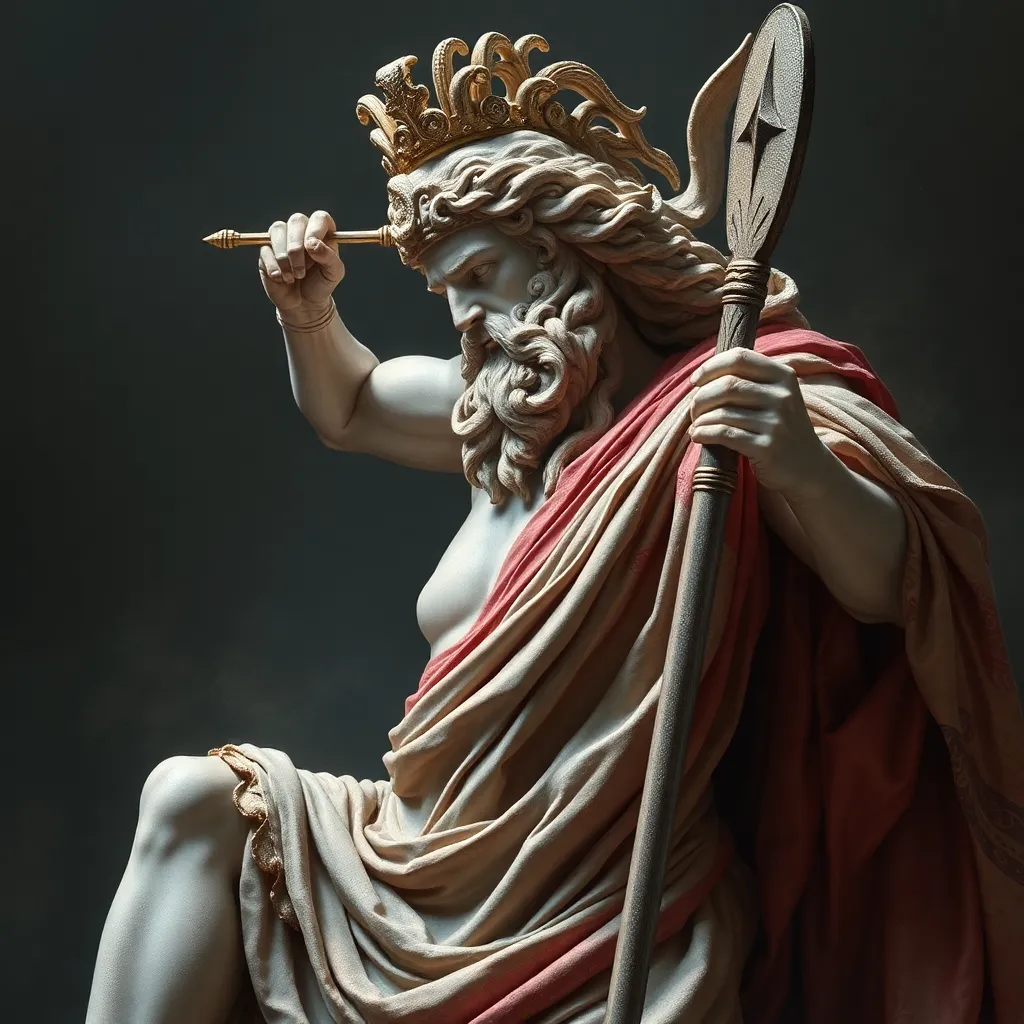
The Role of Perseus in the Development of Greek Mythology
I. Introduction
Greek mythology is a rich tapestry of stories, characters, and themes that have significantly influenced Western culture and literature. It serves not only as a reflection of ancient Greek beliefs and practices but also as a means to understand the complexities of the human experience through divine narratives. Within this intricate framework, Perseus stands out as a pivotal figure whose adventures and legacy have left an indelible mark on the mythology.
This article aims to explore the multifaceted role of Perseus in Greek mythology, examining his origins, heroic feats, and thematic significance. By delving into the life and accomplishments of Perseus, we can appreciate how he embodies the ideals of heroism while also influencing later narratives in literature and art.
II. Historical Context of Greek Mythology
The origins of Greek mythology can be traced back to a blend of ancient oral traditions, cultural practices, and the geographical landscape of Greece, which fostered a diverse array of myths. The evolution of these myths reflects the changing values and beliefs of Greek society over centuries.
A. Origins and evolution of Greek mythology
Greek mythology likely began as oral storytelling, where tales were passed down through generations. As the Greeks formed city-states and established a common culture, these myths began to take written form, solidifying their place in literature.
B. Influence of geography and culture on myth development
The diverse geography of Greece, with its mountains and islands, contributed to the development of localized myths. Each region had its own deities and heroes, leading to a rich interweaving of stories that reflected the values and experiences of the people.
C. The role of oral tradition in shaping mythological narratives
Oral tradition played a crucial role in shaping the narratives of Greek mythology. Stories were often altered and adapted, allowing myths to evolve in response to societal changes and cultural exchanges.
III. The Birth and Early Life of Perseus
Perseus’s origins are steeped in mythological significance, beginning with his lineage. The son of Danaë, a mortal princess, and Zeus, the king of the gods, Perseus’s birth was marked by prophecy and divine intervention.
A. Mythological background of Perseus’s origins
According to the myth, Acrisius, Danaë’s father, received a prophecy that he would be killed by his grandson. To prevent this, he locked Danaë in a bronze chamber. However, Zeus transformed into a shower of gold and visited her, resulting in the birth of Perseus.
B. Key events leading to his rise as a hero
Fearing for his life, Acrisius cast Danaë and Perseus into the sea in a wooden chest. They were rescued by the fisherman Dictys, who raised Perseus as his own. This act of survival set the stage for Perseus’s heroic journey.
C. The significance of his lineage (Danaë and Zeus)
Perseus’s divine heritage is significant as it grants him access to resources and allies that aid him in his quests. His connection to Zeus also places him within the broader narrative of gods interacting with mortals, a common theme in Greek mythology.
IV. Major Adventures and Heroic Feats
Perseus is renowned for several heroic feats that underscore his significance in Greek mythology, most notably his quest to slay the Gorgon Medusa and rescue Andromeda.
A. The quest for the Gorgon’s head
Perseus was tasked with obtaining the head of Medusa, one of the three Gorgons. Medusa’s gaze could turn anyone to stone, making her a formidable foe. Equipped with gifts from the gods, including a reflective shield from Athena and winged sandals from Hermes, Perseus embarked on this perilous quest.
B. The slaying of Medusa: symbolism and impact
The defeat of Medusa is symbolic of overcoming fear and adversity. Perseus used his shield to view Medusa’s reflection, ultimately beheading her without looking directly at her. This act not only showcased his bravery but also marked a turning point in his transformation from boy to hero.
C. Rescue of Andromeda and its implications in mythology
On his return, Perseus encountered Andromeda, who was chained to a rock as a sacrifice to a sea monster. He saved her by slaying the creature, showcasing his role as a protector and hero. This act not only solidified his status as a hero but also laid the groundwork for his eventual marriage to Andromeda.
V. Perseus as a Cultural Hero
Perseus embodies the ideals of heroism and virtue that were highly valued in Greek culture, serving as a model for future generations of heroes.
A. Perseus’s representation of heroism and virtue in Greek culture
His story is one of bravery, intelligence, and divine favor, making him a quintessential hero in Greek mythology. Perseus’s triumphs reflect the values of courage and cleverness, traits admired by the ancient Greeks.
B. Comparison with other Greek heroes (e.g., Heracles, Theseus)
- Heracles: Known for his incredible strength and completing twelve labors, Heracles represents raw physical power.
- Theseus: A prince who embodies intelligence and strategy, Theseus is known for defeating the Minotaur and uniting Athens.
While each hero has unique attributes, Perseus stands out for his combination of divine assistance and personal courage in facing monstrous challenges.
C. The archetype of the hero’s journey in Perseus’s story
Perseus’s narrative is a classic example of the hero’s journey, involving a call to adventure, the acquisition of supernatural aid, the confrontation with evil, and the eventual return home transformed. This structure has influenced countless stories throughout literature.
VI. Influence on Later Mythology and Literature
The legacy of Perseus extends beyond ancient Greece, impacting later mythology, literature, and the arts.
A. Perseus’s legacy in later Greek myths
Perseus’s story is referenced in various other myths, highlighting his role in the pantheon of Greek heroes. His adventures set a precedent for heroism that would inspire subsequent tales.
B. Adaptations and reinterpretations in Roman and modern literature
In Roman mythology, Perseus was often celebrated as a symbol of triumph over chaos. Modern adaptations, such as films and novels, continue to retell his story, adapting it for contemporary audiences while retaining its core themes.
C. Impact on art and popular culture (e.g., film, literature)
- Visual arts: Artists like Caravaggio and Rubens depicted scenes from Perseus’s myths, emphasizing his heroic qualities.
- Film: Movies such as “Clash of the Titans” have reimagined Perseus’s adventures, blending mythology with modern storytelling techniques.
VII. Thematic Elements in Perseus’s Myth
Perseus’s narrative is rich with thematic elements that resonate with universal human experiences.
A. Themes of fate, divine intervention, and destiny
The interplay between fate and free will is central to Perseus’s story. Despite the prophecy surrounding his birth, Perseus exercises agency in his heroic deeds, illustrating the tension between divine influence and personal choice.
B. Exploration of masculinity and heroism in Perseus’s narrative
Perseus’s character embodies traditional notions of masculinity—strength, bravery, and honor. His battles against monsters and protection of Andromeda reflect societal expectations of male heroes in Greek culture.
C. The relationship between humans and gods
Perseus’s interactions with the gods underscore the complexities of divine-human relationships. His success is often attributed to the gifts and guidance of deities like Zeus and Athena, highlighting the theme of divine favor in human endeavors.
VIII. Conclusion
Perseus’s contributions to Greek mythology are profound, offering insights into the values and beliefs of ancient Greek society. His story encapsulates the essence of heroism, courage, and the intricate relationship between mortals and the divine.
The enduring legacy of Perseus is evident in how his myth continues to inspire literature, art, and popular culture. As a cultural hero, he represents the archetype of the hero’s journey, a narrative structure that remains relevant across time and genres.</