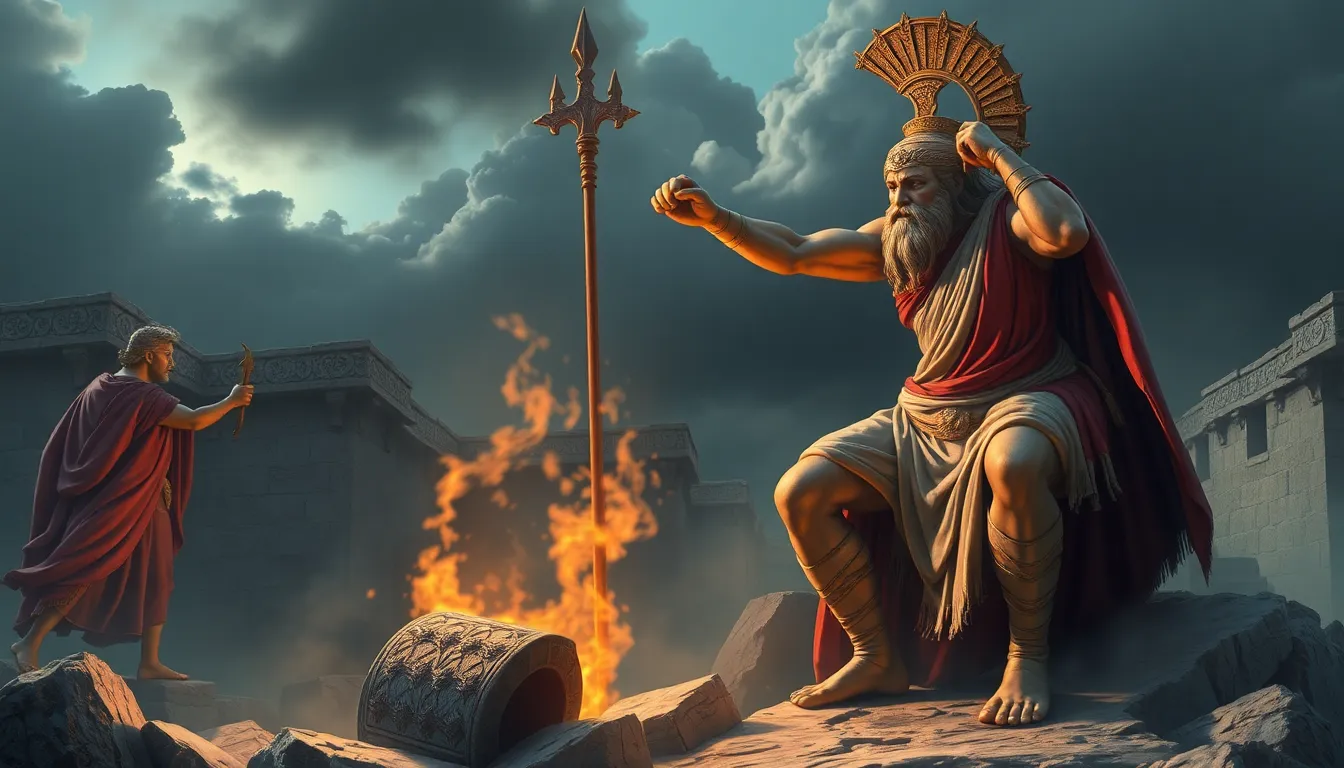
The Role of Sacrifice in the Myths of Perseus
I. Introduction
Perseus is one of the most celebrated heroes in Greek mythology, renowned for his incredible feats and adventures. Born to Danaë and Zeus, his life is marked by extraordinary challenges and triumphs that encapsulate the essence of heroism in ancient Greek culture. A recurring theme in his story is the concept of sacrifice, a notion deeply embedded within the fabric of Greek mythology. Sacrifice, whether personal, familial, or communal, often serves as a catalyst for character development and plot progression.
This article aims to explore the various dimensions of sacrifice in the myths surrounding Perseus, examining how it shapes his journey and the broader narrative of heroism in Greek mythology.
II. The Heroic Journey of Perseus
A. Overview of Perseus’s birth and early life
Perseus’s story begins with a prophecy that foretells his role in the downfall of his grandfather, King Acrisius of Argos. To prevent this fate, Acrisius locks his daughter Danaë in a bronze chamber. However, Zeus, in the form of golden rain, visits Danaë, resulting in the birth of Perseus.
Thus, Perseus enters the world under a cloud of destiny, a child of divine heritage destined for greatness yet marked by the weight of prophecy.
B. Key events leading to his quest
Upon discovering the existence of Perseus, Acrisius sends Danaë and her son out to sea in a wooden chest, hoping to avoid the prophecy. They are rescued by a fisherman named Dictys, who raises Perseus. As he grows, Perseus learns of his destiny and the expectations placed upon him.
The catalyst for his heroic quest occurs when King Polydectes, who desires Danaë, sends Perseus on a seemingly impossible mission: to retrieve the head of Medusa, a Gorgon whose gaze can turn men to stone. This quest not only tests Perseus’s resolve but also forces him to confront his fears and the expectations of those around him.
C. The significance of destiny and fate
Destiny plays a pivotal role in Perseus’s narrative. The prophecies that dictate his life illuminate the tension between free will and fate. Throughout his journey, Perseus grapples with the choices he makes and the sacrifices he must endure, often driven by the inescapable threads of fate woven into his existence.
III. The Concept of Sacrifice in Greek Mythology
A. Definition and examples of sacrifice in myths
In Greek mythology, sacrifice often refers to the act of giving up something valuable for a greater purpose or to appease the gods. Sacrifices can take many forms, including:
- Personal sacrifices, such as enduring pain or hardship.
- Familial sacrifices, where heroes may give up their loved ones or personal desires.
- Ritual sacrifices, where offerings are made to the gods to gain favor or avert disaster.
B. Cultural significance of sacrifice in ancient Greece
For the ancient Greeks, sacrifice was not only a religious obligation but also a means of establishing and maintaining relationships with the divine. It was believed that through sacrifice, mortals could communicate with the gods, seek guidance, or express gratitude. This cultural backdrop emphasizes the importance of sacrifice as a central theme in mythological narratives.
C. How sacrifice shapes hero narratives
In hero narratives, sacrifice often serves as a defining moment that establishes the hero’s character and moral integrity. A hero’s willingness to sacrifice for the greater good underscores their bravery and commitment to their cause. This theme resonates throughout the myths of various heroes, including Perseus, whose journey exemplifies the transformative power of sacrifice.
IV. Perseus and His Sacrificial Choices
A. The quest for Medusa’s head: motivations and risks
Perseus’s quest to obtain Medusa’s head is fraught with danger and moral complexity. Motivated by a desire to prove himself and protect his mother, he embarks on this perilous journey with a mix of hope and trepidation. The risks are high; confronting Medusa means facing death or worse—being turned to stone.
B. The impact of parental expectations and divine intervention
Parental expectations weigh heavily on Perseus throughout his journey. His need to fulfill his destiny and live up to the legacy of both his divine father and mortal mother drives him forward. Additionally, divine intervention plays a crucial role; the gods, particularly Athena and Hermes, provide him with tools and guidance, reflecting the interconnectedness of sacrifice and divine favor in his narrative.
C. Personal sacrifices made by Perseus in his journey
Throughout his quest, Perseus makes several personal sacrifices:
- He sacrifices his safety and comfort, venturing into dangerous territories to confront Medusa.
- He sacrifices time and the comforts of home, leaving behind his loved ones to fulfill his quest.
- He risks his life and the lives of his allies, demonstrating the weight of his responsibilities as a hero.
V. The Role of Sacrifice in Perseus’s Victories
A. Sacrifices made by allies and mentors (e.g., Athena, Hermes)
Perseus’s victories are not his alone; they are bolstered by the sacrifices of his allies and mentors. Athena, who provides him with a reflective shield, and Hermes, who gifts him winged sandals, both sacrifice their resources and time to aid Perseus. Their contributions highlight the collaborative nature of success in heroic narratives.
B. The relationship between sacrifice and triumph in the slaying of Medusa
The slaying of Medusa encapsulates the relationship between sacrifice and triumph. Perseus’s victory is not just a personal achievement but a culmination of the sacrifices made by himself and his allies. The act of cutting off Medusa’s head is both a literal and symbolic sacrifice—representing the overcoming of fear, monstrosity, and the challenges of fate.
C. Consequences of victory and the sacrifices that follow
However, triumph does not come without consequences. The victory over Medusa leads to further challenges, such as the conflict with Polydectes, who poses a new threat to Perseus’s mother. Perseus must again make sacrifices to protect those he loves, illustrating the cyclical nature of sacrifice in his life.
VI. Sacrifice and the Theme of Transformation
A. Transformation of Perseus through sacrifice
Throughout his journey, Perseus undergoes significant transformation, much of which is rooted in the sacrifices he makes. From a young boy destined for obscurity to a celebrated hero, his experiences shape his identity. The act of sacrificing his safety, innocence, and comfort leads to personal growth and maturity.
B. The impact on his identity and heroism
The sacrifices Perseus makes forge his identity as a hero. He learns the values of courage, resilience, and selflessness, which define him throughout his life. This transformation is a key element in the hero’s journey, illustrating how sacrifice is integral to achieving true heroism.
C. Sacrifice as a catalyst for personal growth and change
Ultimately, sacrifice acts as a catalyst for Perseus’s evolution. Each challenge he faces and each sacrifice he endures contribute to his development, enabling him to embrace his role as a hero fully. This theme resonates with the notion that personal growth often comes at a cost, a message that is timeless and relevant.
VII. Legacy of Perseus and the Echo of Sacrifice
A. Influence of Perseus’s story on later myths and literature
The legacy of Perseus extends far beyond his own tale. His story has influenced countless myths, literature, and artistic representations throughout history. The motifs of sacrifice, heroism, and transformation found in his narrative resonate in the stories of other heroes, establishing a framework for understanding heroism in various cultures.
B. The enduring message of sacrifice in heroism
The message of sacrifice persists as a powerful theme in stories of heroism. It serves as a reminder that true greatness often comes with the willingness to give up something of personal value for a greater cause. This lesson continues to inspire contemporary storytelling, reflecting the universal nature of sacrifice in the human experience.
C. Reflection on how sacrifice shapes cultural narratives
Sacrifice shapes cultural narratives by illustrating the complexities of human experience. It highlights the struggles, choices, and values that define individuals and societies