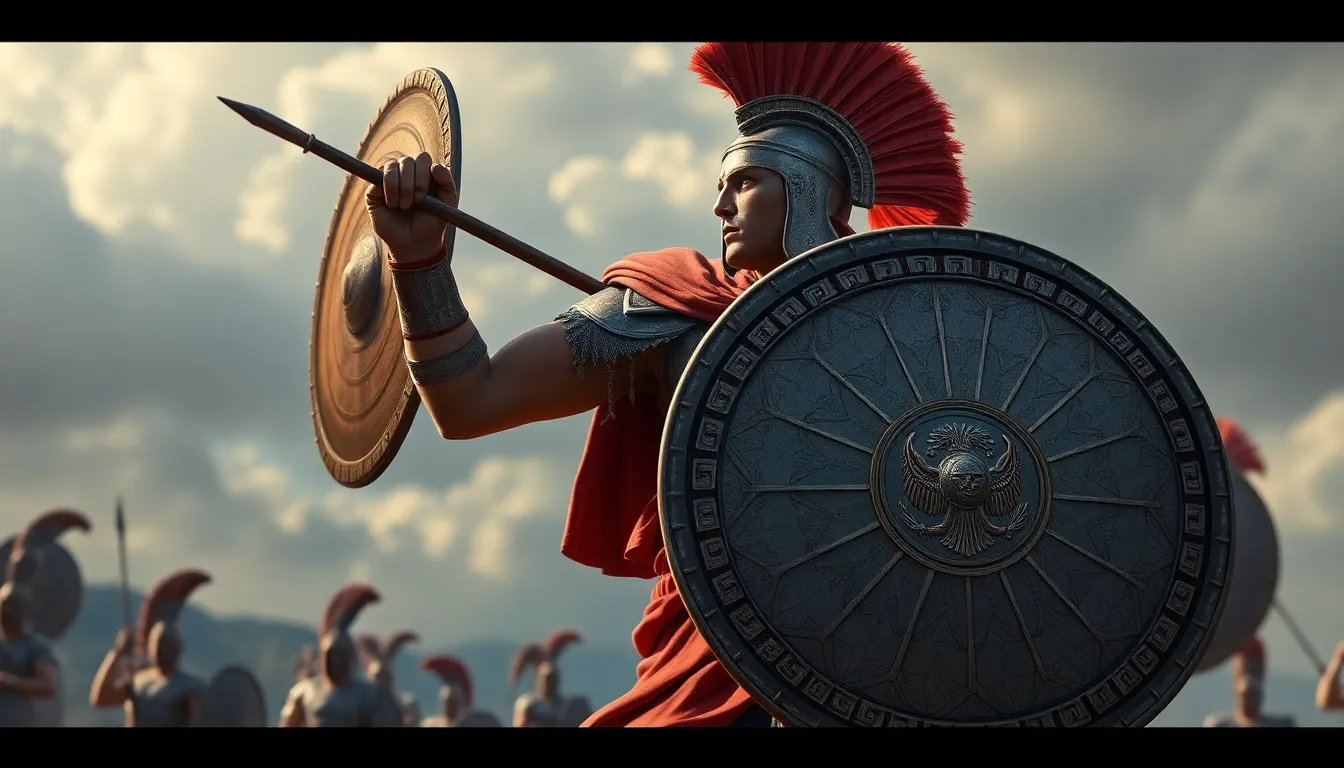
The Role of the Shield Bearer in Greek Warfare: Myths of Protection
I. Introduction
The shield bearer played a crucial role in the context of Greek warfare, serving not only as a combatant but also as a symbol of protection and unity within the phalanx formation. A shield bearer, often a hoplite, was responsible for wielding the heavy shield (aspis) that provided defense for themselves and their comrades. This role was integral to the success of the Greek military strategy, which emphasized the importance of collective defense over individual feats of valor.
The importance of the shield bearer in ancient military formations cannot be overstated. As the backbone of the phalanx, these warriors were trained to work in unison, creating an almost impenetrable wall of shields that could withstand enemy assaults. The myths and cultural significance surrounding shield bearers extend beyond the battlefield, reflecting broader themes of heroism, sacrifice, and communal strength in Greek society.
II. The Historical Context of Greek Warfare
To understand the role of the shield bearer, one must first explore the historical context of Greek warfare. Ancient Greece was composed of numerous city-states, each with its own military organization and strategies. The city-states, or poleis, often engaged in conflicts with one another, leading to the development of distinct military practices.
The evolution of warfare strategies in ancient Greece saw a transition from aristocratic cavalry to the infantry-based hoplite system. This shift was characterized by the rise of the hoplite—a heavily armed foot soldier who fought in close ranks. The emergence of the hoplite was pivotal, as it allowed for the democratization of military service, enabling a broader segment of society to participate in warfare.
The role of the shield bearer, therefore, emerged as a vital component of this new military paradigm, reflecting the collective identity of the hoplite class. Shield bearers were not merely soldiers; they were custodians of their city-state’s honor and security.
III. The Shield Bearer’s Equipment and Training
The equipment used by Greek warriors, particularly the shield known as the aspis, was essential to the shield bearer’s function. The aspis was a large, round shield made of wood and often reinforced with bronze. It was designed to protect the warrior from enemy projectiles and melee attacks, and its size allowed for overlapping defenses with the shields of comrades in formation.
Training regimens for shield bearers in the hoplite phalanx were rigorous, emphasizing both physical conditioning and tactical maneuvers. These training sessions included:
- Drills to practice formation movements and maintain cohesion.
- Exercises to build strength and stamina, essential for bearing the heavy shield during extended battles.
- Combat training to develop skills in close-quarters fighting.
Effective shield bearing required a combination of physical strength and mental discipline. Shield bearers needed to be capable of maintaining their formation under stress, relying on both their training and the trust they had in their fellow soldiers.
IV. The Tactical Importance of Shield Bearers in Battle
The tactical importance of shield bearers in battle is best exemplified by their role in the phalanx formation. This tight, rectangular formation allowed hoplites to present a unified front to the enemy, with overlapping shields providing mutual protection. Shield bearers were crucial in maintaining unit cohesion and ensuring that the formation held together during combat.
Defensive strategies employed by shield bearers included:
- Creating a wall of shields that could absorb enemy charges.
- Using coordinated movements to adjust the formation as needed, responding to changes in the battlefield.
- Utilizing their shields not only for defense but also for offensive strikes against opponents.
Famous battles, such as the Battle of Marathon and the Battle of Thermopylae, highlight the significance of shield bearers. At Marathon, the Athenian hoplites, utilizing their superior tactics and shield formations, achieved a stunning victory against the Persian forces. Similarly, at Thermopylae, the disciplined shield bearers held off a vastly larger army through their strategic use of terrain and formation.
V. Myths and Legends Surrounding Shield Bearers
The cultural narratives surrounding shield bearers extend into Greek mythology and literature, where they are often depicted as heroic figures. In many myths, shield bearers represent not only physical protection but also the ideals of courage and sacrifice. One notable example is the story of Achilles, who, while not a traditional shield bearer, embodies the warrior ethos that valorizes the role of the protector.
In Greek literature, the symbolism of the shield bearer as a protector is prevalent. The shield itself is often described as a source of strength and security, representing the community’s collective will to defend their homeland. Such narratives shaped the perception of shield bearers as paragons of virtue and bravery.
VI. The Shield Bearer in Art and Iconography
The representation of shield bearers in ancient Greek art provides valuable insight into their cultural significance. Numerous pottery pieces and sculptures depict hoplites in battle, showcasing their distinctive armor and shields. These artworks serve not only as historical records but also as reflections of societal values regarding warfare and heroism.
Famous artworks include:
- The Panathenaic amphorae, which often depict scenes of warriors, including shield bearers, in heroic poses.
- The sculptural reliefs from the Parthenon, illustrating battles and the valor of the hoplite class.
- Vases from the Geometric period, which highlight the transition to more complex representations of warriors.
The impact of these representations on the cultural understanding of warfare is profound, solidifying the image of the shield bearer as a central figure in the collective memory of Greek civilization.
VII. The Legacy of the Shield Bearer in Modern Culture
The legacy of the shield bearer extends into modern culture, influencing contemporary depictions of warriors in literature and film. The archetype of the shield bearer persists, often symbolizing protection, honor, and sacrifice in various narratives.
In modern society, the shield bearer serves as a metaphor for those who protect others, from military personnel to first responders. The valor associated with the shield bearer resonates with contemporary audiences, highlighting the timeless nature of these themes.
Moreover, ancient practices and beliefs continue to inform modern military and protective roles, with the camaraderie and discipline of the hoplite phalanx echoed in modern military training. The shield bearer remains a symbol of unity and collective defense, reminding us of the importance of cooperation in the face of adversity.
VIII. Conclusion
In summary, the role of the shield bearer in Greek warfare was not merely tactical but also deeply intertwined with the cultural myths of protection and heroism. Understanding this historical role enriches our perception of ancient Greek society and its values, shedding light on how these ideals continue to resonate in modern culture.
The enduring legacy of the shield bearer serves as a reminder of the importance of collective strength and the sacrifices made by those who protect their communities. As we reflect on the myths and historical significance of the shield bearer, we recognize their place in both history and the cultural narratives that shape our understanding of courage and protection.