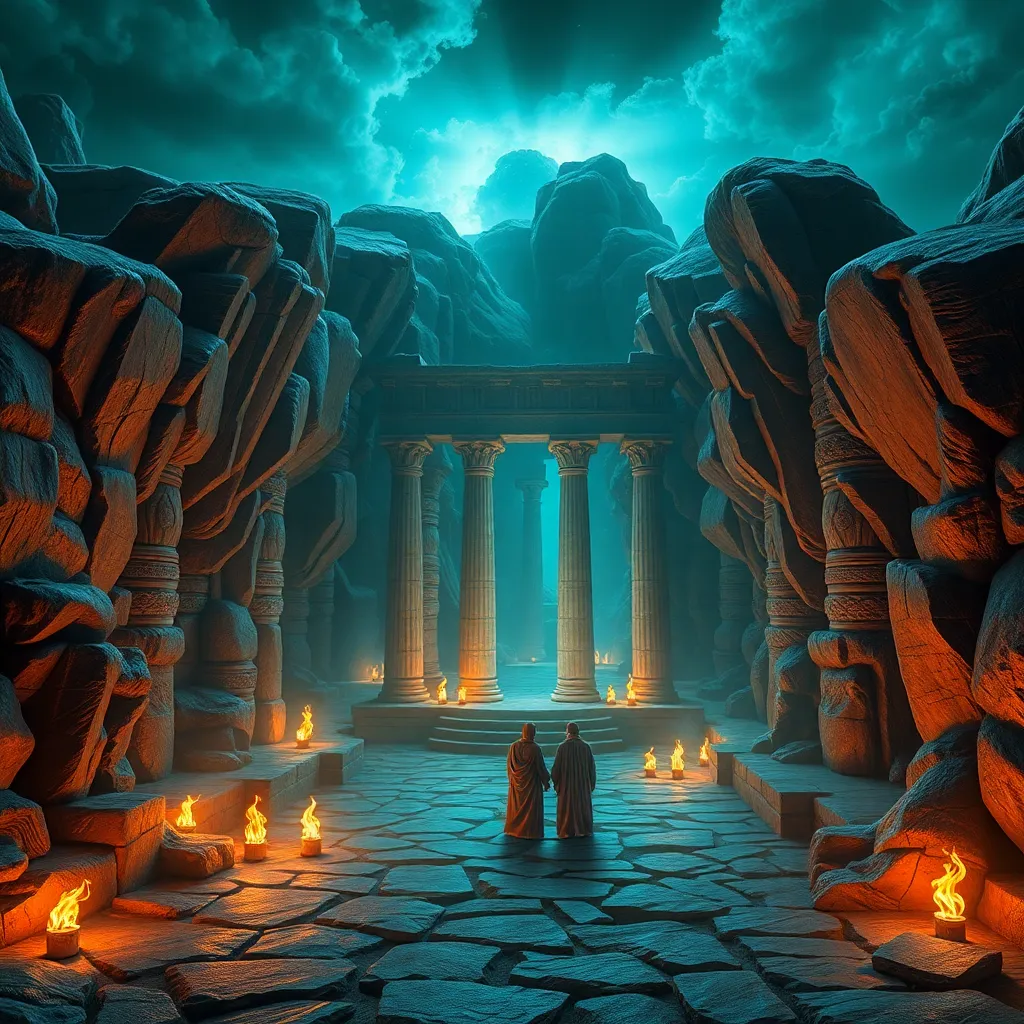
The Role of the Underworld in the Heroic Journeys of Greek Myths
I. Introduction
Greek mythology is rich with tales of heroic journeys, where protagonists face tremendous challenges, undertake quests, and confront their own limitations. These narratives often incorporate the Underworld, a pivotal realm that shapes the hero’s path and character. The Underworld serves not only as a destination but also as a powerful symbol of the trials and transformations that heroes must undergo.
This article explores the significance of the Underworld in the context of heroic journeys in Greek myths, highlighting its role as a testing ground, the symbolic nature of journeys to this realm, and the profound impact it has on the heroes and their narratives.
II. The Concept of the Underworld in Greek Mythology
The Underworld, known as Hades, is a complex realm that serves as the final resting place for souls. It is divided into various sections, including:
- Asphodel Meadows: A neutral zone for souls who led ordinary lives.
- Elysium: A paradise for the virtuous and heroic souls.
- Tartarus: A deep abyss used for the punishment of the wicked.
Key figures associated with the Underworld include:
- Hades: The god of the Underworld, ruling over the dead.
- Persephone: The queen of the Underworld, representing the duality of life and death.
- Charon: The ferryman who transports souls across the river Styx.
The Underworld is not merely a place of death; it is also a domain of judgment and transformation, where souls are held accountable for their earthly actions and can experience redemption or punishment.
III. The Underworld as a Testing Ground
In many Greek myths, the Underworld serves as a critical testing ground for heroes, challenging their resolve and revealing their true character. The trials faced in this realm often lead to significant personal growth and self-discovery.
Examples of heroes who faced trials in the Underworld include:
- Orpheus: His journey to retrieve his beloved Eurydice from death illustrates the power of love and the limits of human will.
- Heracles: One of his Twelve Labors involved descending into the Underworld to capture Cerberus, the three-headed dog.
These experiences profoundly shape the heroes’ identities, altering their destinies and reinforcing their heroic qualities such as bravery, loyalty, and perseverance.
IV. The Journey to the Underworld
The descent to the Underworld is a common motif in Greek mythology, often laden with symbolic meanings. Themes such as death and rebirth, knowledge, and enlightenment play crucial roles in these narratives.
Notable mythological journeys to the Underworld include:
- Odysseus: In “The Odyssey,” he journeys to the Underworld to seek guidance from the prophet Tiresias.
- Theseus: His descent alongside Pirithous illustrates the dangers of attempting to defy the natural order.
These journeys not only highlight the heroes’ courage but also serve as transformative experiences, leading to greater understanding and insight.
V. Encounters with the Dead
Interactions with deceased figures in the Underworld hold significant meaning for heroes, often providing valuable insights and prophecies that influence their future actions.
Some notable encounters include:
- Odysseus and Tiresias: Tiresias offers crucial advice on how to return home safely.
- Orpheus and Eurydice: His tragic attempt to reclaim her underscores the themes of love and loss.
These interactions not only enrich the narrative but also serve as moral lessons, impacting the heroes’ choices and their ultimate paths.
VI. The Role of Women in the Underworld
Female figures in the Underworld, such as Persephone and Hecate, play crucial roles that influence the dynamics of heroism and the narrative’s direction.
Persephone, as the queen of the Underworld, embodies the balance between life and death, while Hecate symbolizes the mysteries of the night and magic. Their presence in these myths often reflects the complexities of gender roles and the power of women in shaping heroic journeys.
Case studies of female characters influencing heroic journeys include:
- Persephone: Her dual existence in the Underworld and the surface world represents the eternal cycle of life.
- Hecate: Often associated with magic and the crossroads, she provides guidance to heroes like Circe.
These characters demonstrate that women in Greek mythology are not merely passive figures; they actively shape the narratives and the journeys of the heroes.
VII. The Underworld’s Impact on Heroic Outcomes
The experiences heroes undergo in the Underworld significantly contribute to their ultimate fates. The duality of life and death serves as a powerful narrative device, emphasizing the cyclical nature of existence.
Heroes who confront the Underworld often emerge with newfound wisdom or face dire consequences if they fail the tests set before them. This cyclical nature reinforces the idea that life and death are intertwined, and understanding one often leads to a deeper comprehension of the other.
Reflection on these themes reveals the broader implications of heroism in Greek mythology, suggesting that the journey is as crucial as the endpoint.
VIII. Conclusion
In summary, the Underworld plays an integral role in the heroic journeys of Greek myths, serving as a site of trials, transformation, and profound encounters. From testing heroes’ resolve to providing critical insights, the Underworld enriches the narratives and underscores the cyclical nature of life and death.
These myths continue to resonate in modern culture, offering timeless lessons about personal growth and the human experience. The Underworld, as a metaphor, invites reflection on our own journeys of transformation and the challenges we face.