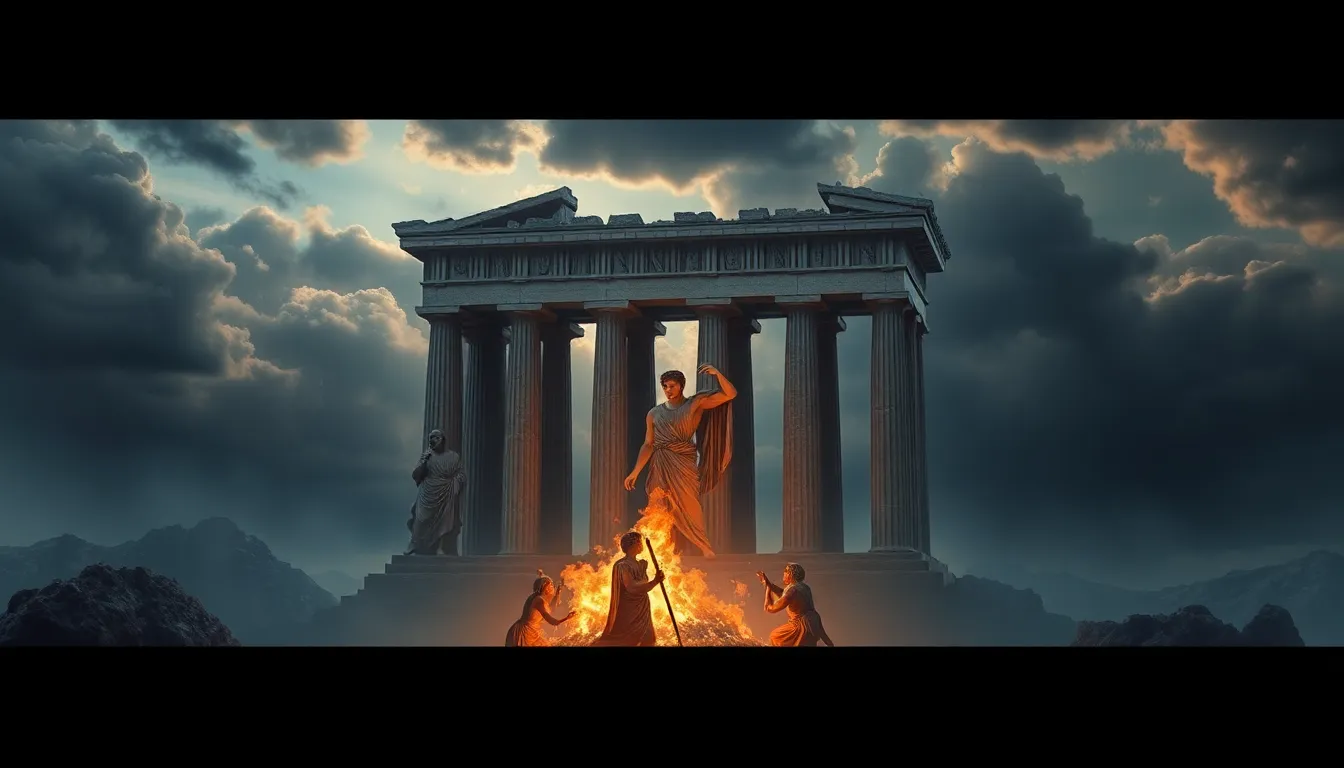
The Sacrifices of the Titans: A Study of Greek Mythology
I. Introduction
Greek mythology is a rich tapestry of stories that have shaped the cultural and spiritual landscape of ancient Greece and continue to influence modern thought. At the heart of these narratives are the Titans, primordial deities who predate the Olympian gods and played crucial roles in the formation of the world and the destinies of mankind.
This article aims to explore the sacrifices made by the Titans, examining their actions and the consequences that followed. By understanding these sacrifices, we can gain deeper insights into the themes of power, rebellion, and the human condition as reflected in Greek mythology.
II. The Titans: Origin and Characteristics
The Titans were the descendants of Uranus (Sky) and Gaia (Earth), forming a group of powerful deities who ruled during the Golden Age. They are often depicted as colossal figures embodying various aspects of the natural world and human experience.
A. Definition and lineage of the Titans
In Greek mythology, the Titans are the twelve original deities who were born from Gaia and Uranus. Their lineage is significant as it establishes their connection to both the earth and the heavens. The most notable Titans include:
- Cronus: The leader of the Titans, known for his role in the overthrow of Uranus.
- Rhea: The mother of the Olympian gods, wife of Cronus.
- Oceanus: The Titan of the ocean, representing the vast waters.
- Hyperion: The Titan of light, often associated with the sun.
- Prometheus: The Titan known for his intelligence and foresight.
B. Key Titans and their attributes
Each Titan embodies specific characteristics and domains, which play significant roles in various myths. For example:
- Prometheus is often associated with wisdom and the act of creation.
- Cronus is linked with time and the cyclical nature of existence.
- Oceanus represents the life-giving and destructive aspects of water.
C. The Titans’ relationship with the Olympian gods
The Titans’ reign came to an end with the rise of the Olympian gods, led by Zeus, the son of Cronus. This transition marked a significant shift in power and mythology, as the Olympians overthrew the Titans in a great battle known as the Titanomachy. This conflict not only defined the hierarchy of deities but also established the theme of generational conflict that permeates Greek myths.
III. The Concept of Sacrifice in Greek Mythology
To understand the sacrifices of the Titans, one must first grasp the broader concept of sacrifice in ancient Greek culture. Sacrifice is not merely an act of offering; it embodies the complex relationship between mortals and deities, often serving as a means of appeasing the gods or securing favor.
A. Understanding sacrifice in ancient Greek culture
In ancient Greece, sacrifices were integral to religious practices, often involving the offering of animals, food, or libations to the gods. These rituals were believed to maintain harmony between the divine and human realms.
B. Different forms of sacrifice: literal and metaphorical
While literal sacrifices involved physical offerings, metaphorical sacrifices pertain to personal choices and actions that lead to significant consequences. The Titans exemplified both forms through their deeds, which often required them to relinquish something of great value.
C. The importance of sacrifice in mythological storytelling
Mythological stories frequently highlight the theme of sacrifice, illustrating how characters are willing to give up personal desires for the greater good or face dire consequences for their actions. This theme resonates with human experiences, making these tales timeless and relatable.
IV. Major Sacrifices of the Titans
Two of the most significant sacrifices made by Titans are those of Prometheus and Cronus, each reflecting different aspects of sacrifice and its repercussions.
A. Prometheus: The sacrifice of foresight and rebellion
Prometheus is perhaps the most famous Titan associated with sacrifice. His story is one of defiance against the divine order and a profound commitment to humanity.
1. Gift of fire to humanity
Prometheus is credited with stealing fire from the gods and giving it to mankind, an act that symbolizes knowledge, enlightenment, and the power of creation. This gift allowed humans to develop civilization, but it also angered Zeus, the king of the gods.
2. Consequences of his actions
As punishment for his rebellion, Zeus ordered Prometheus to be bound to a rock, where an eagle would eat his liver daily, only for it to regenerate each night. This eternal torment highlights the theme of sacrifice, as Prometheus endured immense suffering for the sake of humanity’s advancement.
B. Cronus: The sacrifice of power and family
Cronus, the leader of the Titans, made a different kind of sacrifice—one rooted in fear and paranoia. His actions set the stage for his downfall.
1. Fear of being overthrown
After receiving a prophecy that one of his children would dethrone him, Cronus chose to swallow each of his offspring to prevent this fate. This drastic measure reflects his ultimate sacrifice: the loss of his family and the love of his children for the sake of preserving his power.
2. Actions taken against his own children
Cronus’s sacrifices led to a cycle of violence and betrayal. Rhea, his wife, saved their youngest child, Zeus, by hiding him and tricking Cronus into swallowing a stone instead. This act of defiance initiated the eventual rebellion against Cronus, culminating in the Titanomachy.
V. The Aftermath of Titan Sacrifices
The sacrifices made by Prometheus and Cronus had profound consequences not only for the Titans themselves but also for the entire pantheon of Greek mythology.
A. The rise of the Olympian gods
With the defeat of the Titans in the Titanomachy, the Olympian gods ascended to power, marking a new era in mythology. Zeus and his siblings established a new order, symbolizing a shift from the old ways of the Titans to a more dynamic and hierarchical divine structure.
B. The fall of the Titans and their enduring legacy
Though defeated, the Titans’ influence persisted in various forms within Greek mythology. Their stories serve as cautionary tales about the consequences of power struggles, rebellion, and the sacrifices one makes to uphold or challenge authority.
C. How sacrifices influenced subsequent myths and stories
The sacrifices of the Titans laid the groundwork for future myths, illustrating themes of conflict, destiny, and the human condition. These narratives continued to evolve, reflecting societal values and challenges throughout history.
VI. Symbolism and Themes in Titan Sacrifices
Examining the sacrifices of the Titans reveals deeper themes and symbols that resonate with the human experience.
A. Exploration of themes such as sacrifice, power, and rebellion
The sacrifices made by Prometheus and Cronus encapsulate the tension between power and rebellion. Prometheus’s defiance represents the struggle for knowledge and freedom, while Cronus’s actions illustrate the destructive nature of power and fear.
B. Symbolism of the Titans in relation to human experiences
The Titans symbolize the primal forces of nature and human emotion, serving as archetypes for the conflicts that define the human experience—between ambition and morality, love and betrayal, and freedom and oppression.
C. The moral lessons derived from their sacrifices
Through their stories, the Titans impart crucial moral lessons about the consequences of one’s actions. Prometheus teaches the value of sacrifice for the greater good, while Cronus illustrates how fear can lead to self-destruction.