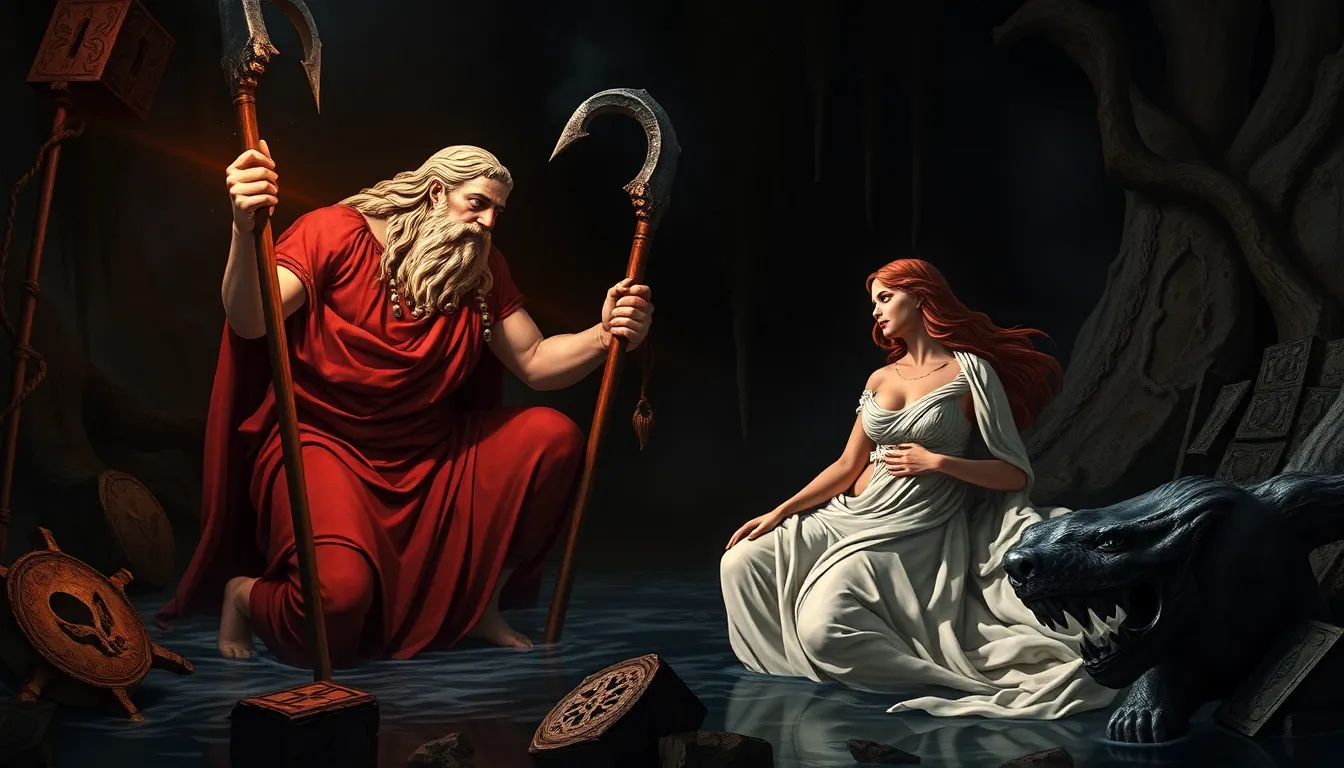
The Sacrificial Myths of the Underworld: Tales of Charon and Persephone
I. Introduction
Greek mythology is a rich tapestry of stories that explore the complexities of existence, morality, and the human condition. It served not only as a form of entertainment but also as a means of explaining natural phenomena and human experiences. Among the most compelling tales are those of Charon and Persephone, two central figures in the myths surrounding the Underworld.
Charon, the stern ferryman of the dead, and Persephone, the dual goddess of spring and queen of the Underworld, embody the themes of life, death, and sacrifice. Their narratives intertwine to reveal profound insights into the nature of existence and the inevitable cycle of life and death.
This article will explore the sacrificial elements of their stories and the significance of their roles within the context of Greek mythology.
II. Understanding the Underworld in Greek Mythology
The Underworld in Greek mythology, known as Hades, is a complex realm that serves as the final destination for souls after death. It is not merely a place of torment but also a domain of reflection, where the dead reside and are judged based on their earthly lives.
Key aspects of the Underworld include:
- The River Styx: A central feature, the Styx serves as the boundary between the living world and the Underworld. Souls must cross it to enter Hades.
- Judges of the Dead: Figures like Minos, Rhadamanthus, and Aeacus determine the fate of souls, deciding who deserves reward and who faces punishment.
- Fields of Asphodel: A neutral area where most souls reside, reflecting a life that was neither exceptionally good nor evil.
- Tartarus: A deep abyss used as a dungeon of torment for the wicked, often associated with punishment for the most heinous crimes.
The Underworld encapsulates the Greek belief in an afterlife, where the dead continue to exist in a different form, and it plays a crucial role in the overarching narratives of their myths.
III. Charon: The Ferryman of Souls
Charon is depicted as a grim figure, typically portrayed as an old man with a rugged appearance, often carrying a staff. He is the ferryman who transports the souls of the deceased across the River Styx. His origins can be traced back to ancient Greek texts, where he is mentioned in works such as Homer’s “Odyssey.”
Charon’s primary role is to ensure that souls reach their final resting place. Each soul must pay Charon a fare, traditionally a coin placed in the mouth of the deceased. This payment underscores the significance of his role as a gatekeeper of the afterlife.
His symbolism extends beyond mere transportation; Charon represents:
- Guidance: Charon serves as a guide through the transition from life to death, emphasizing the journey every soul must undertake.
- Separation: He symbolizes the separation between the living and the dead, marking the end of earthly existence.
- Necessity: Charon’s role is essential for the souls’ passage, emphasizing the inevitability of death.
IV. Persephone: The Queen of the Underworld
Persephone embodies duality, representing both the vibrant goddess of spring and the somber queen of the Underworld. Her story is one of transformation and sacrifice, marked by her abduction by Hades, the god of the Underworld.
The myth of Persephone’s abduction is central to her identity:
- Abduction: Hades takes Persephone from her mother, Demeter, while she is gathering flowers, symbolizing the abruptness of death.
- Demeter’s Grief: In her sorrow, Demeter, the goddess of agriculture, causes the earth to wither, leading to the first winter.
- The Compromise: To appease both Hades and Demeter, Persephone spends half the year in the Underworld and half on Earth, marking the changing seasons.
Persephone’s annual return to the surface symbolizes rebirth and renewal, illustrating the cyclical nature of life and death. Her story reflects the essential theme of sacrifice, as she must leave her mother and the world of the living for part of each year.
V. The Sacrificial Elements in Their Myths
The myths of Charon and Persephone are steeped in themes of sacrifice, revealing the complexities of their characters and the narratives surrounding them.
Both figures embody sacrifices that resonate throughout their stories:
- Charon’s Sacrifice: Charon sacrifices his own comfort and well-being as he diligently ferries souls, living in the shadows of the Underworld. His existence is one of solitude and duty.
- Persephone’s Cycle: Persephone’s seasonal journey is a form of sacrifice. Each year, she relinquishes her time in the vibrant world above to fulfill her role as queen, which represents a loss of innocence and freedom.
The implications of these sacrifices highlight the interplay between life and death, as well as the necessity of transition and change in the cycle of existence.
VI. Thematic Connections Between Charon and Persephone
The narratives of Charon and Persephone are interconnected, reflecting broader themes of Greek mythology. Their stories explore the profound relationship between life, death, and rebirth, emphasizing the cyclical nature of existence.
Key thematic connections include:
- Interplay of Life and Death: Charon’s role as the ferryman underscores the inevitability of death, while Persephone’s duality illustrates the ongoing cycle of life.
- Individual Myths Within the Larger Narrative: Both Charon and Persephone contribute to the overarching narrative of the Underworld, representing different facets of the human experience.
- Symbolic Interpretations: Their interactions symbolize the acceptance of death and the understanding that life is transient, ultimately leading to rebirth and renewal.
VII. Cultural Impact and Legacy
The influence of Charon and Persephone extends beyond ancient mythology, permeating literature, art, and modern interpretations. Their stories have inspired countless works throughout history, reflecting the enduring nature of their themes.
In literature and art, Charon and Persephone have appeared in various forms:
- Literature: Their stories have been retold in numerous literary works, from classical texts to modern novels, often exploring themes of love, loss, and the afterlife.
- Visual Arts: Artists have depicted their images in paintings and sculptures, capturing the emotional depth of their narratives.
- Modern Adaptations: Contemporary interpretations often explore the psychological and emotional aspects of their myths, making them relevant to modern audiences.
Their myths continue to resonate today, serving as a lens through which we can examine contemporary discussions of sacrifice, mortality, and the human condition.
VIII. Conclusion
In summary, the sacrificial myths of Charon and Persephone reveal profound insights into the nature of existence and the complexities of life and death. Through their narratives, we explore themes of transition, sacrifice, and the cyclical nature of life.
Understanding the significance of Charon and Persephone not only enriches our appreciation of Greek mythology but also invites deeper reflection on the themes of sacrifice that resonate throughout human history. Their stories remind us of the intricate connections between life, death, and rebirth, emphasizing that every ending is also a new beginning.