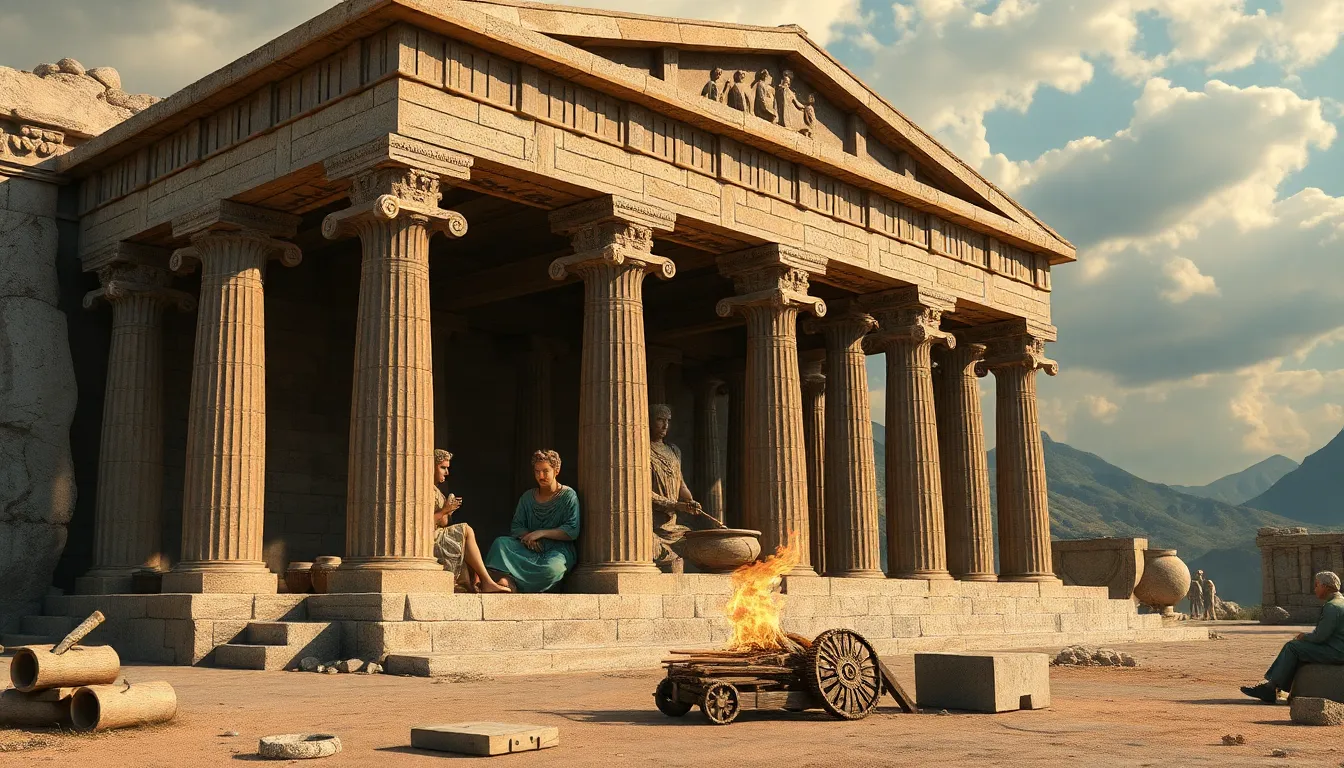
The Sacrificial Offerings of Ancient Greece: A Cultural Exploration
I. Introduction
In Ancient Greece, sacrificial offerings played a central role in the cultural and religious practices of the time. These rituals were not merely acts of devotion; they were deeply intertwined with the social, political, and spiritual fabric of Greek life. Sacrifices were a means of communicating with the divine, seeking favor, and expressing gratitude. This article aims to explore the significance of sacrificial offerings in Ancient Greece, highlighting their historical context, types, rituals, symbolism, regional variations, and eventual decline.
II. Historical Context of Sacrificial Practices
A. Origins of sacrificial offerings in ancient Greek religion
The practice of sacrifice in Ancient Greece can be traced back to prehistoric times. Early Greek religion revolved around animism and the worship of natural forces. As societies evolved, so did their religious practices. Sacrifices became formalized rituals aimed at honoring gods and ensuring their favor. The earliest records of these practices can be found in Homer’s epics, where offerings to the gods are frequent.

B. Evolution of rituals from the Dark Ages to the Classical period
During the Dark Ages (circa 1100-800 BCE), many aspects of Mycenaean civilization were lost, including complex religious practices. However, the revival of trade and communication in the subsequent Archaic period led to the re-establishment of sacrificial rituals. By the Classical period (5th-4th century BCE), sacrifices had become elaborate events involving the entire community, often accompanying significant festivals.
C. The role of sacrifices in Greek mythology
In Greek mythology, sacrifices were often depicted as essential elements in the narratives of gods and heroes. Myths frequently illustrate how sacrifices were performed to appease gods after transgressions or to celebrate victories. For instance, the sacrifice of Iphigenia by Agamemnon is a poignant example of the intertwining of myth and ritual, emphasizing the themes of duty, honor, and divine will.
III. Types of Sacrificial Offerings
A. Animal sacrifices: Common species and their significance
Animal sacrifices were the most prominent form of offerings in Ancient Greece. Various animals were selected based on the deity being honored:
- Sheep: Commonly sacrificed to gods like Hermes and Apollo.
- Goats: Often associated with Dionysus, representing fertility and abundance.
- Cattle: Reserved for significant occasions and major deities like Zeus and Hera.
- Pigs: Frequently offered in agricultural rituals and to goddess Demeter.
B. Grain and libation offerings: Importance in rituals
Besides animal sacrifices, offerings of grain and libations (liquid offerings, often wine or oil) were crucial in rituals. Grain was a symbol of sustenance and fertility, often used in agricultural festivals. Libations were poured onto the ground or altar as an act of devotion, representing a gift to the gods.
C. Unique offerings: Special cases and exceptions
Some sacrifices were unique to specific occasions or deities. For example:
- Human sacrifices: Rare but noted in extreme circumstances, such as during wars or disasters, aiming to appease vengeful gods.
- Votive offerings: Objects or symbols dedicated to gods as thanks for favors received.
IV. Rituals and Ceremonies Surrounding Sacrifices
A. Preparations and purification rites
The process of sacrifice began long before the actual offering. Preparations included the selection of the animal, ritual purification of participants, and the gathering of the community. Purification rites often involved washing, fasting, and sacred processions, underscoring the importance of cleanliness and spiritual readiness.
B. The role of priests and participants in rituals
Priests held a central role in sacrificial rituals, acting as intermediaries between the gods and the people. They were responsible for conducting the ceremonies, including:
- Reciting prayers and hymns.
- Performing the actual sacrifice.
- Interpreting omens and signs from the gods.
Community participation was also essential, as sacrifices were often public events that reinforced social bonds and collective identity.
C. Key festivals and their associated sacrifices (e.g., Panathenaea, Dionysia)
Several key festivals in Ancient Greece were characterized by grand sacrificial offerings:
- Panathenaea: A major festival in Athens celebrating Athena, featuring a grand procession and the sacrifice of numerous animals.
- Dionysia: A festival dedicated to Dionysus that included dramatic performances and the sacrifice of goats, symbolizing fertility and the cycle of life.
- Olympic Games: Apart from athletic competitions, sacrifices were offered to Zeus, celebrating divine favor and community achievement.
V. Symbolism and Meaning of Sacrifices
A. The relationship between humans and gods
In Ancient Greece, sacrifices symbolized the reciprocal relationship between humans and the divine. Offerings were seen as a way to maintain harmony with the gods, ensuring their protection and favor in various aspects of life, from agriculture to warfare.
B. Sacrifice as a means of seeking favor or atonement
People offered sacrifices to seek favor from the gods or atone for wrongdoings. For example, after a defeat in battle, communities would conduct sacrifices to appease deities and restore equilibrium. This practice illustrates the Greek understanding of moral and cosmic balance.
C. Symbolic interpretations of offerings in art and literature
Art and literature from Ancient Greece often depict sacrificial scenes, conveying deeper meanings. For instance:
- Vase paintings often illustrate the ritual act of sacrifice, highlighting its communal nature.
- Literary works, such as the tragedies of Aeschylus and Sophocles, explore the themes of sacrifice and divine justice, emphasizing the moral implications of these acts.
VI. Regional Variations in Sacrificial Practices
A. Differences between city-states (Athens vs. Sparta)
While sacrificial practices were widespread, there were notable differences between city-states. Athens, with its rich cultural life, emphasized public rituals and festivals, while Sparta focused on military sacrifices, reflecting its austere and militaristic society.
B. Local deities and their specific rituals
Different regions of Greece honored local deities with unique sacrificial practices. For example:
- Demeter was particularly honored in agricultural communities with harvest sacrifices.
- Poseidon was worshipped with marine sacrifices in coastal areas.
C. Influence of geography on sacrificial offerings
The diverse geography of Greece influenced the types of offerings made. Mountainous regions might emphasize certain animals or grains, while coastal areas could include fish and marine life in their rituals. This geographical variation enriched the tapestry of Greek sacrificial practices.
VII. The Decline of Sacrificial Offerings
A. Impact of philosophical thought on sacrificial practices
As philosophical thought evolved in Ancient Greece, particularly with the rise of figures like Socrates, Plato, and Aristotle, the emphasis on reason and ethics began to challenge traditional sacrificial practices. Philosophers questioned the moral implications of sacrifice and sought alternative means of understanding the divine.
B. The rise of Christianity and its effect on pagan rituals
The advent of Christianity in the 1st century CE marked a significant shift in religious practices. The new faith rejected pagan rituals, including sacrifices, leading to their decline. Early Christians viewed the sacrificial system of the Greeks as incompatible with their beliefs about the nature of God and salvation.
C. Modern interpretations and the legacy of Greek sacrifices
Today, the legacy of Greek sacrificial practices continues to influence various aspects of culture, including art, literature, and theater. Modern interpretations often explore themes of sacrifice as a metaphor for human experience, reflecting on the enduring significance of these ancient rituals in contemporary society.
VIII. Conclusion
A. Summary of key insights from the exploration of sacrificial offerings
This exploration of sacrificial offerings in Ancient Greece reveals their complexity and significance within the cultural and religious landscape. From their origins to their decline, sacrifices served as a vital means of communication between humans and the divine.
B. Reflection on the cultural significance of sacrifices in Ancient Greece</h3