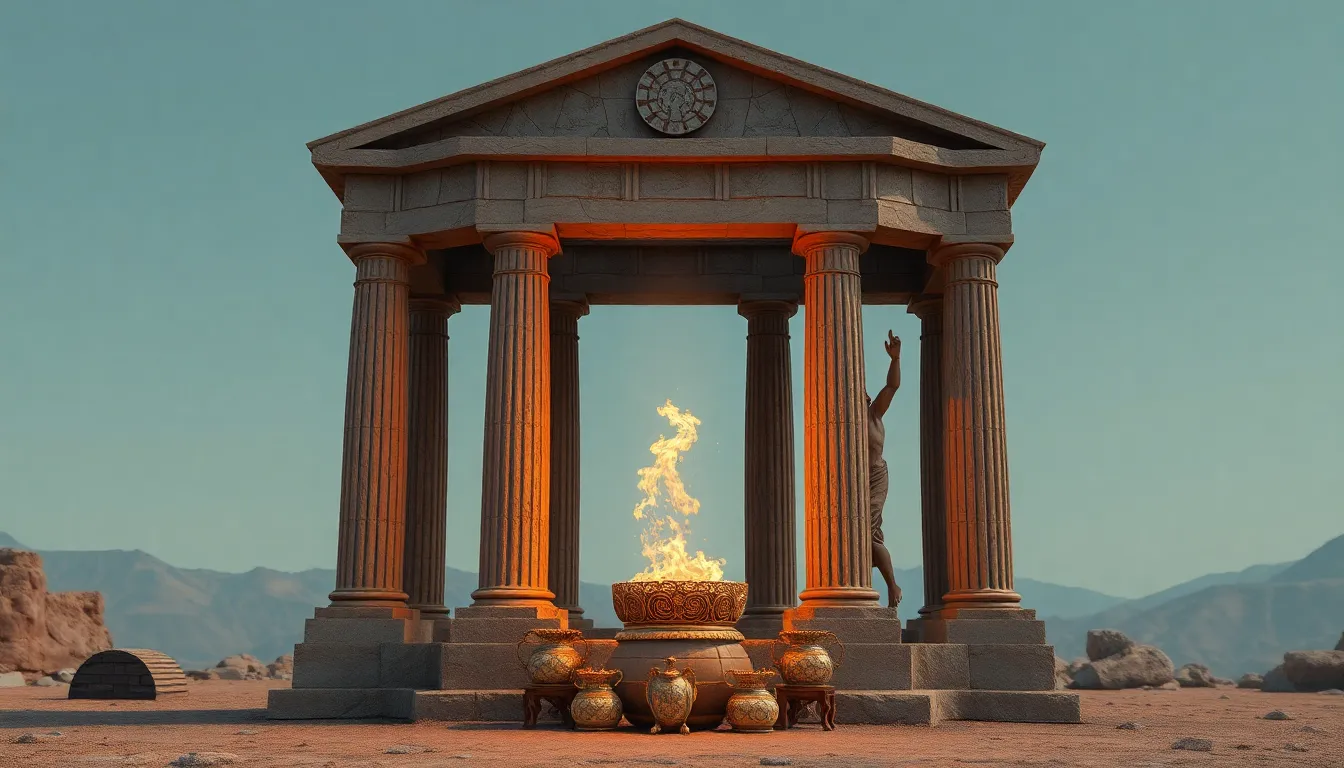
The Sacrificial Offerings of the Ancient Greeks: A Study of Rituals
I. Introduction
In ancient Greek culture, sacrificial offerings were a fundamental aspect of religious practices. These rituals, which involved the offering of animals, food, and other goods to the gods, served as a means of communication and connection between mortals and the divine.
The importance of rituals in Greek religious practices cannot be overstated; they were seen as vital to maintaining the favor of the gods and ensuring prosperity and well-being for the community. This article will explore the historical context, types, roles, symbolism, and rituals surrounding sacrificial offerings in ancient Greece, shedding light on their significance in Greek society.
II. Historical Context of Greek Sacrificial Practices
The practice of sacrifice in ancient Greece has a deep history that evolved significantly from the Mycenaean period to the Classical era. During the Mycenaean period (circa 1600-1100 BCE), evidence suggests that sacrifices were performed as part of elaborate ceremonies, often in connection with funerary rites.
As Greek society transitioned to the Classical era (5th-4th centuries BCE), the nature of sacrifices became more structured and ritualized, influenced by geography and local customs. Different regions of Greece had their unique practices, reflecting the local deities and agricultural cycles.
Key historical texts, such as Homer’s “Iliad” and “Odyssey,” as well as Hesiod’s “Theogony,” provide insights into the sacrificial practices of the time. Archaeological findings, including altars and offerings at sacred sites, further illuminate how deeply ingrained these rituals were in Greek life.
III. Types of Sacrificial Offerings
There were various types of sacrificial offerings in ancient Greece, each with its own significance and purpose:
- Animal Sacrifices: The most common form of sacrifice involved the offering of animals, such as sheep, goats, and cattle. Each type of animal held specific meanings and was associated with different deities.
- Offerings of Food, Drink, and Other Goods: In addition to animal sacrifices, the Greeks offered fruits, grains, wine, and other goods to the gods. These offerings often accompanied animal sacrifices and were seen as vital for maintaining good relations with the divine.
- Human Sacrifice: Although rare, there are instances in ancient Greek literature and mythology that describe human sacrifices. Such acts were often viewed as desperate measures in times of crisis, and the cultural perceptions surrounding them were complex and varied.
IV. The Role of Sacrifices in Religious Worship
Sacrifices played a crucial role in the religious worship of the ancient Greeks, establishing a direct connection between the people and the pantheon of gods.
The priests and priestesses were central figures in sacrificial rituals. They were responsible for performing the sacrifices, interpreting the will of the gods, and ensuring that the rituals were carried out according to tradition.
Festivals often included communal sacrifices, which reinforced social bonds within the community. These events were not merely religious observances; they were social gatherings that fostered a sense of unity and identity among the participants.
V. Symbolism and Meaning Behind Sacrificial Offerings
The symbolism of sacrificial offerings in ancient Greece is profound, with many layers of meaning attached to the act of sacrifice.
- The Symbolism of Blood and Life: Blood was seen as a vital essence, representing life itself. The act of sacrificing an animal was viewed as a way to transfer life from the offering to the gods.
- Gift-Giving to the Gods: Sacrifices were considered gifts to the deities, an expression of gratitude for blessings received and a means to secure future favors. The concept of reciprocity was crucial in this relationship.
- Seeking Favor and Averting Disaster: Sacrifices were often made in times of need, whether to seek divine favor for a good harvest or to avert disaster in times of crisis. This aspect highlights the pragmatic nature of Greek religious practices.
VI. The Ritual Process of Sacrificial Offerings
The ritual process of sacrificial offerings involved several distinct steps, reflecting the seriousness and sanctity of the act.
A. Preparation and Selection of Offerings
The selection of offerings was a critical part of the ritual. Animals were often chosen based on specific criteria, including age, health, and color, which held symbolic significance. Preparations also included purification rites for the participants, ensuring that they were spiritually clean before approaching the gods.
B. The Act of Sacrifice: Steps and Rituals Involved
The actual act of sacrifice involved a series of meticulously followed steps:
- The animal was led to the altar, often adorned with wreaths and other decorations.
- A prayer was offered, invoking the presence of the deity.
- The animal was then killed in a specific manner, usually by cutting the throat, while the blood was collected and offered to the gods.
- Parts of the animal were burned on the altar as a gift to the deity, while others were reserved for communal consumption.
C. The Aftermath: Sharing of Meat and Communal Feasting
After the sacrifice, the meat was often shared among participants in a communal feast. This act reinforced social ties and allowed the community to partake in the blessings that were believed to have been conferred by the gods.
VII. Case Studies of Notable Sacrificial Rituals
Several notable sacrificial rituals in ancient Greece stand out for their significance and complexity:
- The Panathenaic Festival: Held in Athens, this festival honored the goddess Athena and included a grand procession and an elaborate sacrifice of cattle, symbolizing the city’s devotion and unity.
- The Eleusinian Mysteries: These secretive rites were dedicated to Demeter and Persephone and included sacrifices that were central to the themes of life, death, and rebirth, reflecting the agricultural cycle.
- Regional Variations in Sacrificial Practices: Different regions of Greece had unique sacrificial customs that reflected local beliefs and agricultural practices. For example, the Cretans had distinct rituals honoring their specific deities.
VIII. Conclusion
The significance of sacrifices in ancient Greek society cannot be overstated. They provided a means for individuals and communities to connect with the divine, seek favor, and express gratitude. The rituals surrounding sacrificial offerings were complex and varied, reflecting the rich tapestry of Greek religious life.
Moreover, the legacy of these sacrificial rituals continues to influence modern religious practices and cultural expressions. From artistic representations to philosophical discussions on sacrifice, the ancient Greek approach to ritual offers valuable insights into human relationships with the sacred.
For those interested in further exploring this topic, a wealth of archaeological evidence and scholarly resources are available, providing deeper understanding of the intricate world of Greek sacrificial offerings.