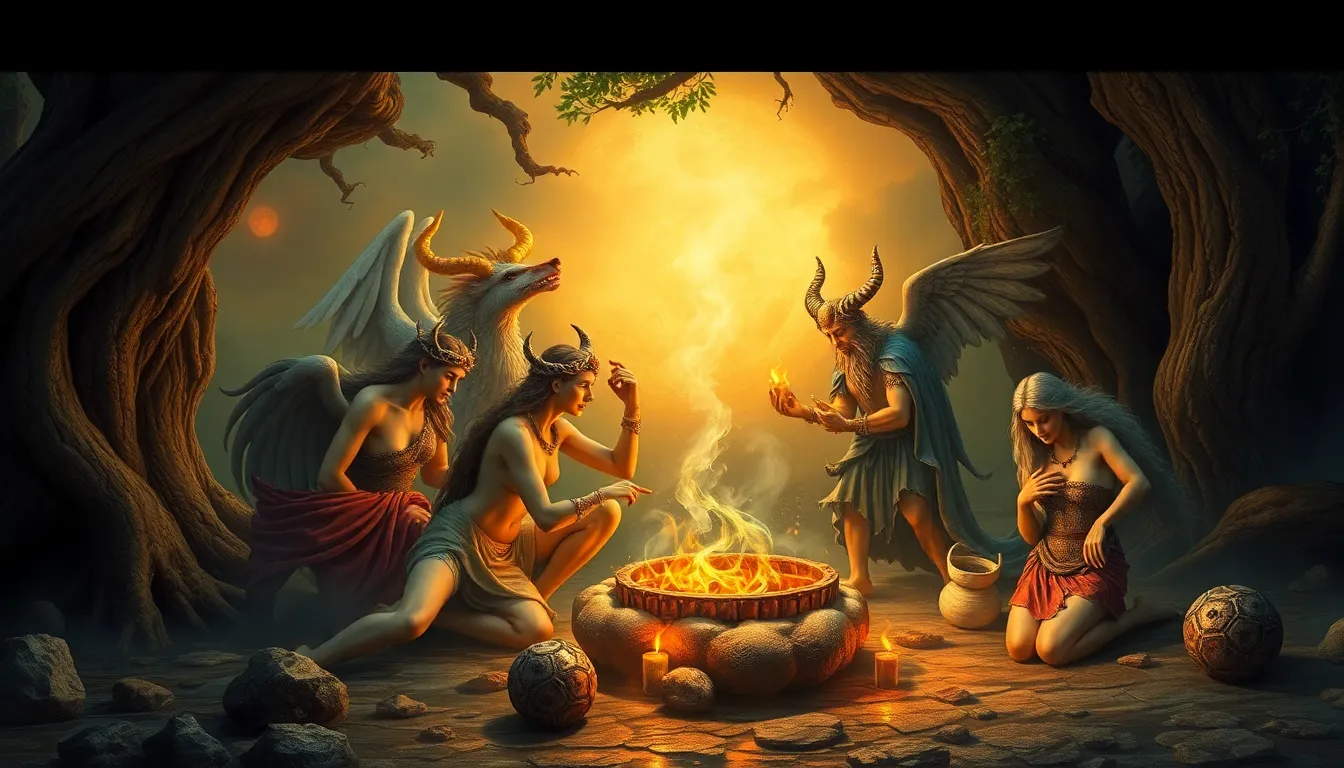
The Sacrificial Offerings of the Nymphs: Myths of Nature and Divinity
I. Introduction
Nymphs are captivating figures in Greek mythology, embodying the spirit of nature and the divine. These lesser deities are often associated with specific natural elements, such as forests, rivers, and mountains. Generally depicted as beautiful young women, nymphs personify the beauty and vitality of the natural world.
Their role in mythology extends beyond mere representations of nature; they act as guardians of the landscapes they inhabit and are often seen as intermediaries between the mortal realm and the divine. The purpose of this article is to explore the concept of sacrificial offerings made to nymphs, examining how these acts reflect the interconnectedness of nature and divinity in ancient beliefs.
II. The Nature of Nymphs
A. Types of Nymphs: Naiads, Dryads, Oreads, and others
Nymphs are categorized into various types, each associated with different aspects of the natural world:
- Naiads: Nymphs of freshwater, such as rivers, streams, and lakes.
- Dryads: Tree nymphs, particularly linked to oak trees, who protect forests and woodlands.
- Oreads: Nymphs of the mountains and cliffs, often associated with rocky landscapes.
- Oceanids: Sea nymphs, daughters of the Titans Oceanus and Tethys, representing the vastness of the ocean.
B. Symbolism of Nymphs in Ancient Cultures
Nymphs symbolize the beauty, fertility, and nurturing aspects of nature. They are often seen as embodiments of the life force present in natural elements, highlighting the ancient belief in the interconnectedness of all living things. In many myths, nymphs are depicted as vital forces that sustain the environment, reinforcing the idea that nature is a living entity deserving of respect and reverence.
C. Connection Between Nymphs and the Natural Elements
The connection between nymphs and the natural elements is profound. Nymphs are believed to inhabit and protect their specific domains, making them guardians of the earth’s resources. This relationship underscores the importance of nature in mythology and reflects the ancient understanding of the balance required to maintain harmony in the world.
III. Myths Surrounding Nymphs and Sacrifice
A. Key Myths Featuring Nymphs and Their Sacrificial Acts
Numerous myths feature nymphs engaging in sacrificial acts, often to appease the gods or to restore balance to nature. One notable example is the story of the Naiads who offered libations to the river gods during times of drought, ensuring the rivers flowed and life thrived around them.
Another significant myth involves the Dryads, who were said to perish if their sacred trees were cut down. In one tale, when a tree was threatened, the Dryad sacrificed herself to prevent its destruction, showcasing the deep bond between nymphs and their natural habitats.
B. Analysis of the Motivations Behind These Sacrifices
The motivations behind the sacrifices made by nymphs are often complex. Nymphs may sacrifice themselves or their offerings to:
- Appease the gods and ensure divine favor.
- Protect their domains and the creatures that inhabit them.
- Maintain the balance of nature, sustaining the interconnected web of life.
These acts reflect a deep understanding of reciprocity between the divine, nature, and humanity, serving to reinforce the idea that all elements of existence are interlinked.
C. The Role of Sacrifice in Maintaining Balance in Nature
Sacrifice plays a crucial role in maintaining balance in nature according to ancient beliefs. The act of offering something valuable, whether it be a physical item or a nymph’s own life, symbolizes the necessity of giving to receive. This reciprocity ensures that nature remains vibrant and flourishing, echoing the cyclical nature of life and death that permeates many mythologies.
IV. The Divine Connection
A. Nymphs as Intermediaries Between Mortals and Gods
Nymphs often serve as intermediaries between mortals and the gods. They possess unique powers and knowledge that allow them to communicate with deities, acting as messengers or advocates for human needs. This role enhances their significance in sacrificial offerings, as they are seen as the link between the earthly and divine realms.
B. How Offerings to Nymphs Reflect Divine Favor
Offerings made to nymphs are believed to invoke divine favor. By honoring these nature spirits, mortals seek blessings for fertility, prosperity, and protection. The act of sacrifice, whether in the form of a ritual or a personal offering, signifies respect and acknowledgment of the nymph’s power and influence over natural elements.
C. Examples of Divine Responses to Nymphs’ Sacrifices
Many myths recount instances where divine beings respond favorably to the sacrifices made by nymphs. For example, after a Naiad sacrifices her beauty to save a river, the gods may bless the waters, ensuring they remain bountiful and pure. In another tale, a Dryad’s selfless act to protect her tree could lead to the tree bearing magical fruits, symbolizing the rewards of sacrifice.
V. Cultural Variations of Nymph Sacrifices
A. Greek and Roman Interpretations of Nymph Sacrifices
In Greek and Roman cultures, nymphs were revered, and various rituals were conducted to honor them. Offerings often included flowers, fruits, and libations, reflecting the agricultural practices of the time. The Romans particularly emphasized the veneration of water nymphs, linking them to the health and prosperity of their cities.
B. Comparisons with Other Mythologies (e.g., Celtic, Hindu)
Other cultures also feature similar nature spirits that engage in sacrificial acts. For instance:
- Celtic Mythology: The Tuatha Dé Danann, deities of nature, often demanded offerings to maintain harmony.
- Hindu Mythology: Nymph-like figures, such as Apsaras, are known for their beauty and the sacrifices they make to please the gods.
These comparisons highlight a global understanding of the sacredness of nature and the need for respect and offerings to maintain balance.
C. The Evolution of Nymph Worship Across Cultures
As cultures evolved, so did the worship of nymphs and similar entities. In modern times, while the direct worship of nymphs has diminished, their symbolic significance persists. Environmental movements often draw parallels to ancient beliefs, emphasizing the need to protect nature, akin to honoring the nymphs.
VI. The Role of Nature in Nymph Myths
A. The Interplay Between Natural Landscapes and Nymph Identities
Nymphs are intrinsically linked to the landscapes they inhabit. Their identities are shaped by the characteristics of these environments, making them integral to the myths that surround them. For example, Dryads are not only guardians of trees but also representations of the forest’s strength and resilience.
B. How Environmental Changes Influenced Nymph Lore
Environmental changes, such as deforestation or drought, often led to the evolution of nymph myths. Stories about nymphs adapting to changing landscapes or facing challenges due to human intervention highlight the ancient recognition of nature’s fragility and the need for stewardship.
C. The Significance of Sacred Groves and Water Sources
Sacred groves and water sources were integral to nymph mythology. These places were often considered holy ground, where nymphs would reside and where people would come to offer sacrifices. Such locations served as reminders of the importance of preserving nature and the divine connection to water and forests.
VII. Modern Interpretations and Legacy
A. The Resurgence of Interest in Nymph Myths in Contemporary Culture
In recent years, there has been a resurgence of interest in nymph myths, often reflected in literature, art, and film. The romanticization of nature and the acknowledgment of its importance in modern society have rekindled the fascination with these mythical beings.
B. Artistic Representations and Adaptations in Literature and Media
Nymphs