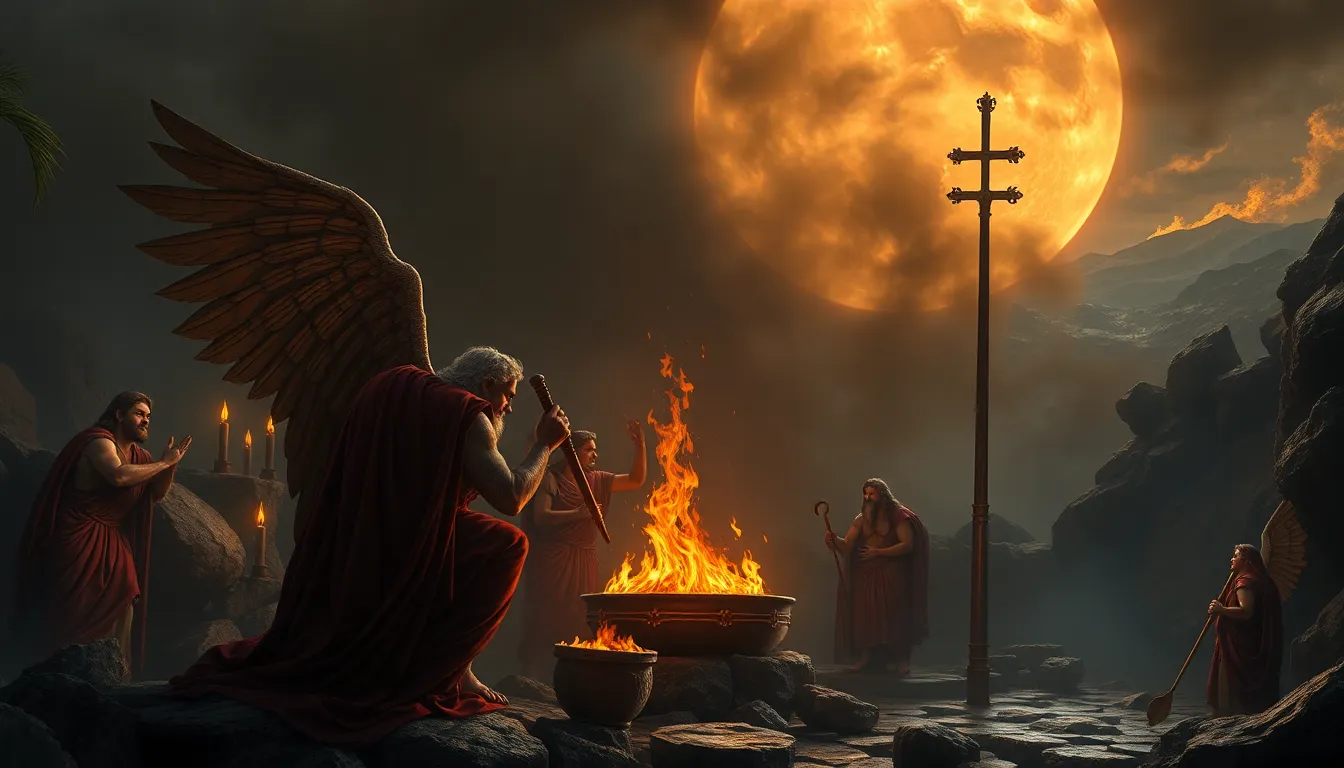
The Sacrificial Themes in the Myths of the Underworld
I. Introduction
The myths surrounding the Underworld are an essential part of ancient narratives, capturing the imagination of cultures throughout history. These stories often delve into the complexities of life, death, and the intricate relationship between mortals and the divine.
A significant aspect of these myths is the theme of sacrifice. Whether it involves the offering of a life, a promise, or a journey into the depths of the unknown, sacrifice serves as a pivotal element that shapes the narratives and their meanings.
This article will explore the historical context of Underworld myths, the concept of sacrifice within these tales, and provide case studies from Greek and Mesopotamian mythology. We will also conduct a comparative analysis of sacrificial themes across cultures and discuss their relevance in modern interpretations.
II. Historical Context of Underworld Myths
A. Origins of Underworld Myths Across Cultures
Underworld myths can be traced back to ancient civilizations, including the Egyptians, Greeks, Mesopotamians, and many more. Each culture presented unique depictions of the afterlife and the realm of the dead, often reflecting their beliefs and values.
- Egyptian Mythology: The afterlife was viewed as a continuation of life, with the journey through the Duat (underworld) requiring trials and the weighing of the heart against the feather of Ma’at.
- Greek Mythology: The Underworld, ruled by Hades, was a place of judgment where souls were sent to different realms based on their earthly lives.
- Mesopotamian Mythology: The Underworld was a dark, dreary place where the dead lived in a shadowy existence, reflecting the often harsh realities of life in the region.
B. Societal Views on Death and the Afterlife
Different societies held varying views on death and the afterlife, which influenced their mythologies. For instance, the Egyptians emphasized the importance of living a virtuous life to ensure a favorable afterlife, while the Greeks focused on the concept of judgment and the fates that awaited souls.
These beliefs were often intertwined with their practices, leading to rituals and sacrifices intended to appease the gods and ensure safe passage for the deceased.
C. The Role of Sacrifice in Ancient Religions
Sacrifice played a critical role in ancient religions, often seen as a means to communicate with the divine or to seek favor from the gods. This could take many forms:
- Animal sacrifices during festivals and rituals.
- Human sacrifices in extreme cases, believed to appease angry deities or ensure bountiful harvests.
- Symbolic sacrifices, such as offerings of food, drink, or precious items.
These acts of sacrifice were deeply embedded in the cultural practices of communities, reinforcing the connection between the living and the dead.
III. The Concept of Sacrifice in Mythology
A. Definitions and Types of Sacrifice
In mythology, sacrifice can be defined as the act of giving up something valued for the sake of something greater. This can manifest in various forms:
- Ritual Sacrifice: Often performed as a ceremonial act to honor deities.
- Personal Sacrifice: Characters in myths may sacrifice their desires or lives for the sake of others.
- Symbolic Sacrifice: Objects or actions that represent a greater loss or commitment.
B. Symbolism of Sacrifice in Cultural Narratives
Sacrifice in mythology often symbolizes a transformation or a passage from one state of being to another. It can represent:
- The transition from life to death.
- The cleansing of sins or wrongdoings.
- The assertion of loyalty to the gods or community.
As such, sacrifices are not merely acts of loss; they are imbued with deeper meanings and consequences that resonate throughout the narratives.
C. The Psychological and Spiritual Significance of Sacrifice
Psychologically, sacrifice can be seen as a form of catharsis, allowing individuals to confront their fears and desires. Spiritually, it signifies a connection to the divine, often leading to personal growth or enlightenment.
The act of sacrifice, therefore, serves as a bridge between the mortal world and the divine, facilitating communication and understanding between the two realms.
IV. Case Study: Greek Myths and the Underworld
A. The Story of Orpheus and Eurydice
One of the most poignant examples of sacrifice in Greek mythology is the tale of Orpheus and Eurydice. Orpheus, a gifted musician, descends into the Underworld to retrieve his beloved wife, Eurydice, who has died.
His journey is marked by sacrifice as he must confront Hades and Persephone, showcasing the lengths one will go for love. Orpheus sacrifices his safety and the chance at happiness in the mortal realm to save Eurydice, ultimately leading to tragic consequences when he looks back at her before reaching the surface.
B. The Role of Persephone and the Cycle of Seasons
The myth of Persephone also encapsulates themes of sacrifice and rebirth. Persephone is taken to the Underworld by Hades, leading to a profound sacrifice on both sides. Her mother, Demeter, sacrifices her joy, resulting in the barrenness of the earth during Persephone’s absence.
This cyclical sacrifice reflects the changing seasons and the natural order of life and death, highlighting the interconnectedness of all beings and the sacrifices made in the name of love and duty.
C. Sacrificial Elements in the Myth of Hades and Demeter
The myth of Hades and Demeter further illustrates the concept of sacrifice. Hades sacrifices his solitude for love, while Demeter sacrifices her fertility and the abundance of the earth in her grief. This sacrifice leads to a balance between life and death, illustrating the necessity of sacrifice for regeneration and growth.
V. Case Study: Mesopotamian Myths and Sacrifice
A. The Epic of Gilgamesh and the Underworld
In the Epic of Gilgamesh, the hero’s journey to the Underworld is filled with themes of mortality and the sacrifices made in pursuit of immortality. Gilgamesh’s encounter with the dead reveals the inevitable fate of all humans, prompting him to reflect on his own life and the sacrifices he must make to achieve his goals.
B. Inanna’s Descent and the Theme of Death and Rebirth
Inanna’s descent into the Underworld is another significant myth that explores sacrifice. Inanna sacrifices her power and status to enter the realm of the dead, undergoing a transformation that leads to her eventual rebirth. This journey emphasizes the cyclical nature of life and the necessity of sacrifice for renewal.
C. Rituals of Sacrifice in Ancient Mesopotamian Culture
Ancient Mesopotamian cultures practiced various forms of sacrifice, often linked to their agricultural cycles and religious beliefs. Offerings to the gods, including food, livestock, and sometimes human sacrifices, were seen as essential for ensuring fertility and prosperity.
VI. Comparative Analysis of Sacrificial Themes
A. Similarities Across Different Cultures
Despite the diversity of myths, sacrificial themes show remarkable similarities across cultures. Common threads include:
- The idea of sacrifice as a means of communication with the divine.
- The representation of sacrifice as a necessary component of growth and transformation.
- The use of death and the afterlife as a backdrop for exploring human emotions and relationships.
B. Unique Interpretations of Sacrifice in Different Myths
While many cultures share similar themes, unique interpretations of sacrifice can be found within each mythos. For example, the Greek emphasis on individual choice and fate contrasts with the more communal aspect of sacrifice seen in Mesopotamian cultures.
C. The Impact of Geography and Culture on Mythological Themes
Geography and culture