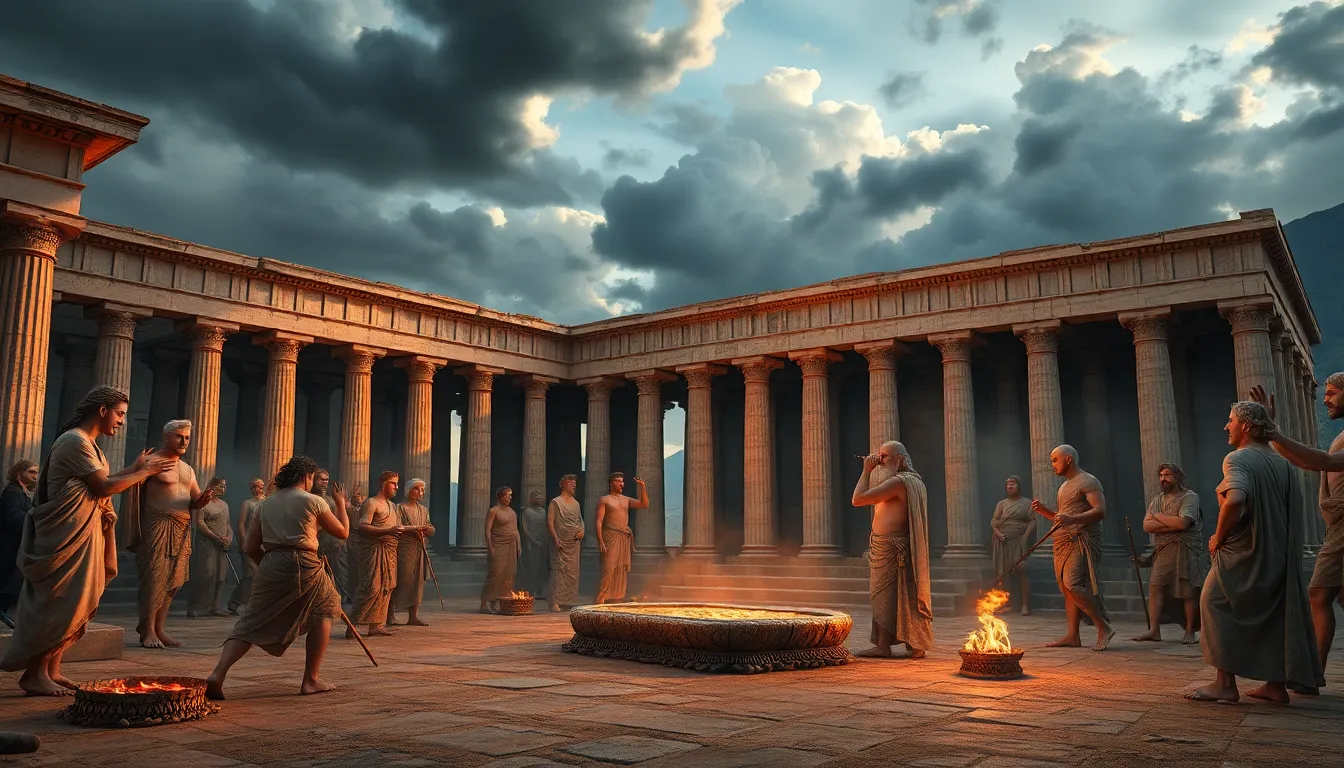
The Significance of Sacrifices in Ancient Greek Festivals
I. Introduction
Ancient Greek festivals were vibrant celebrations that brought together communities to honor their gods, commemorate significant events, and participate in cultural traditions. These festivals were not merely social gatherings; they were deeply intertwined with religious beliefs and practices. Central to these celebrations were rituals and sacrifices that held great importance within Greek culture. This article explores the significance of sacrifices in ancient Greek festivals, highlighting their historical context, types, rituals, symbolism, and social implications.
II. Historical Context of Sacrifices
A. Origins of sacrificial practices in ancient Greece
The practice of sacrifice in ancient Greece can be traced back to its earliest societies. Archaeological evidence suggests that offerings to deities were made as a way to seek favor, express gratitude, and appease the gods. These rituals were often tied to agricultural cycles, reflecting the agrarian lifestyle of the Greeks.
B. Evolution of sacrificial rituals over time
As Greek society evolved, so too did the rituals associated with sacrifices. Initially, sacrifices were simple and involved basic offerings of food or livestock. However, with the rise of city-states and the development of more complex religious structures, these rituals became more elaborate. Different regions developed unique practices, leading to a rich tapestry of sacrificial customs across Greece.
C. Role of mythology in shaping sacrificial customs
Mythology played a crucial role in shaping the sacrificial practices of ancient Greece. Myths often depicted the interactions between gods and mortals, illustrating the need for sacrifices as a means of communication and appeasement. Heroes and mythological figures frequently performed sacrifices, serving as models for proper conduct in worship.
III. Types of Sacrifices
A. Animal sacrifices: common animals and their significance
Animal sacrifices were among the most significant forms of offerings in ancient Greece. Common animals included:
- Sheep: Often sacrificed to deities like Apollo and Hermes.
- Goats: Frequently used in rituals, especially in Dionysian celebrations.
- Bulls: Reserved for major festivals, bulls symbolized strength and fertility.
Each animal held specific meanings and was chosen based on the deity being honored and the occasion of the festival.
B. Offerings of grains, fruits, and other goods
In addition to animal sacrifices, the Greeks also offered grains, fruits, and other produce. These offerings symbolized the bounty of the earth and were often part of agricultural festivals. Common offerings included:
- Wheat: Representing the harvest and fertility of the land.
- Olives: Sacred to Athena, representing peace and prosperity.
- Wine: Associated with Dionysus, symbolizing joy and celebration.
C. Variability of sacrifices based on the deity or festival
The type of sacrifice varied significantly depending on the deity being worshipped and the specific festival. For instance, Demeter was honored with offerings of grain during harvest festivals, while Dionysus received wine and theatrical performances. This variability highlighted the personal relationship between the worshippers and their gods.
IV. Ritual Practices and Procedures
A. Preparation for sacrifices: purification and rituals
Before a sacrifice, participants underwent purification rituals. These might include bathing, fasting, or offering preliminary gifts to the gods. This purification was essential to ensure that the worshippers were in a proper state to approach the divine.
B. The act of sacrifice: methods and symbolic gestures
The act of sacrifice itself involved several stages, typically including:
- Invocation: Priests would call upon the god, invoking their name and recounting their attributes.
- Presentation: The animal was presented to the altar, often adorned with garlands or other offerings.
- Ritual slaughter: The animal was killed in a specific manner, often with a dagger or knife, as a symbolic gesture of devotion.
C. Role of priests and community participation
Priests played a vital role in conducting sacrifices, leading the rituals, and ensuring that they were performed correctly. However, community participation was also crucial. Festivals were often communal events where citizens gathered to partake in the rituals, reinforcing social bonds and shared cultural identity.
V. Symbolism and Meaning of Sacrifices
A. Sacrifices as a form of communication with the divine
At their core, sacrifices were a means of communication with the gods. They represented an offering of something valuable to the divine in exchange for blessings, guidance, or favor. The act of giving was seen as a way to establish and maintain a relationship with the gods.
B. Symbolic interpretations of the sacrificial act
The act of sacrifice transcended the physical offering; it symbolized deeper themes, such as:
- Life and death: The blood of the sacrificed animal symbolized life being given back to the gods.
- Fertility: Sacrifices were often linked to agricultural fertility, ensuring a bountiful harvest.
- Community unity: Shared sacrifices reinforced social cohesion and collective identity among participants.
C. The concept of reciprocity in offerings to gods
The Greeks believed in a reciprocal relationship with their deities, where offerings would yield blessings in return. This concept of reciprocity was fundamental to Greek religion, emphasizing the need for balance between human actions and divine favor.
VI. Social and Political Significance
A. Community bonding and identity through shared rituals
Shared sacrificial rituals fostered a sense of community and belonging among the citizens. Festivals became occasions for collective celebration, where individuals came together to honor their gods and reinforce their social ties.
B. Display of wealth and status through grand sacrifices
Wealthy individuals often sponsored grand sacrifices as a way to display their status and generosity. These public acts of piety not only honored the gods but also elevated the individual’s standing within the community.
C. Role of sacrifices in asserting political power
Political leaders utilized sacrifices to legitimize their rule and gain popular support. By participating in or sponsoring significant sacrifices, leaders could present themselves as favored by the gods, thereby strengthening their political power and influence.
VII. Case Studies of Notable Festivals
A. The Panathenaea: significance of the grand sacrifices
The Panathenaea was one of the most important festivals in ancient Athens, celebrating the city’s patron goddess, Athena. It featured grand sacrifices of animals, including oxen, and culminated in a grand procession to the Acropolis. The festival emphasized Athenian unity and pride, showcasing the city’s wealth and devotion to their goddess.
B. The Eleusinian Mysteries: mystical aspects of offerings
The Eleusinian Mysteries celebrated Demeter and Persephone and included secretive rites and sacrifices. These rituals were believed to ensure a good harvest and promised initiates a better afterlife. The emphasis on mystery and personal experience set the Eleusinian Mysteries apart from other festivals.
C. The Dionysia: theatrical and communal dimensions of sacrifices
The Dionysia honored Dionysus with dramatic performances, processions, and sacrifices. The festival included the sacrifice of goats, symbolizing fertility and the life-death-rebirth cycle. The communal aspect, combined with theatrical presentations, made it a unique celebration of culture and devotion.
VIII. Conclusion
In conclusion, sacrifices in ancient Greek festivals were multifaceted, serving religious, cultural, and social purposes. They were a means of communicating with the divine, reinforcing community bonds, and displaying wealth and power. The legacy of these sacrificial practices continues to resonate in contemporary culture, reminding us of the deep connections between ritual, community, and identity. As we reflect on these ancient traditions, we gain insight into the values and beliefs that shaped one of history’s most influential civilizations.