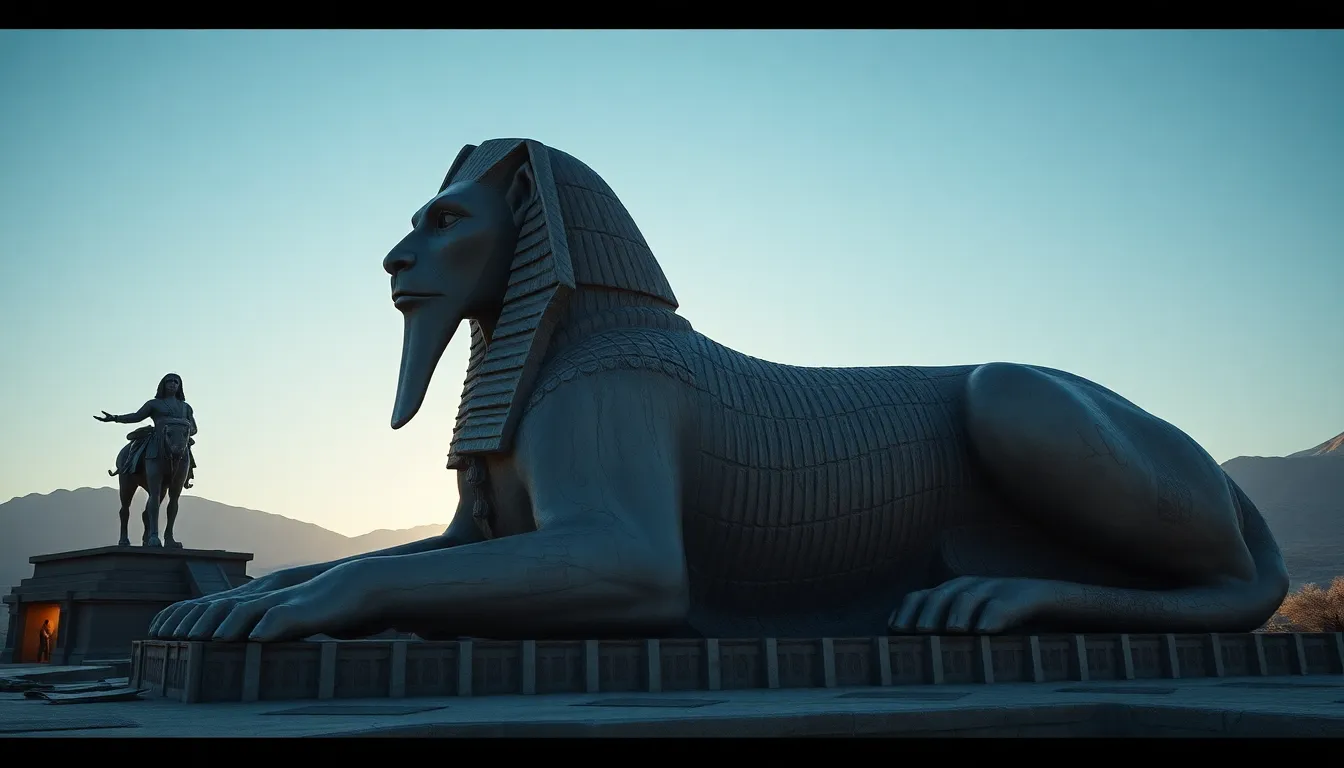
The Sphinx: A Creature of Fear and Fascination
Introduction
The Sphinx has captivated the imaginations of humankind for millennia, serving as a powerful symbol in mythology and culture. Its dual nature embodies both fear and fascination, representing the unknown that lies beyond human understanding. This enigmatic creature has been depicted in various forms, often associated with riddles and the mysteries of life and death.
Historical Origins of the Sphinx
The origins of the Sphinx can be traced back to ancient civilizations, with the earliest depictions appearing in Egyptian art and architecture. These ancient representations hold significant cultural and religious meanings, evolving over time to influence Greek mythology and beyond.
Egyptian Sphinx
- The Egyptian Sphinx is typically depicted as a lion with a human head, symbolizing power and protection.
- This creature served as guardians of tombs and temples, representing the pharaoh’s strength and wisdom.
Evolution in Greek Mythology
As the Sphinx transitioned into Greek mythology, its characteristics and symbolism underwent notable changes. The Greek Sphinx became a more complex figure, known for its riddles and association with fate.
The Sphinx in Egyptian Mythology
In ancient Egypt, the Sphinx stood as a colossal figure, most famously represented by the Great Sphinx of Giza. This monumental sculpture serves as a testament to the architectural prowess and religious beliefs of the Egyptians.
- Description and Characteristics: The Egyptian Sphinx is typically shown as a lion’s body with a pharaoh’s head, often adorned with royal regalia.
- Symbolism: It represents the combination of human intellect and animal strength, embodying the idea of divine protection.
- Role: The Sphinx was believed to guard sacred spaces and the tombs of the deceased, ensuring safe passage to the afterlife.
The Greek Sphinx: A Riddle of Fate
In Greek mythology, the Sphinx is often associated with the tragic tale of Oedipus. This transformation marks a significant departure from its Egyptian origins, as the Greek Sphinx embodies a darker aspect of fate and knowledge.
- The Famous Riddle: The Sphinx posed a riddle to travelers: “What walks on four legs in the morning, two legs at noon, and three legs in the evening?” Those who could not answer were met with death.
- Implications in the Story of Oedipus: Oedipus solved the riddle, symbolizing the acquisition of knowledge, but ultimately, this knowledge led to his tragic downfall.
Artistic Representations of the Sphinx
The Sphinx has inspired countless works of art and architecture throughout history. Its powerful imagery can be found in various forms, reflecting its cultural significance across different eras.
- In Ancient Art: The Sphinx was commonly depicted in sculptures and reliefs, often found in temples and funerary art.
- Renaissance Influence: During the Renaissance, artists reinterpreted the Sphinx, blending classical themes with contemporary styles.
- Modern Art Movements: The Sphinx’s enigmatic nature continues to inspire modern artists, symbolizing the allure of mystery and the unknown.
Cultural Interpretations and Symbolism
Across different civilizations, the Sphinx has been interpreted in various ways, each reflecting unique cultural beliefs and philosophical ideas.
- Symbol of the Unknown: The Sphinx often represents the mysteries of existence and the fear that accompanies the unknown.
- Divergent Interpretations: While the Egyptian Sphinx symbolizes protection and wisdom, the Greek Sphinx embodies a more ominous role, serving as a harbinger of fate.
Modern Fascination with the Sphinx
In contemporary culture, the Sphinx remains a popular subject in literature, film, and media. Its timeless appeal continues to resonate with audiences worldwide.
- Literature: The Sphinx has appeared in various literary works, often representing the struggle against fate and the pursuit of knowledge.
- Film and Media: Modern adaptations frequently draw on the Sphinx’s mysterious nature, using it as a symbol of intrigue and danger.
- Discussions on Mythology: The Sphinx serves as a focal point in contemporary discussions about mythology, history, and the human condition.
Conclusion
The Sphinx remains an enduring symbol of fear and fascination, reflecting the complexities of human nature and our relationship with the unknown. Its duality invites contemplation on the balance between knowledge and ignorance, power and vulnerability. As we continue to explore the myths and legends surrounding this enigmatic creature, the Sphinx will undoubtedly maintain its allure for generations to come.
https://www.youtube.com/watch?v=AhuPEp4ct6U