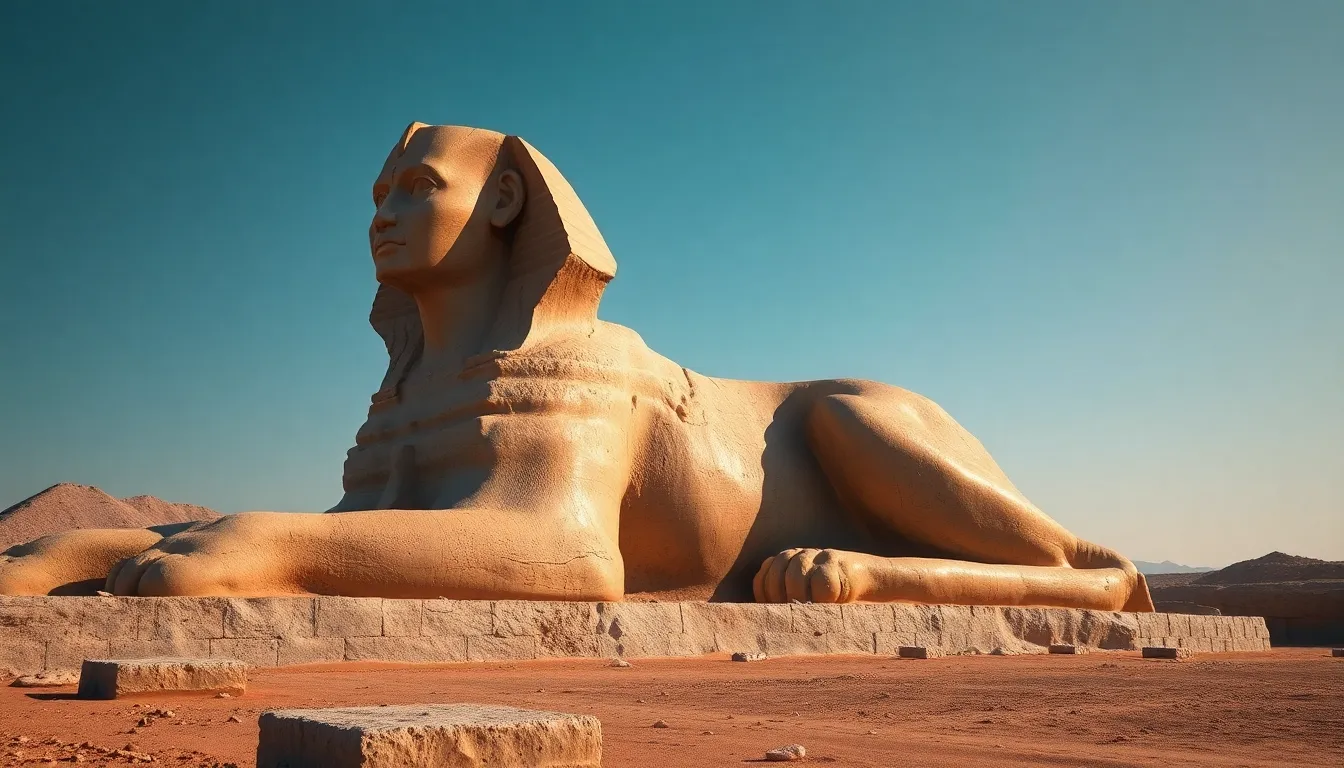
The Sphinx: A Reflection of Ancient Greek Values
I. Introduction
The Sphinx is one of the most intriguing figures in Greek mythology, renowned for its enigmatic presence and the profound lessons it embodies. With its lion’s body and human head, the Sphinx serves as a powerful symbol that reflects various aspects of ancient Greek culture and values.
In ancient Greek society, the Sphinx was not merely a creature of myth; it represented a complex interplay of knowledge, fate, and the human experience. This article aims to explore the Sphinx as a symbol of Greek values, delving into its historical context, symbolism, and lasting legacy.
II. Historical Context of the Sphinx
A. Origins of the Sphinx in mythology
The origins of the Sphinx can be traced back to ancient Egyptian mythology, where it was depicted as a guardian figure. However, the Greek Sphinx took on a unique identity within the context of Greek myth. It was said to have been sent by the goddess Hera to plague the city of Thebes, posing riddles to travelers and devouring those who could not answer correctly.
B. The Sphinx in Greek literature and art
The Sphinx has been featured prominently in various works of Greek literature, most notably in Sophocles’ tragedy “Oedipus Rex.” In this play, the Sphinx’s riddle sets the stage for Oedipus’s tragic journey. The creature also appears in different forms of art, including pottery and sculpture, showcasing its significance in the cultural landscape of ancient Greece.
C. The role of the Sphinx in the Theban cycle
Within the Theban cycle of myths, the Sphinx plays a crucial role in the fate of Oedipus and the city of Thebes. Its presence serves as a catalyst for the unfolding drama, highlighting themes of knowledge, identity, and destiny.
III. The Symbolism of the Sphinx
A. The dual nature of the Sphinx: guardian and enigma
The Sphinx embodies a duality of purpose. As a guardian, it protects the city of Thebes but also serves as an enigma that challenges individuals to confront their own understanding and limitations. This duality reflects the ancient Greek belief in the necessity of wisdom and knowledge in navigating life’s challenges.
B. Representation of knowledge and wisdom
The Sphinx symbolizes the quest for knowledge and the importance of wisdom in Greek culture. The riddle it poses is not just a test of intellect but also an exploration of self-awareness and understanding of the human condition.
C. The Sphinx as a symbol of fate and destiny
Moreover, the Sphinx represents the intricate relationship between fate and destiny in Greek thought. It embodies the idea that while fate may be predetermined, individuals possess the power to choose how they respond to it.
IV. The Sphinx’s Riddle and Its Significance
A. The famous riddle posed to Oedipus
One of the most famous aspects of the Sphinx is its riddle: “What walks on four legs in the morning, two legs at noon, and three legs in the evening?” This riddle is a metaphor for the stages of human life, symbolizing the journey from infancy to old age.
B. Interpretation of the riddle in relation to human experience
The riddle can be interpreted in multiple ways, reflecting the complexities of human existence. It encourages individuals to contemplate their own lives, choices, and the passage of time.
C. The concept of knowledge versus ignorance in Greek thought
In Greek philosophy, the pursuit of knowledge was viewed as essential for personal growth and understanding. The Sphinx’s riddle emphasizes the importance of knowledge as a means to overcome ignorance and face the challenges of life.
V. The Sphinx as a Reflection of Greek Values
A. The importance of intelligence and cunning
The Sphinx embodies the Greek value of intellect. The ability to solve its riddle represents not only intelligence but also cunning and resourcefulness, qualities highly regarded in ancient Greek society.
B. The value of self-discovery and personal growth
Engaging with the Sphinx’s riddle encourages self-discovery and introspection. The journey to understand oneself and one’s place in the world is a theme prevalent in Greek philosophy and literature.
C. The intersection of fate and free will in Greek culture
Lastly, the Sphinx illustrates the tension between fate and free will. While individuals may be bound by fate, they also possess the agency to make choices that shape their destinies, a fundamental concept in Greek thought.
VI. Artistic Representations of the Sphinx
A. Depictions in ancient Greek sculpture and pottery
The Sphinx has been depicted in various forms of ancient Greek art, including sculpture and pottery. These artistic representations often highlight its dual nature as both a terrifying creature and a symbol of wisdom.
B. The influence of the Sphinx on later artistic movements
The image of the Sphinx has influenced numerous artistic movements throughout history, inspiring artists to explore themes of mystery, knowledge, and the human condition.
C. The Sphinx in modern interpretations of Greek mythology
In contemporary culture, the Sphinx continues to be a source of inspiration, appearing in literature, films, and art. Its legacy endures as a powerful symbol of the complexities of life and knowledge.
VII. The Enduring Legacy of the Sphinx
A. The Sphinx in contemporary culture and literature
Today, the Sphinx remains a prominent figure in literature and popular culture. Its riddles and symbolism are often referenced to explore themes of knowledge, fate, and human experience.
B. How the Sphinx continues to symbolize Greek values today
The Sphinx’s lessons about the importance of wisdom and self-discovery resonate with modern audiences, reinforcing the timeless nature of Greek values.
C. The relevance of the Sphinx’s lessons in today’s society
In an age where information is abundant, the Sphinx’s challenge to seek deeper understanding and confront ignorance remains relevant. Its story serves as a reminder of the importance of knowledge in shaping our lives and destinies.
VIII. Conclusion
In summary, the Sphinx is a multifaceted symbol that reflects essential Greek values, including the pursuit of knowledge, the significance of self-discovery, and the interplay of fate and free will. Its presence in mythology, literature, and art underscores its importance in understanding ancient Greek civilization.
The Sphinx stands as a timeless reflection of human values, reminding us of the enduring quest for wisdom and understanding in our lives. As we continue to explore its legacy, we gain insight into the rich cultural heritage of the ancient Greeks and the universal themes that continue to resonate today.