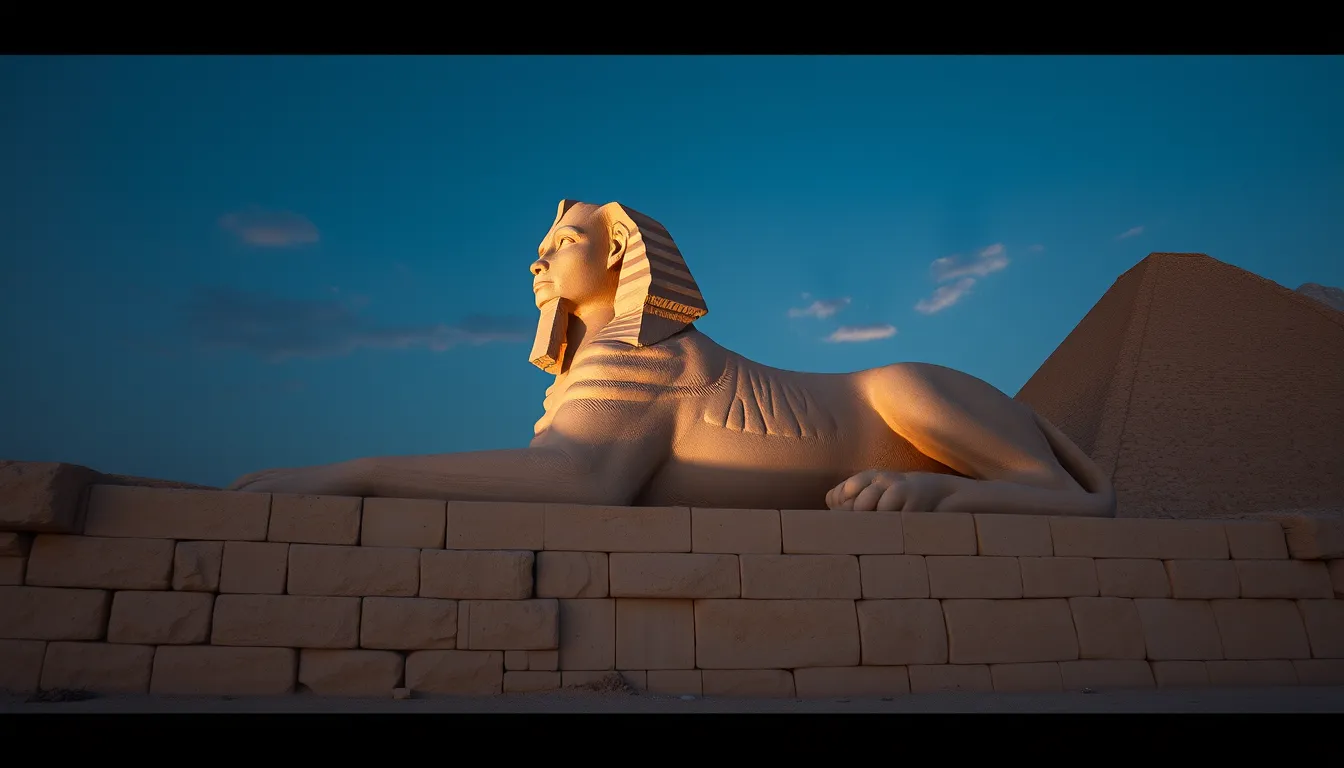
The Sphinx: A Study of Its Role in Heroic Narratives
I. Introduction
The Sphinx is one of the most intriguing figures in mythology, known for its enigmatic presence and profound symbolism. In mythology, the Sphinx is typically depicted as a creature with the body of a lion and the head of a human. Its riddle and its role as a gatekeeper highlight its significance in various heroic narratives.
This article aims to explore the historical context of the Sphinx, its role as a symbol of challenge, and its impact on heroic archetypes. Through this exploration, we will gain a deeper understanding of how the Sphinx has shaped narratives throughout history.
II. Historical Context of the Sphinx
A. Origins and Evolution of the Sphinx in Ancient Cultures
The Sphinx has origins that trace back to ancient civilizations, where it served various symbolic purposes. The creature represents a fusion of human intellect and animal strength, embodying the dual nature of wisdom and power.
B. The Sphinx in Egyptian Mythology
In Egyptian mythology, the Sphinx is often associated with the Great Sphinx of Giza, a monumental statue that symbolizes strength and protection. It was believed to guard the tombs of pharaohs and represent the divine rulership of the king. The Egyptian Sphinx typically has a lion’s body and a pharaoh’s head, emphasizing its connection to royalty and divine protection.
C. The Sphinx in Greek Mythology
In contrast, the Greek Sphinx is often characterized by its more sinister role. The most famous tale involving the Sphinx is that of Oedipus, who encounters the creature on his journey to Thebes. The Greek Sphinx poses a riddle to travelers, and those who fail to solve it are killed, symbolizing the perilous nature of knowledge and wisdom.
III. The Sphinx as a Symbol of Challenge
A. The Sphinx’s Riddle and Its Role as a Gatekeeper
The Sphinx is most renowned for its riddle: What walks on four legs in the morning, two legs at noon, and three legs in the evening? This riddle serves as a gatekeeping mechanism, filtering those deemed worthy to pass based on their wisdom and intellect.
B. Analysis of the Riddle in Relation to Heroic Trials
The riddle can be seen as a metaphor for the journey of life, where the stages of walking represent the phases of human existence. Solving the riddle requires introspection and understanding of the human condition, making it a pivotal moment of growth for heroes.
C. The Significance of Overcoming Challenges in Narratives
Overcoming the Sphinx’s challenge is not merely about survival; it serves as a moment of transformation for the hero. This theme resonates throughout many narratives, illustrating how challenges shape identity and character.
IV. The Sphinx and Heroic Archetypes
A. Examination of Heroes Who Confront the Sphinx
Among the most notable heroes to confront the Sphinx is Oedipus. His encounter with the creature marks a significant turning point in his life and serves as a catalyst for the unfolding tragedy of his story.
B. Comparison of Different Hero Responses to the Sphinx’s Challenge
- Oedipus: He approaches the Sphinx with confidence and ultimately solves the riddle, showcasing his intellectual prowess.
- Other Heroes: In various adaptations, other heroes may approach the Sphinx with fear or cunning, highlighting different aspects of heroism.
C. The Sphinx’s Role in Shaping Heroism and Identity
The Sphinx challenges heroes to confront their fears and insecurities. The nature of their response to the challenge often reveals deeper truths about their character and sets the stage for their development throughout the narrative.
V. Thematic Elements Associated with the Sphinx
A. Themes of Knowledge and Wisdom
The Sphinx embodies the theme of knowledge as both a source of power and a potential danger. The challenge posed by the Sphinx forces heroes to confront the weight of wisdom and the responsibilities that come with it.
B. The Duality of Danger and Protection
While the Sphinx represents a formidable obstacle, it also serves as a protector of sacred knowledge. This duality reflects the complex nature of truth and the journey toward enlightenment.
C. The Interplay Between Fate and Free Will
The Sphinx’s riddle encapsulates the tension between fate and free will. Heroes must navigate their destinies while also making choices that impact their journeys, illustrating the intricate dance between predetermined paths and personal agency.
VI. The Sphinx in Literary Adaptations
A. The Portrayal of the Sphinx in Classical Literature (e.g., Oedipus Rex)
In Sophocles’ “Oedipus Rex,” the Sphinx is a central figure that embodies the tragic themes of fate and knowledge. Oedipus’s encounter with the Sphinx serves as a dramatic foreshadowing of his eventual downfall.
B. Modern Interpretations and Adaptations in Literature and Film
The Sphinx has been interpreted in various modern adaptations, from retellings of Greek myths to contemporary fantasy literature. These adaptations often explore the Sphinx’s riddle in new contexts, reflecting modern themes of identity and truth.
C. The Sphinx’s Influence on Contemporary Heroic Narratives
Today, the Sphinx continues to influence storytelling, representing the timeless struggle between knowledge and ignorance. Its legacy persists in various forms of media, encouraging audiences to engage with the complexities of heroism.
VII. Cultural Impact and Legacy of the Sphinx
A. The Sphinx’s Representation in Art and Architecture
The Sphinx has been a prominent subject in art and architecture throughout history. From ancient sculptures to modern interpretations, it symbolizes the enduring fascination with the mystery of knowledge.
B. Its Lasting Influence on Storytelling and Popular Culture
The Sphinx’s role in mythology has left a lasting imprint on storytelling, inspiring countless narratives that explore the themes of challenge, knowledge, and heroism.
C. The Sphinx’s Role in Shaping Perceptions of Heroism Across Cultures
Across various cultures, the Sphinx has influenced the portrayal of heroes, highlighting the universal struggle against challenges and the pursuit of wisdom.
VIII. Conclusion
In conclusion, the Sphinx stands as a powerful symbol within heroic narratives, representing the challenges that heroes must face on their journeys. Its role as a gatekeeper emphasizes the importance of knowledge and the trials that shape identity.
The Sphinx’s enduring legacy continues to resonate in literature and popular culture, inviting further exploration of mythological figures and their impact on storytelling. As we reflect on the Sphinx’s significance, we are reminded of the timeless themes of heroism, knowledge, and the complexities of the human experience.