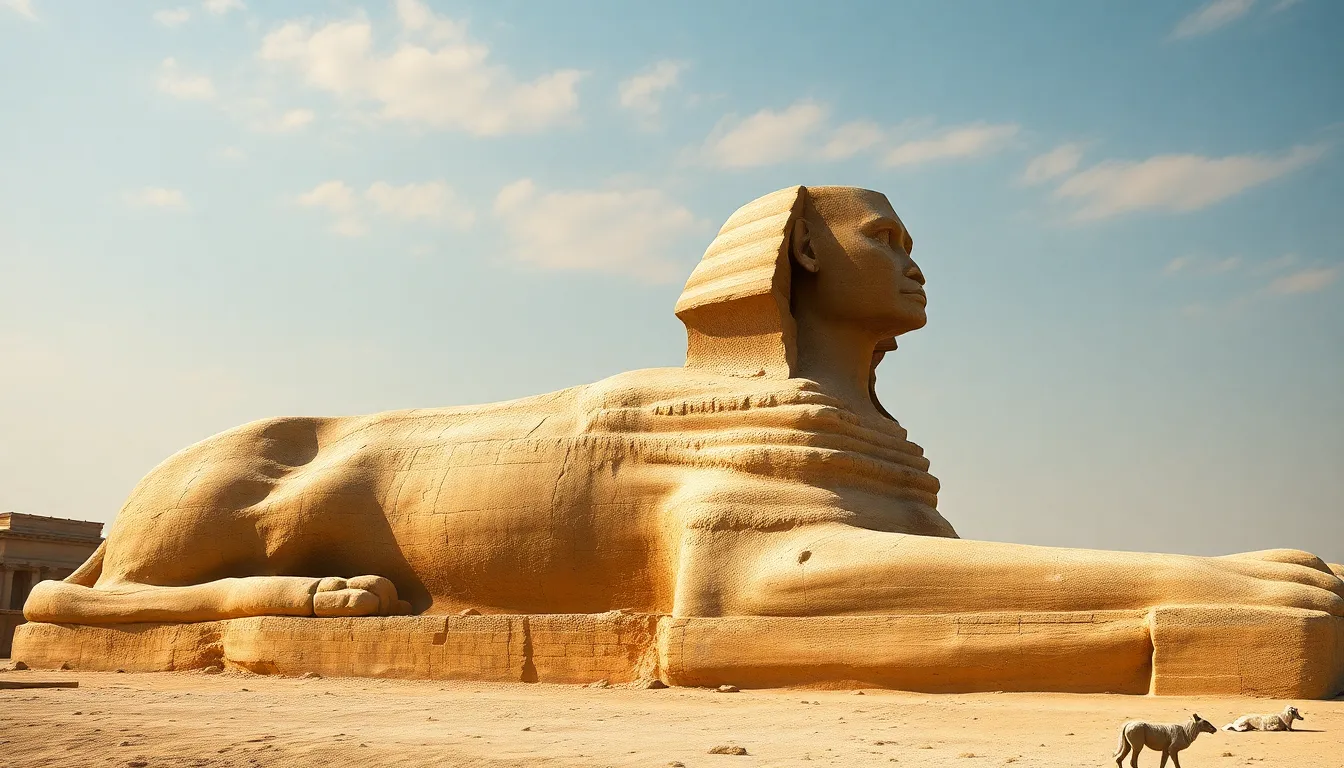
The Sphinx in Historical Accounts: What We Know
I. Introduction
The Great Sphinx of Giza is one of the most iconic monuments of ancient Egypt, capturing the imagination of historians, archaeologists, and tourists alike. With its mysterious visage and colossal form, the Sphinx has stood guard over the Giza Plateau for thousands of years, embodying the grandeur of ancient Egyptian civilization.
This article aims to explore the historical accounts surrounding the Sphinx, delving into its origins, physical characteristics, symbolic meanings, and the various interpretations and myths that have arisen over the centuries. We will also examine its role in modern archaeology and its lasting impact on culture and society.
II. The Origins of the Sphinx
A. Historical context of ancient Egypt
The Sphinx was constructed during the reign of the pharaoh Khafre (c. 2558–2532 BC), who is also associated with the nearby second pyramid at Giza. This period, known as the Fourth Dynasty of the Old Kingdom, was marked by remarkable advancements in architecture and monumental construction.
B. Theories regarding the construction date and purpose
While most scholars agree on the Sphinx’s association with Khafre, debates persist regarding its exact date of construction. Some theories propose that the Sphinx predates Khafre, possibly built during an earlier period due to certain geological evidence. The purpose of the Sphinx is also a subject of speculation, with some suggesting it served as a guardian for the tombs nearby, while others believe it may have been a representation of the sun god Ra.
III. Physical Characteristics and Symbolism
A. Description of the Sphinx’s structure and design
The Great Sphinx measures about 73 meters (240 feet) in length and 20 meters (66 feet) in height, making it one of the largest statues in the world. It is carved from limestone and features the body of a lion with a human head, believed to represent the pharaoh Khafre himself. The Sphinx’s face, however, has suffered significant erosion over the centuries, leading to various interpretations of its original likeness.
B. Symbolic meanings associated with the Sphinx in ancient Egyptian culture
In ancient Egyptian culture, the Sphinx symbolized strength and wisdom. The lion’s body represented power and ferocity, while the human head signified intelligence and insight. Together, they embodied the ideal qualities of a ruler. The Sphinx also had solar associations, often linked to the sun god, reinforcing its status as a protector of the pharaoh’s afterlife.
IV. Historical Accounts from Ancient Sources
A. References in ancient texts and inscriptions
The Sphinx is mentioned in several ancient texts, including the writings of Herodotus, who visited Egypt in the 5th century BC. He described the Sphinx and noted its proximity to the pyramids, referring to it as a remarkable structure. Other inscriptions from ancient Egyptian texts provide insights into the Sphinx’s role in religious practices and funerary rites.
B. Notable historians and scholars who documented the Sphinx
- Herodotus: Known as the “Father of History,” he provided one of the earliest detailed accounts of the Sphinx.
- Pliny the Elder: A Roman author who wrote about the Sphinx in his encyclopedic work, Natural History.
- Arab historian Al-Maqdisi: Documented the Sphinx and its significance in the medieval period.
V. The Sphinx in Modern Archaeology
A. Recent discoveries and excavations related to the Sphinx
Modern archaeological efforts have led to significant discoveries around the Sphinx, including the uncovering of various artifacts and structures that suggest a larger complex surrounding the monument. Excavations have revealed remnants of temples and other buildings, indicating the Sphinx’s central role in ancient religious practices.
B. Advances in technology that aid in Sphinx research
Technological advancements such as ground-penetrating radar and 3D scanning have revolutionized the study of the Sphinx. These methods allow archaeologists to explore hidden chambers and features without disturbing the site, leading to new insights into its construction and historical context.
VI. Theories and Myths Surrounding the Sphinx
A. Legends and myths associated with the Sphinx
Throughout history, the Sphinx has inspired numerous legends and myths. One of the most famous is the Greek myth of the Sphinx, which tells of a creature that posed a riddle to travelers and devoured those who could not answer correctly. This myth, while not directly related to the Egyptian Sphinx, demonstrates the enduring fascination with the concept of the Sphinx across cultures.
B. Interpretations and debates among historians and archaeologists
Historians and archaeologists continue to debate the Sphinx’s origins and meanings. Some suggest that it reflects a blend of Egyptian and other cultural influences, while others argue for a more isolated Egyptian interpretation. The lack of definitive historical records adds to the intrigue and complexity surrounding the Sphinx.
VII. The Sphinx in Popular Culture
A. The Sphinx’s representation in art, literature, and film
The Sphinx has made numerous appearances in art, literature, and film, often symbolizing mystery and enigma. It has been featured in works ranging from classical literature to modern movies, where it is frequently depicted as a guardian of ancient secrets.
B. Impact of the Sphinx on contemporary society and tourism
Today, the Sphinx is one of Egypt’s most popular tourist attractions, drawing millions of visitors each year. Its allure continues to captivate people worldwide, serving as a symbol of ancient civilization and human ingenuity. The Sphinx has also sparked interest in archaeology and history, contributing to the broader understanding of ancient cultures.
VIII. Conclusion
In conclusion, the Great Sphinx of Giza stands as a testament to the ingenuity and creativity of ancient Egyptian civilization. From its origins and physical characteristics to its symbolic meanings and modern interpretations, the Sphinx continues to be a subject of fascination and study.
The enduring legacy of the Sphinx not only enriches our understanding of ancient cultures but also inspires future generations to explore the mysteries of the past.
https://www.youtube.com/watch?v=pyBGqlNGfZc