The Temple of Gaia: Celebrating the Earth Mother in Ancient Greece
I. Introduction
Gaia, the primordial goddess of the Earth in Greek mythology, is often revered as the Earth Mother, symbolizing fertility, nurturing, and the very essence of life. She is not merely a deity but a representation of the natural world itself, embodying the land, the sea, and the skies. The Temple of Gaia, an ancient sanctuary dedicated to this venerable goddess, played a pivotal role in Greek culture and religion, serving as a site for worship, rituals, and community gatherings.
This article explores the significance of Gaia and her temple, delving into the mythological roots, historical context, architectural features, rituals, and the enduring impact of Gaia’s legacy in both ancient and modern contexts. By understanding this temple’s importance, we can appreciate the deep reverence the ancient Greeks had for the Earth and its resources.
II. The Mythological Roots of Gaia
Gaia’s origins can be traced back to the very beginning of creation in Greek mythology. According to Hesiod’s “Theogony,” she emerged from Chaos, the primordial void, to give birth to the sky, the mountains, and the sea. As the Earth Mother, she is the progenitor of many deities and creatures, playing a crucial role in the foundation of the Greek pantheon.
A. Gaia’s origins in Greek creation myths
In the ancient texts, Gaia is depicted as a powerful and nurturing figure. She bore the Titans, including Cronus and Rhea, the Cyclopes, and the Giants, thus establishing her as a central figure in the genealogical tree of Greek mythology. Her creation story emphasizes her role as the source of all life and the interconnectedness of nature.
B. Gaia’s relationships with other gods and titans
- Uranus: Gaia’s first consort, the personification of the sky, with whom she had many offspring.
- Chronus: Gaia’s son, who would eventually overthrow his father Uranus, symbolizing the cycle of succession among the gods.
- Rhea: Gaia’s daughter, known as the mother of the Olympian gods, including Zeus.
C. Symbolism of Gaia as a nurturing and life-giving force
Gaia epitomizes fertility, nurturing, and the life-giving qualities of the Earth. She embodies the cycles of nature, from birth to death and rebirth, symbolizing the sustenance and abundance the land provides. As such, she was revered not just as a deity but as an essential force of the natural world, emphasizing the importance of harmony with nature.
III. Historical Context of the Temple of Gaia
The Temple of Gaia, constructed in the heart of ancient Greece, served as a testament to the people’s devotion to the Earth Mother. Its significance can be understood through its historical timeline, architectural style, and the cultural practices associated with it.
A. Timeline of the temple’s construction and significance
While the exact date of the temple’s construction is debated among historians, it is widely believed to have been built during the height of ancient Greek civilization, around the 5th century BCE. The temple emerged as a central site for rituals and gatherings, reflecting the societal values of the time.
B. Location and architectural style of the temple
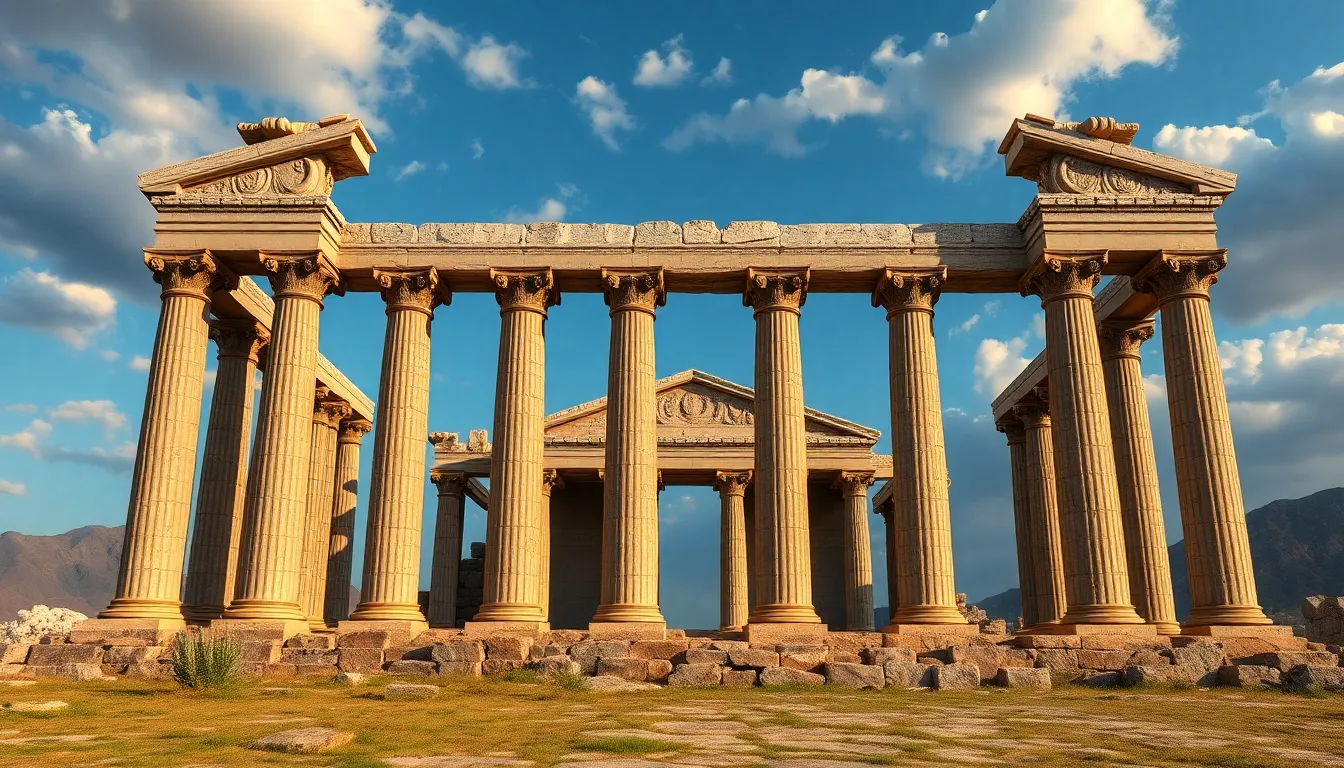
The Temple of Gaia was strategically located in a fertile valley, symbolizing its connection to agriculture and the land. Its architectural style is characterized by:
- Doric columns: Representing strength and simplicity, typical of ancient Greek temples.
- Natural elements: Incorporation of local stone and materials, reflecting the goddess’s connection to the Earth.
- Open-air design: Allowing for communal gatherings and celebrations in honor of Gaia.
C. Cultural and religious practices associated with the temple
The temple served as a focal point for various cultural and religious practices. Communities would gather for celebrations, festivals, and rituals that honored the Earth Mother, reinforcing their connection to the land and the cycles of nature.
IV. Architectural Features of the Temple
The architectural design of the Temple of Gaia was not only a reflection of the aesthetic values of the era but also incorporated elements that symbolized Gaia’s attributes.
A. Design elements reflecting Gaia’s attributes
The temple’s design featured:
- Earth tones: The use of colors and materials that blended harmoniously with the surrounding landscape.
- Curvilinear forms: Representing the organic shapes found in nature, reflecting Gaia’s nurturing essence.
B. Use of natural materials and symbolism in the architecture
Constructed primarily from local stone, the temple’s architecture emphasized a connection with the land. The incorporation of symbols such as:
- Vines and leaves: Carvings that represented fertility and growth.
- Earth motifs: Designs that echoed the forms of hills and valleys, signifying Gaia’s nurturing embrace.
C. Comparison with other ancient temples dedicated to earth deities
While the Temple of Gaia was unique, it shared similarities with other ancient temples dedicated to earth deities, such as:
- The Temple of Demeter: Celebrating the goddess of agriculture, which also emphasized the importance of the land.
- The Temple of Artemis: Highlighting the connection to nature and wildlife, akin to Gaia’s nurturing aspects.
V. Rituals and Celebrations at the Temple
The Temple of Gaia was a vibrant center for various rituals and celebrations that honored the Earth Mother. These practices fostered a sense of community and connection to the land.
A. Major festivals held in honor of Gaia
Festivals dedicated to Gaia included:
- Gaia’s Renewal Festival: Celebrating the arrival of spring and the rebirth of nature.
- Harvest Festival: Acknowledging the bounty of the earth and giving thanks for the harvest.
B. Types of offerings and sacrifices made to Gaia
Devotees would offer various gifts to Gaia, including:
- Fruits and grains, symbolizing the fertility of the land.
- Flowers and herbs, representing the beauty and diversity of nature.
C. Role of priests and priestesses in rituals
Priests and priestesses held significant roles in conducting rituals and ceremonies. They were responsible for:
- Interpreting the will of Gaia and relaying messages to the community.
- Performing sacrifices and offerings to ensure harmony with nature.
VI. The Temple’s Influence on Ancient Greek Society
The Temple of Gaia had a profound influence on ancient Greek society, shaping agricultural practices, community values, and philosophical thought.
A. Impact on agriculture and community practices
The temple served as a center for agricultural wisdom, where farmers would gather to share knowledge and strategies for sustainable farming, reinforcing the importance of living in harmony with the Earth.
B. Gaia’s role in promoting environmental stewardship
Gaia’s teachings emphasized the need for environmental stewardship. The reverence for the Earth Mother encouraged communities to:
- Practice sustainable farming techniques.
- Respect the natural cycles of the land.
C. Influence on later philosophical and ecological thought
The concept of Gaia has transcended ancient Greece, influencing later philosophical movements and ecological thought. Philosophers like Aristotle reflected on the interconnectedness of nature, and modern environmental movements draw inspiration from Gaia’s mythology, emphasizing the need for a balanced relationship with the Earth.
VII. The Temple of Gaia in Modern Context
Today, the Temple of Gaia continues to inspire interest and reverence, as archaeological discoveries shed light on its historical significance and as modern movements seek to revive Gaia’s teachings.
A. Archaeological discoveries and ongoing research
Recent archaeological excavations have uncovered artifacts and structural remnants of the Temple of Gaia, providing insights into its historical and cultural context. Ongoing research continues to unveil