The Temples of Ancient Greece: A Cultural and Spiritual Legacy
I. Introduction
Ancient Greece is often regarded as one of the cornerstones of Western civilization, marked by significant advancements in art, philosophy, politics, and science. At the heart of this vibrant culture were the temples, which served not only as places of worship but also as crucial centers of social and political life. The grandeur and architectural brilliance of these structures reflect the importance of religion and spirituality in the daily lives of the ancient Greeks.
This article delves into the rich history and architectural significance of Greek temples, exploring their evolution, major examples, and the cultural impact they had on society. By understanding these sacred spaces, we can appreciate their enduring legacy and relevance in contemporary culture.
II. Historical Context of Greek Temples
The history of Greek temples is intertwined with the evolution of Greek civilization itself. Initially, early Greeks worshipped in simple shrines or altars dedicated to their gods. However, as society progressed, so did the complexity and grandeur of their religious structures.
A. Evolution of temple architecture in ancient Greece
Greek temple architecture underwent several phases, reflecting changes in religious practices, societal structures, and artistic styles. The Early Archaic period saw the emergence of the first stone temples, which were simple and rectangular in shape. Over time, these evolved into the more sophisticated designs of the Classical period, characterized by intricate detailing and harmonious proportions.
B. Timeline of significant temple constructions
- 8th century BCE: Early stone temples begin to appear.
- 6th century BCE: The introduction of the Doric and Ionic orders.
- 5th century BCE: The construction of the Parthenon on the Acropolis of Athens.
- 4th century BCE: The rise of the Corinthian order and more elaborate temple designs.
- 2nd century BCE: The influence of Hellenistic styles on temple architecture.
C. Influence of historical events on temple development
Political events, such as wars and the rise and fall of city-states, greatly influenced temple construction. For instance, the Persian Wars led to a surge in Athenian pride and the subsequent construction of the Parthenon, symbolizing Athenian democracy and cultural superiority.
III. Architectural Features of Greek Temples
The architectural grandeur of Greek temples is defined by their distinct styles and structural elements. Each temple was designed not only to honor the gods but also to reflect the values and aspirations of the society that built it.
A. Common styles: Doric, Ionic, and Corinthian
Greek temples are primarily categorized into three architectural orders:
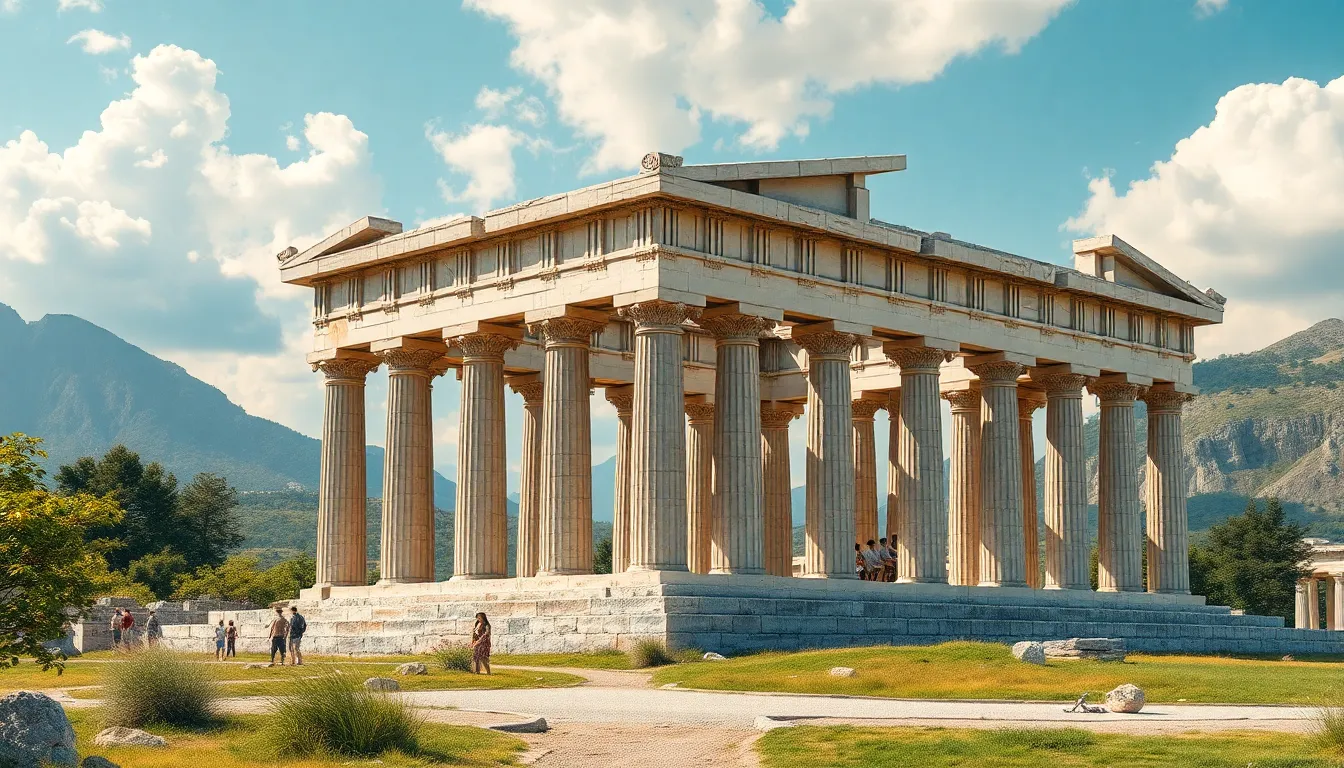
- Doric: The simplest and oldest style, characterized by sturdy, fluted columns with no base and a plain capital.
- Ionic: Noted for its slender, fluted columns with a base and scroll-like volutes at the capital.
- Corinthian: The most ornate style, featuring tall, slender columns with elaborate capitals adorned with acanthus leaves.
B. Key architectural elements: columns, friezes, and pediments
Several key elements define Greek temple architecture:
- Columns: Vertical pillars that support the structure; their design varies with the architectural order.
- Friezes: Horizontal bands that often feature sculptural reliefs depicting mythological scenes or historical events.
- Pediments: Triangular sections at the ends of the temple, typically adorned with sculptures that represent the temple’s deity or significant myths.
C. Innovations in temple design and construction techniques
Greeks were pioneers in architectural innovations, employing techniques such as entasis, which involved slightly curving columns to counteract optical illusions that make straight columns appear to bulge. These advancements contributed to the temples’ aesthetic appeal and structural integrity.
IV. Major Temples and Their Significance
Among the numerous temples scattered across ancient Greece, several stand out due to their historical and cultural significance.
A. The Parthenon: A symbol of Athenian democracy
The Parthenon, dedicated to the goddess Athena, epitomizes the glory of ancient Athens. Built between 447 and 432 BCE, it served not only as a temple but also as a treasury and a symbol of Athenian power and democracy. Its architectural perfection, including the use of the Doric order, intricate sculptures by Phidias, and its commanding position on the Acropolis, make it a defining monument of classical architecture.
B. The Temple of Apollo at Delphi: The site of the Oracle
The Temple of Apollo at Delphi was renowned for housing the Oracle, a priestess who provided cryptic predictions and guidance. This temple was central to the religious practices of the Greeks, where individuals and city-states would seek advice on crucial matters. The site’s stunning views and rich historical context make it a significant cultural landmark.
C. The Temple of Zeus at Olympia: Center of the Olympic Games
Dedicated to Zeus, the Temple of Zeus at Olympia was crucial for the Olympic Games, which celebrated athletic prowess and honored the gods. Built in the 5th century BCE, it housed the colossal statue of Zeus, one of the Seven Wonders of the Ancient World. This temple symbolizes the intertwining of religion, sport, and civic pride in ancient Greece.
V. The Role of Temples in Religious Practices
Greek temples served as vital centers for religious activities and communal gatherings, reflecting the deep connection between spirituality and daily life.
A. Temples as centers of worship and sacrifice
Temples were not merely architectural feats; they were sacred spaces where rituals, sacrifices, and ceremonies took place. Citizens would bring offerings and perform rites to honor the deities, seeking favor and blessings for their families and city-states.
B. Festivals and rituals associated with temples
Numerous festivals were held in honor of the gods, often featuring athletic competitions, theatrical performances, and sacrifices. The Panathenaea in Athens, for example, celebrated Athena with grand processions and cultural displays, showcasing the temple’s central role in community life.
C. The connection between temples and the pantheon of Greek gods
Each temple was dedicated to a specific deity, reflecting the pantheon of Greek mythology. Temples served as physical manifestations of the gods, encapsulating their stories, attributes, and the values they represented within Greek society.
VI. Temples as Cultural Hubs
Beyond their religious functions, temples played a significant role in the cultural and civic life of ancient Greece.
A. Temples as centers for art and sculpture
Greek temples were adorned with magnificent sculptures and friezes, showcasing the artistic talent of the time. These artworks not only enhanced the beauty of the structures but also conveyed narratives from mythology, thus serving as educational tools for the populace.
B. Influence of temples on literature and philosophy
Temples were often the backdrop for philosophical discussions and literary compositions. The works of playwrights and philosophers, such as Plato and Aristotle, frequently referenced the moral and ethical teachings derived from mythology and religion, which were closely associated with the temples.
C. Role of temples in community and civic life
Temples were community gathering places, where citizens came together not only for worship but also for civic duties. The social and political activities surrounding temples reinforced community bonds and fostered a sense of shared identity among the people.
VII. The Legacy of Greek Temples Today
The influence of ancient Greek temples extends far beyond their original context, leaving a lasting impact on modern society.
A. Preservation and restoration of ancient sites
Today, many ancient temples have been preserved and restored as UNESCO World Heritage Sites. Efforts to protect these sites allow us to appreciate their historical significance and architectural brilliance, serving as a testament to the ingenuity of ancient Greek builders.
B. Influence on modern architecture and design
The architectural styles and principles established by the ancient Greeks continue to influence modern architecture. Elements such as columns, symmetry, and proportion can be seen in various public buildings, museums, and monuments around the world, reflecting the timeless appeal of Greek design.
C. Continuing cultural and spiritual significance
Greek temples still hold cultural and spiritual significance today. They