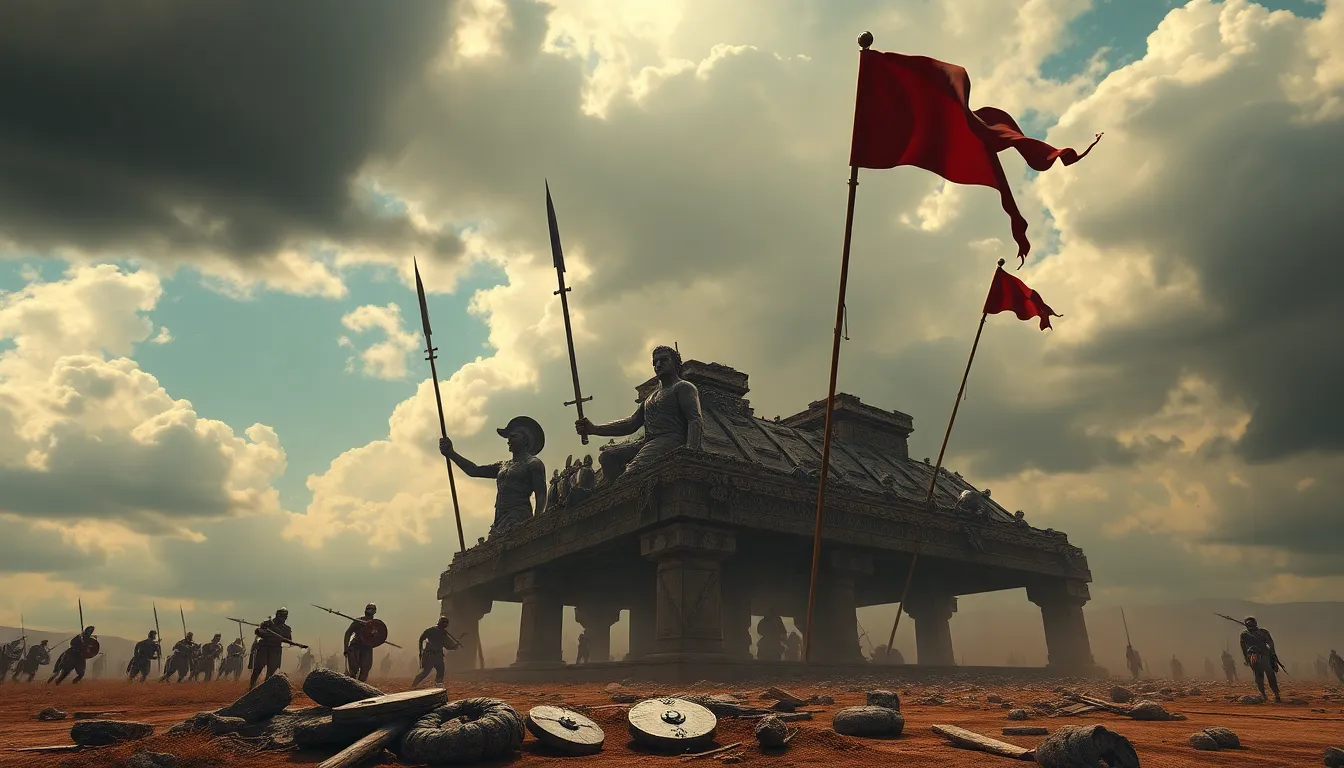
The Titanomachy: A Journey Through Ancient Greek Warfare
I. Introduction to the Titanomachy
The Titanomachy is one of the most significant conflicts in Greek mythology, representing the epic battle between the Titans and the Olympian gods. This monumental struggle not only shaped the pantheon of deities that the ancient Greeks worshiped but also reflected the societal values and cultural dynamics of the time.
In this fierce conflict, the Olympian gods, led by Zeus, rose against their predecessors, the Titans, in a quest for supremacy. The outcome of this war marked the transition from the old order of Titans to the new reign of the Olympians, establishing a new hierarchy within the cosmos.
The Titanomachy serves as a lens through which we can understand ancient Greek culture, highlighting themes of power, rebellion, and the cyclical nature of history.
II. The Titans: Origins and Characteristics
The Titans were a group of powerful deities who predated the Olympian gods in Greek mythology. They were children of Gaia (Earth) and Uranus (Sky) and represented various natural and cosmic elements.
Key figures among the Titans include:
- Cronus: The leader of the Titans, known for his role in overthrowing his father Uranus.
- Rhea: The sister and wife of Cronus, mother of the Olympian gods.
- Oceanus: The Titan of the ocean, representing the vast bodies of water.
- Hyperion: The Titan of light, often associated with the sun.
- Themis: The Titaness of divine law and order.
The reign of the Titans was characterized by a chaotic rule that embodied the primordial chaos of the universe. This chaos eventually led to their downfall, as their rule was challenged by the younger generation of gods.
III. The Rise of the Olympian Gods
The rise of the Olympian gods began with the birth of Zeus, the youngest son of Cronus and Rhea. Fearing a prophecy that one of his children would overthrow him, Cronus swallowed each of his offspring. However, Rhea saved Zeus by hiding him in a cave on Crete and giving Cronus a stone wrapped in swaddling clothes instead.
As Zeus grew, he sought to liberate his siblings—Hestia, Hera, Demeter, Poseidon, and Hades—from Cronus’s stomach. After successfully freeing them, the siblings united against their father and the Titans.
The motivations behind the Olympians’ rebellion were fueled by a desire for freedom and a rightful place in the cosmos. They sought to establish a new order that would allow them to govern the world.
During this time, alliances were formed with other deities and beings, including:
- Gaia, who supported the Olympians against her own children, the Titans.
- The Cyclopes, who provided Zeus with thunderbolts, and the Hecatoncheires, who contributed their immense strength.
IV. Key Battles and Strategies in the Titanomachy
The Titanomachy was marked by several key battles as the Titans and the Olympians clashed for supremacy. The fight lasted for ten years, with each side employing various strategies and tactics.
Major battles included:
- The initial clashes on Mount Olympus, where the Titans had the upper hand.
- The decisive battle at the plains of Phlegra, where the Olympians rallied their forces.
- Encounters in the depths of Tartarus, where the Titans were ultimately imprisoned.
The military tactics used by both sides varied significantly. The Titans, with their sheer strength and numbers, relied on brute force. In contrast, the Olympians, under Zeus’s leadership, utilized strategic planning and the element of surprise. The use of divine intervention, particularly Zeus’s thunderbolts and the power of prophecy, played a crucial role in turning the tide of battle.
V. The Role of Prometheus and Other Key Figures
Among the notable figures in the Titanomachy, Prometheus stands out for his involvement and significance. Although he was a Titan, he sided with the Olympians, aiding them in their struggle against Cronus and the other Titans.
Prometheus is best known for his act of defiance against the will of the gods—stealing fire from Olympus and giving it to humanity. This act symbolized enlightenment and knowledge but also led to severe punishment by Zeus.
Other characters who played crucial roles included:
- Atlas: A Titan who bore the weight of the heavens after the defeat of the Titans.
- Hercules: A demigod and hero who later played a role in combating the remnants of Titan influence.
- The Cyclopes: Known for their craftsmanship, they forged weapons for the Olympians.
Betrayal and loyalty were central themes in the Titanomachy, with figures like Prometheus demonstrating the complexities of allegiance in the face of war.
VI. Consequences of the Titanomachy
The aftermath of the Titanomachy resulted in the defeat of the Titans and the establishment of the Olympian order. The Olympians, led by Zeus, created a new hierarchy that would govern the cosmos.
Significant consequences included:
- The imprisonment of the Titans in Tartarus, a deep abyss used as a dungeon of torment.
- The division of realms among the Olympian gods, with Zeus taking the sky, Poseidon the sea, and Hades the underworld.
- The establishment of a new order that emphasized justice and order over chaos.
The fate of the Titans became a cautionary tale about the dangers of pride and the inevitability of change. Their legacy lived on in myths, often serving as a reminder of the past and the consequences of challenging the new order.
VII. Cultural Impact and Representation in Art and Literature
The Titanomachy has had a profound impact on ancient Greek literature and poetry. It inspired countless works, including epic poems, tragedies, and philosophical texts that explored themes of power, conflict, and morality.
Artistic representations of the Titanomachy can be found in various forms:
- Sculpture: Many sculptures depict the struggle between the Titans and Olympians, showcasing the dramatic moments of the conflict.
- Pottery: Ancient pottery often illustrated scenes from the Titanomachy, providing visual narratives of the myth.
- Literature: Works by poets like Hesiod in “Theogony” narrate the events of the Titanomachy, shaping the understanding of Greek cosmology.
The influence of the Titanomachy extends beyond ancient Greece, inspiring later works in art and literature, and continues to resonate in modern interpretations of mythology.
VIII. Conclusion: The Titanomachy’s Legacy in Warfare and Mythology
The Titanomachy remains a powerful narrative that reflects enduring themes of conflict and power. It serves as a metaphor for human struggle and resilience, illustrating the cyclical nature of history where old orders give way to new ones.
This epic battle has left a lasting legacy, influencing not only ancient Greek culture but also shaping contemporary understandings of mythology and warfare. The stories of the Titans and Olympians continue to captivate audiences, reminding us of the complexities of power dynamics and the universal themes of conflict.
In conclusion, the Titanomachy is more than just a myth; it is a profound exploration of the human experience, reflecting our struggles for power, identity, and the consequences of our choices in the grand tapestry of history.