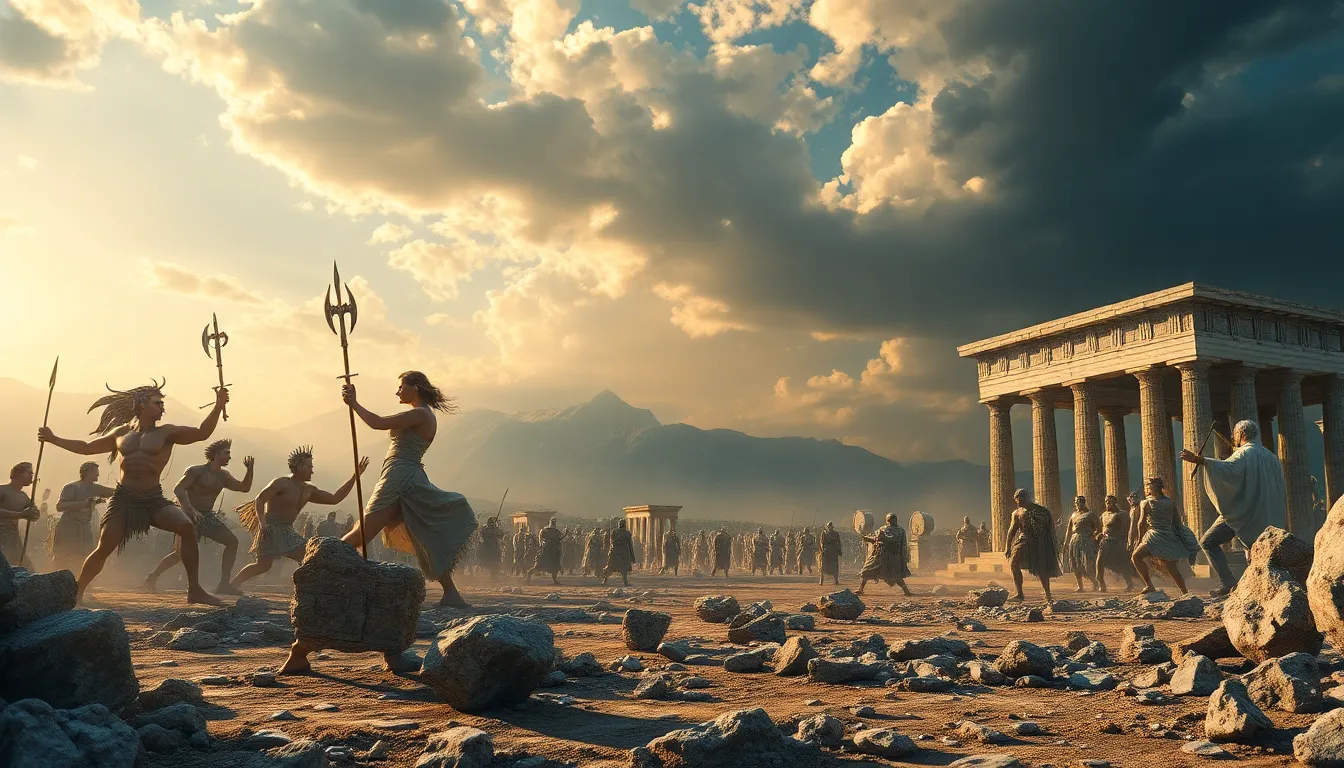
The Titanomachy: A Mythical War of Titans and Gods
I. Introduction
The Titanomachy, a pivotal conflict in Greek mythology, refers to the epic battle between the Olympian gods and the Titans, the elder deities who ruled during the Golden Age. This myth not only marks the transition of power from the Titans to the Olympians but also encapsulates fundamental themes of rebellion, familial strife, and the quest for supremacy. In this article, we will explore the origins and characteristics of the Titans, the rise of the Olympians, the events leading to the war, the battle itself, its aftermath, and the enduring legacy of the Titanomachy in culture and art.
II. The Titans: Origins and Characteristics
The Titans were the primordial deities that emerged from Chaos, embodying natural and cosmic forces. They were the offspring of Gaia (Earth) and Uranus (Sky), and each Titan represented different aspects of the world, from the ocean to the heavens.
A. Description of the Titans and Their Role in Greek Mythology
The Titans were known for their immense size and strength, often seen as the archetypal figures of power and dominance in the ancient world. They ruled over the cosmos with little regard for the future, leading to their eventual downfall.

B. Key Titans: Cronus, Rhea, Oceanus, and Others
- Cronus: The leader of the Titans who overthrew his father Uranus and was known for his time as the god of time and harvest.
- Rhea: The sister and wife of Cronus, often associated with motherhood and fertility.
- Oceanus: The Titan of the ocean, representing the great river encircling the world.
- Tethys: The personification of the nourishing flow of water and wife of Oceanus.
- Hyperion: The Titan of light, often associated with the sun.
- Themis: The Titaness of divine law and order, representing the principles of justice.
C. The Titans’ Reign During the Golden Age
The period known as the Golden Age was characterized by peace, prosperity, and the absence of conflict. The Titans’ governance was marked by a harmonious existence for humanity, who lived without labor or strife. However, this idyllic state was not to last, as the seeds of discord were sown within their own ranks.
III. The Olympian Gods: Rise of the New Order
The Olympian gods are the descendants of the Titans, primarily born from Cronus and Rhea. They came to symbolize a new order of deities who would eventually rise to challenge the established rule of the Titans.
A. Introduction to the Olympians and Their Lineage
The Olympians included major gods and goddesses such as Zeus, Hera, Poseidon, and Hades. Each of these deities held dominion over specific aspects of life and nature, representing the complexities of the human experience.
B. Key Figures: Zeus, Hera, Poseidon, and Hades
- Zeus: The king of the gods, known for his control over the sky and thunder.
- Hera: The queen of the gods and goddess of marriage, often portrayed as jealous and vengeful towards Zeus’s lovers.
- Poseidon: The god of the sea, earthquakes, and horses, often depicted wielding a trident.
- Hades: The god of the underworld, ruling over the realm of the dead.
C. The Motivations Behind the Olympians’ Rebellion
As the offspring of Cronus, the Olympians were prophesied to overthrow him. Fearing that one of his children would dethrone him, Cronus swallowed each of them at birth. However, Rhea saved Zeus, who would lead the revolt against the Titans. The motivations for the Olympian rebellion were rooted in a desire for freedom and a new order that would bring balance to the cosmos.
IV. The Prelude to War: Tensions and Alliances
Before the Titanomachy erupted, a series of events set the stage for this monumental conflict.
A. Key Events Leading Up to the Titanomachy
The tension escalated when Zeus, having been raised in secret, rallied his siblings to reclaim their rightful place. This act of rebellion was fueled by a desire for justice and revenge against Cronus, who had wronged them.
B. The Role of Prophecy and Familial Conflict
Prophecies played a crucial role in Greek mythology, often dictating the actions of the gods. The prophecy that foretold Cronus’s downfall at the hands of one of his children became a driving force behind the Olympians’ rebellion. Additionally, the conflicts within the Titan family, including Cronus’s fear and paranoia, contributed to the brewing war.
C. Alliances Formed by Both Titans and Olympians
As the conflict approached, both sides sought allies. The Olympians garnered support from other deities, including the Cyclopes and the Hecatoncheires, who possessed immense strength and power. The Titans, on the other hand, relied on their established dominance but faced the challenge of betrayal from within.
V. The Great Battle: Key Events and Strategies
The Titanomachy was not just a battle of strength but also a clash of strategy and cunning.
A. Description of the Battlefield and Its Significance
The battlefield was a chaotic realm, often described as the space between heaven and earth. It was a place where the forces of nature clashed, symbolizing the struggle for control over the cosmos.
B. Major Events During the Conflict
During the ten-year siege, various significant events unfolded:
- The Cyclopes forged powerful weapons for the Olympians, including Zeus’s thunderbolt, Poseidon’s trident, and Hades’ helm of invisibility.
- The Titans utilized their formidable strength and numbers, creating a fierce resistance against the Olympians.
- Key battles were fought on multiple fronts, with shifting allegiances and strategies as the war progressed.
C. Strategies Employed by Both Sides
The Olympians relied on their ingenuity and the support of the Cyclopes, while the Titans depended on their raw power and established positions. The use of divine weapons and the manipulation of the battlefield’s elements played a crucial role in determining the outcome.
VI. The Aftermath of the Titanomachy
The conclusion of the Titanomachy marked a significant turning point in Greek mythology.
A. Consequences for the Titans and Olympians
The Titans were ultimately defeated, leading to a dramatic shift in the power dynamics of the cosmos. The Olympians emerged victorious, establishing a new order.
B. The Fate of the Titans: Imprisonment in Tartarus
As punishment for their rebellion, the Titans were cast into Tartarus, a deep abyss used as a dungeon of torment and suffering. There, they would remain for eternity, ensuring that they could not challenge the Olympians again.
C. Establishment of the Olympian Rule and New Order
With the Titans defeated, the Olympians established their rule from Mount Olympus. This new order brought about changes in the relationship between gods and mortals, as the Olympians were more involved in the lives of humans, often intervening in their affairs.
VII. Cultural Impact and Legacy of the Titanomachy
The Titanomachy has left a lasting impact on art, literature, and modern media, becoming a symbol of conflict, change, and the struggle for power.
A. Influence on Art, Literature, and Modern Media
The story of the Titanomach