

The Titanomachy: A War of Gods That Changed Everything
I. Introduction to the Titanomachy
The Titanomachy is one of the most significant conflicts in Greek mythology, representing the struggle for power between the older generation of gods, the Titans, and their younger successors, the Olympians. This epic battle not only shaped the divine hierarchy of the ancient Greek pantheon but also reflected the broader themes of conflict and change that permeate human existence.
The significance of the Titanomachy extends beyond mere myth; it encapsulates the transition from chaos to order and the establishment of a new world order under the leadership of Zeus and the Olympians. The repercussions of this war would resonate through countless myths and stories, influencing Greek culture and beyond.
II. The Origins of the Titanomachy
To understand the Titanomachy, one must explore the genealogy of the Titans and Olympians. The Titans, led by Cronus, were the first generation of gods born from Gaia (Earth) and Uranus (Sky). They ruled during the Golden Age, a time of peace and prosperity.
However, Cronus, fearing a prophecy that he would be overthrown by one of his children, swallowed each of his offspring as they were born. Rhea, his wife, managed to save their youngest child, Zeus, by hiding him in Crete and giving Cronus a stone wrapped in swaddling clothes instead.
The key figures in this divine saga include:
- Cronus: The leader of the Titans, who devoured his children to avoid being overthrown.
- Rhea: The mother of the Olympians, who devised a plan to save Zeus.
- Zeus: The youngest son, destined to lead the revolt against the Titans.
- Hestia, Hera, Demeter, Poseidon, and Hades: The siblings of Zeus, who would become key players in the war.
The prophecy that sparked the conflict was a chilling warning that Cronus would be overthrown by one of his own sons. This foreboding prediction set the stage for the inevitable clash between the Titans and their offspring, the Olympians.
III. The Build-Up to War
The tensions between the Titans and Olympians gradually escalated, leading to the declaration of war. After Zeus was raised in secret, he returned to confront his father. With the help of his mother Rhea, Zeus freed his siblings from Cronus’s stomach, uniting the Olympians against the Titans.
Key events leading to the war included:
- The release of Zeus’s siblings, who rallied to support him.
- The forging of alliances with other powerful beings, including the Cyclopes and the Hecatoncheires, who were imprisoned by the Titans.
- Zeus’s strategic planning and gathering of forces to challenge Cronus’s reign.
Neutral parties, such as the primordial deities and certain Titans who were sympathetic to the Olympians, played crucial roles during this period, providing assistance and resources that would prove vital in the upcoming battle.
IV. The Great Battle: Key Events and Strategies
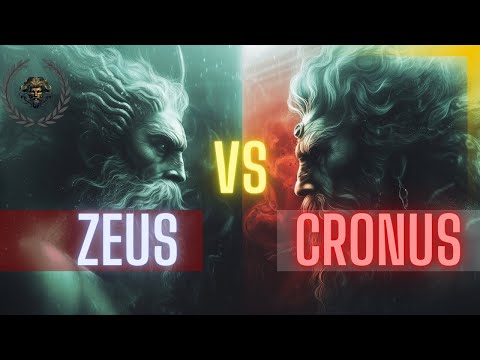
The Titanomachy unfolded over a decade of fierce warfare, characterized by intense battles and divine strategies. The two factions clashed on the plains of Thessaly, with Zeus leading the Olympians and Cronus commanding the Titans.
Key events in the battle included:
- The Cyclopes: After being freed, they crafted powerful weapons for the Olympians, including Zeus’s thunderbolts, Poseidon’s trident, and Hades’s helm of darkness.
- The Hecatoncheires: With their hundred arms, they hurled massive boulders at the Titans, turning the tide of battle.
- The Final Confrontation: Zeus’s strategic use of lightning bolts played a critical role in the defeat of Cronus and the Titans.
As the war raged on, divine interventions and clever strategies became crucial. The Olympians utilized their newfound powers and alliances to counter the Titans’ formidable strength. Major turning points included the fall of Cronus’s forces and the eventual defeat of the Titan king himself.
V. The Aftermath of the Titanomachy
The consequences of the Titanomachy were profound for both the Titans and the Olympians. With the Titans defeated, Zeus and his siblings established a new order among the gods, with Zeus taking the throne as the king of the Olympians.
The aftermath included:
- Imprisonment of the Titans: The defeated Titans were cast into Tartarus, a deep abyss used as a dungeon of torment.
- The Reorganization of Power: Zeus, alongside his brothers and sisters, divided the realms of the world—Zeus took the sky, Poseidon the sea, and Hades the underworld.
- Impact on the Natural World: The Olympians brought order to the chaos that had reigned, leading to the flourishing of the Earth and the establishment of a new era.
VI. The Titanomachy in Art and Literature
The Titanomachy has been a source of inspiration for countless artists and writers throughout history. In ancient Greece, it was depicted in various forms of art, including pottery, sculpture, and painting.
Some notable artistic representations include:
- Vase Paintings: Many ancient Greek vases feature scenes of the Titanomachy, capturing the dynamic battles between the gods.
- Sculptures: Statues and friezes from temples depict key moments of the battle, showcasing the power of the gods.
Literary representations are equally rich, found in epic poetry such as Hesiod’s “Theogony” and later works by playwrights like Aeschylus. In modern adaptations, the Titanomachy continues to resonate, influencing contemporary literature, films, and video games.
VII. The Titanomachy’s Legacy
The legacy of the Titanomachy is evident in its lasting impact on mythology and culture. It serves as a foundational story that informs numerous myths and legends that followed, illustrating the perpetual theme of power struggles.
Key aspects of its legacy include:
- Influence on Subsequent Myths: The themes of rebellion, family conflict, and the rise and fall of power can be seen in many later myths.
- Metaphor for Power Struggles: The Titanomachy represents the universal human experience of conflict over power and control, relevant in both historical and contemporary contexts.
- Cultural References: The story continues to appear in literature, theater, and popular culture, symbolizing the battle between old and new, chaos and order.
VIII. Conclusion
In summary, the Titanomachy stands as a monumental event in Greek mythology, illustrating the transformative power of conflict and the establishment of a new order. Its significance transcends mere myth, offering insights into the nature of power, family dynamics, and the eternal struggle between generations.
The enduring impact of the Titanomachy on mythology and culture is a testament to its relevance across time, reminding us of the lessons learned from divine conflicts and the complexities of existence. The Titanomachy is not just a story of gods; it is a reflection of the human condition, encompassing the struggles that define our lives.


