The Titanomachy Explained: The Battle for Supreme Rule
I. Introduction
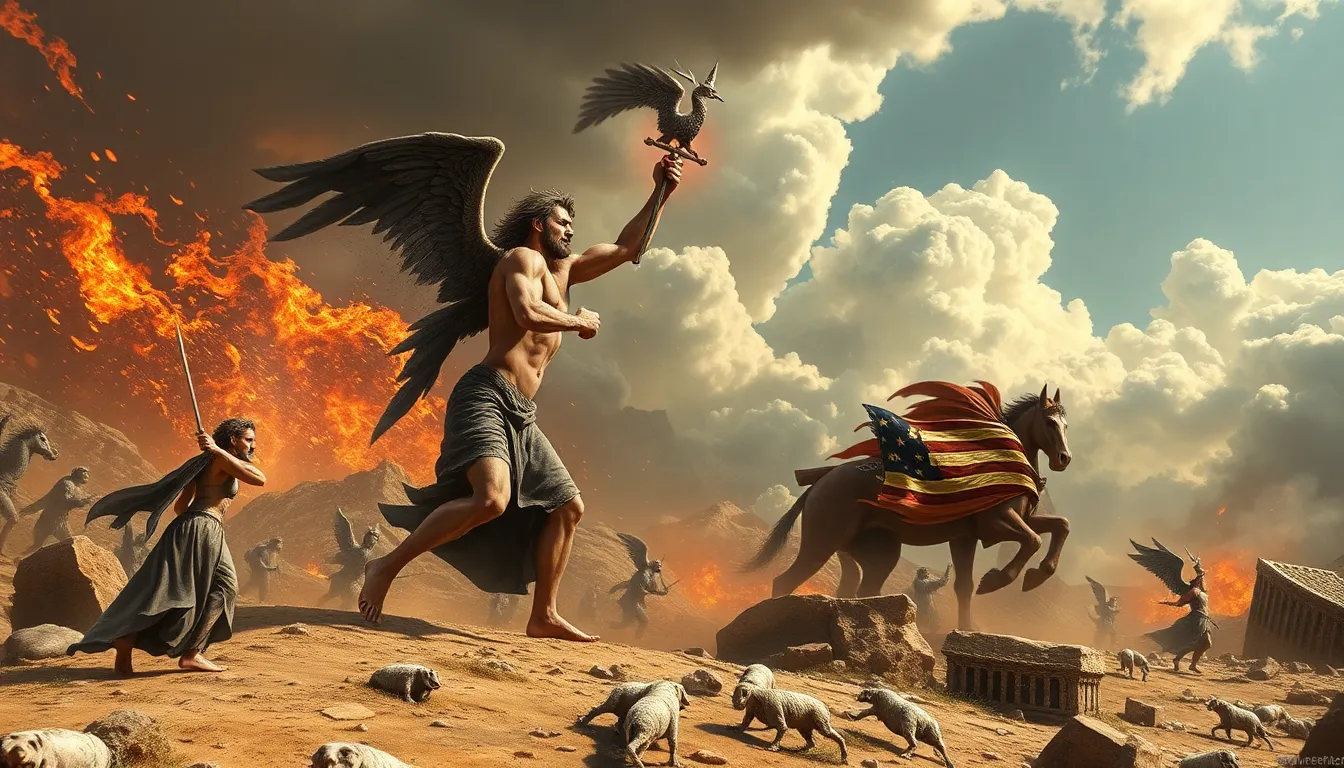
The Titanomachy, a monumental conflict in Greek mythology, refers to the epic battle between the Titans, the elder gods, and the Olympians, the younger generation of deities. This war is not just a clash of titanic proportions but symbolizes the struggle for supremacy in the cosmos. It is a pivotal event that reshaped the divine hierarchy and established the rule of the Olympian gods, marking a significant transition in the mythological narrative.
Understanding the Titanomachy is crucial for grasping the broader themes of power, rebellion, and the cyclical nature of mythology. This article will explore the origins and roles of the Titans, the rise of the Olympian gods, the events leading to the war, the battle itself, its aftermath, and its lasting cultural impact.
II. The Titans: Who Were They?
The Titans were a race of powerful deities that predated the Olympian gods. They were born from Gaia (Earth) and Uranus (Sky), and they personified various natural and conceptual elements. The lineage of the Titans is essential for understanding their role in Greek mythology.
A. Origins and lineage of the Titans
The Titans emerged during the creation of the universe, and their lineage includes:
- Coeus – Titan of intellect
- Crius – Titan of the constellations
- Hyperion – Titan of light
- Oceanus – Titan of the ocean
- Prometheus – Titan of forethought
- Rhea – Mother of the Olympians
- Chronos – Titan of time
B. Key figures among the Titans
Among the Titans, several figures stand out:
- Cronus: The leader of the Titans, who overthrew his father Uranus and ruled during the Golden Age.
- Rhea: The wife of Cronus and mother of the first generation of Olympians, including Zeus and Hera.
- Oceanus: The Titan god of the ocean, symbolizing the vastness of the waters.
C. Role of the Titans in the early cosmos
The Titans played a fundamental role in the early cosmos, governing various aspects of the natural world and human experience. Their rule was characterized by a lack of order, leading to chaos that would ultimately set the stage for the Titanomachy.
III. The Olympian Gods: Rise of the New Order
The Olympian gods represent a new order of deities that emerged from the conflict with the Titans. Their rise marked a significant shift in the power dynamics of the mythological world.
A. Introduction to the Olympian gods
Led by Zeus, the Olympians were a group of twelve major gods who resided on Mount Olympus. They were characterized by their distinct personalities, domains, and relationships with humanity.
B. Key figures: Zeus, Hera, Poseidon, and others
Some key figures among the Olympians include:
- Zeus: King of the gods, god of the sky and thunder.
- Hera: Queen of the gods, goddess of marriage and family.
- Poseidon: God of the sea, earthquakes, and horses.
- Athena: Goddess of wisdom and war.
- Apollo: God of the sun, music, and prophecy.
C. The motivations behind their rebellion against the Titans
The Olympians’ rebellion was driven by several factors:
- Desire for freedom from the oppressive rule of Cronus.
- Prophecies foretelling their ascent to power.
- Personal ambitions and grievances against the Titans.
IV. The Prelude to War: Tensions and Alliances
Before the Titanomachy erupted, various tensions and alliances formed that set the stage for the conflict.
A. Events leading up to the Titanomachy
Several key events precipitated the war, including:
- The swallowing of Zeus’s siblings by Cronus, which fueled Zeus’s desire for revenge.
- The eventual escape of Zeus with the help of Rhea, leading to the formation of the Olympian alliance.
B. Major alliances formed
The Olympians were not alone in their quest for supremacy. They formed alliances with various entities, including:
- The Cyclopes, who provided Zeus with his thunderbolts.
- The Hecatoncheires, monstrous giants with a hundred hands, who aided the Olympians in battle.
C. The role of prophecy and fate in the conflict
Prophecy played a crucial role in the Titanomachy. It was foretold that Cronus would be overthrown by one of his children, which motivated his tyrannical actions and the Olympians’ rebellion. The intertwining of fate and free will in this conflict highlights the complexities of Greek mythology.
V. The Great Battle: Key Events and Strategies
The Titanomachy was marked by fierce battles and strategic maneuvers that ultimately determined the fate of the cosmos.
A. Description of the battlefield
The battlefield was a chaotic expanse, with Mount Olympus serving as a key vantage point for the Olympians. The Titans, with their immense size and strength, clashed against the cunning and agility of the Olympians.
B. Major confrontations between Titans and Olympians
Some of the most significant confrontations included:
- The duel between Zeus and Cronus, which symbolized the struggle for supremacy.
- The fierce battles involving the Hecatoncheires and the Titans, showcasing brute strength against strategic might.
C. The involvement of other mythological creatures and beings
Various other beings played a role in the Titanomachy, including:
- The Centaurs, who sided with different factions.
- The Nymphs and other divine entities who took part in the conflict.
VI. The Aftermath: Consequences of the Titanomachy
The Titanomachy resulted in profound changes in the divine order and the fate of the Titans.
A. The defeat of the Titans and their fate
The Titans were ultimately defeated and imprisoned in Tartarus, a dark abyss where they would remain for eternity, symbolizing their fall from power.
B. Establishment of the Olympian order
With the Titans vanquished, the Olympians established a new order, with Zeus as the supreme ruler. This new hierarchy defined the relationships between gods and mortals for centuries to come.
C. Changes in the divine hierarchy and their implications
The victory of the Olympians not only reshaped the divine hierarchy but also influenced the nature of human worship and the relationships between gods and mortals. The Olympians were seen as more relatable and human-like, fostering a new era of mythology.
VII. Cultural Impact: The Titanomachy in Art and Literature
The Titanomachy has left an indelible mark on Greek art, literature, and modern interpretations.
A. Representation in ancient Greek art
Artists in ancient Greece depicted the Titanomachy in various forms, including pottery, sculptures, and frescoes. These artworks often illustrated the dramatic confrontations between the Titans and Olympians.
<h3