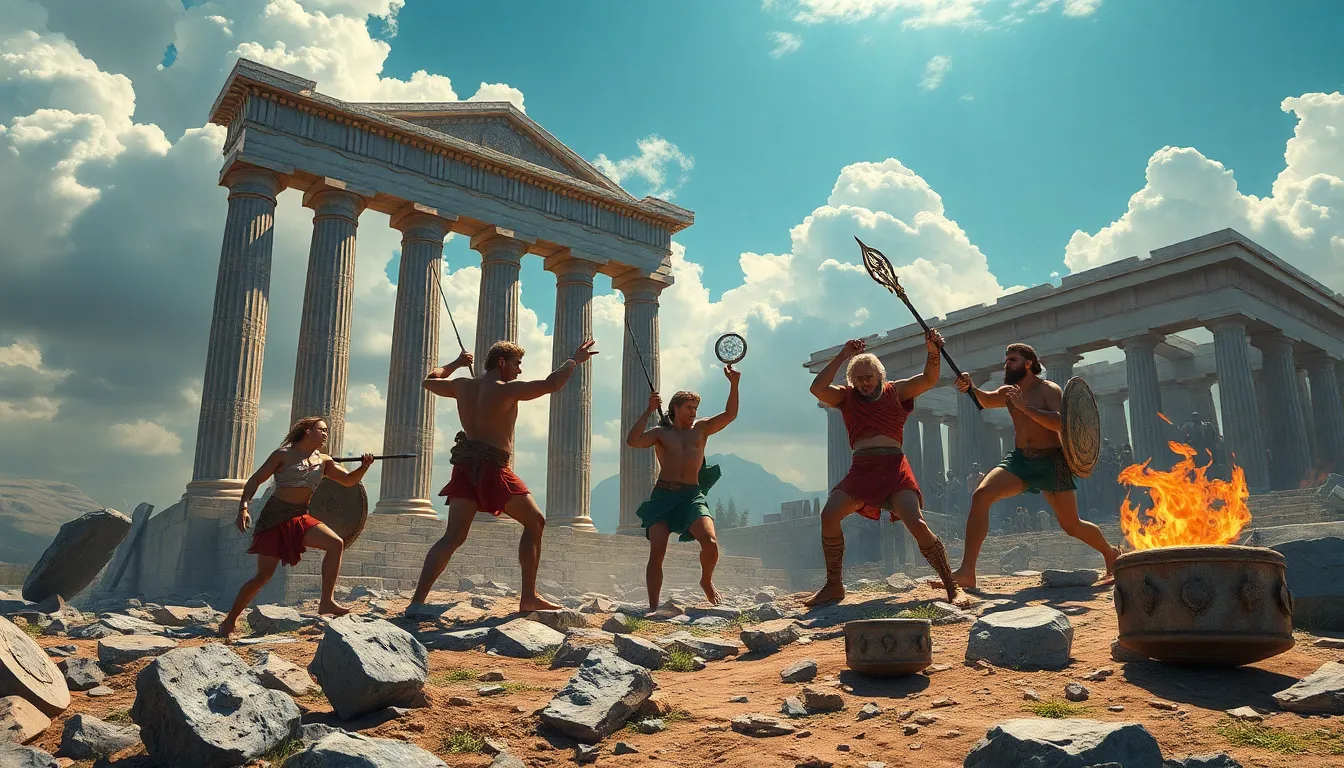
The Titanomachy: How the Olympians Defeated the Titans
I. Introduction
The Titanomachy, often referred to as the War of the Titans, is one of the most significant conflicts in Greek mythology. This epic battle pitted the Olympian gods against their predecessors, the Titans, in a struggle for supremacy over the cosmos. The Titanomachy not only illustrates the themes of power and rebellion but also marks the transition from the old order of Titans to the new order of Olympian gods, shaping the very foundation of Greek mythology.
In this article, we will explore the intricate details of the Titanomachy, discussing the background of the Titans, the rise of the Olympians, the events of the war, and the aftermath that followed the climactic struggle.
II. Background of the Titans
The Titans were the primordial deities in Greek mythology, descendants of Gaia (Earth) and Uranus (Sky). They represented various natural phenomena and aspects of the world, embodying the powerful forces of nature that governed existence.
A. Origin and lineage of the Titans
The Titans were born from Gaia and Uranus, and there were twelve original Titans, including:
- Cronus: The youngest Titan and leader who overthrew Uranus.
- Rhea: Sister and wife of Cronus, mother of the Olympians.
- Oceanus: The Titan of the ocean.
- Tethys: The Titaness of the nourishing flow of fresh water.
- Hyperion: The Titan of light.
- Theia: The Titaness of sight and the shining sky.
- Coius: The Titan of intellect.
- Phoebe: The Titaness of prophecy.
- Coeus: The Titan of the north.
- Mnemosyne: The Titaness of memory and remembrance.
- Chronos: The Titan of time.
- Iapetus: The Titan associated with mortality.

B. Key figures among the Titans
Cronus and Rhea are particularly significant in this narrative. Cronus, fearing that his children would overthrow him as he had done to his father, swallowed each of them at birth. Rhea, desperate to save her youngest child, Zeus, hid him away and gave Cronus a stone wrapped in swaddling clothes instead.
C. The Titans’ reign and characteristics
The Titans ruled during the Golden Age, a time characterized by peace and prosperity. They were known for their strength and might, embodying the raw forces of nature. However, their reign was marked by Cronus’s paranoia and tyranny, setting the stage for eventual rebellion by his children.
III. The Rise of the Olympians
The Olympians, who would eventually become the primary gods of the Greek pantheon, were the children of Cronus and Rhea. They were destined to challenge the Titans, leading to the fateful Titanomachy.
A. Introduction of the Olympian gods
Born in secrecy, the Olympians—Zeus, Hera, Poseidon, Hestia, Demeter, and Hades—were raised away from their father’s tyranny. Each of them possessed unique powers and attributes that would later play a crucial role in the conflict.
B. Key figures among the Olympians
The most prominent Olympian was Zeus, who would eventually become the king of the gods. Other key figures included:
- Hera: Zeus’s sister and wife, goddess of marriage and family.
- Poseidon: God of the sea, known for his control over water.
- Hades: God of the underworld, ruling over the dead.
- Demeter: Goddess of agriculture and the harvest.
- Hestia: Goddess of the hearth and domestic life.
C. Early conflicts and the quest for power
As the Olympians grew, they began to plot against Cronus. This rebellion was fueled by a prophecy that foretold Zeus would overthrow his father, a prophecy that Cronus desperately tried to prevent.
IV. The Prelude to War
Before the Titanomachy erupted into war, several key events set the stage for the conflict.
A. The prophecy concerning Cronus and his children
According to the prophecy, Cronus was doomed to be overthrown by one of his offspring. In a desperate attempt to avert this fate, he devoured each of his children as they were born, believing that by doing so, he could prevent the prophecy from coming true.
B. The secret alliance of the Olympians
While Cronus thought he had secured his reign, Rhea secretly nurtured Zeus and helped him form alliances with other powerful beings, including the Cyclopes and the Hecatoncheires, monstrous giants with a hundred hands.
C. The role of Prometheus and other Titans in the conflict
Prometheus, a Titan known for his intelligence and as a champion of humanity, played a pivotal role in aiding the Olympians by providing them with crucial information and support against Cronus and the Titans.
V. The Great War: Key Events and Battles
The Titanomachy was a monumental conflict filled with epic battles and strategic maneuvers. The war lasted for ten years, with both sides suffering great losses.
A. Description of the epic battles between the two factions
The battles were fierce, with the Titans exhibiting their raw power against the newly formed alliance of the Olympians. Key battles included:
- The Battle of the Titans: A massive confrontation where the Titans clashed with the Olympians, showcasing their immense strength.
- The Siege of Olympus: The Olympians, led by Zeus, launched a counter-offensive aimed at reclaiming their rightful place in the cosmos.
B. The use of strategic alliances
Throughout this conflict, the Olympians gained crucial allies:
- Gaia: The Earth mother, who supported Zeus and the Olympians against Cronus.
- Cyclopes: Master craftsmen who forged powerful weapons, including Zeus’s thunderbolt.
- Hecatoncheires: The hundred-handed giants who fought valiantly for the Olympians.
C. The turning points in the war
One of the turning points of the Titanomachy was the freeing of the Cyclopes and Hecatoncheires from Tartarus, who then aided Zeus with their formidable powers. The use of the thunderbolt, given to Zeus by the Cyclopes, marked a significant turning point in the war, allowing the Olympians to gain the upper hand.
VI. The Role of Zeus: The Leader of the Olympians
Zeus emerged as the central figure in the Titanomachy, showcasing leadership qualities that would define his reign as king of the gods.
A. Zeus’s rise to power
After defeating Cronus, Zeus freed his siblings and rallied them to establish a new order. His strategic mind and ability to inspire loyalty were instrumental in unifying the Olympians and their allies.
B. Key decisions and strategies employed by Zeus
Zeus made several key decisions that contributed to the Olympian victory:
- Forming alliances with powerful beings like Gaia and the Cyclopes.
- Using strategic warfare tactics to exploit the weaknesses of the Titans.
- Leading from the front in battle, inspiring his allies with courage and strength.
C. The significance of Zeus’s leadership in the victory
Zeus’s leadership was pivotal not only in the military victory over the Titans but also in the establishment of a new order of gods that would govern the cosmos. His ability to unite his siblings against a common foe was critical in the success of the Olympians.