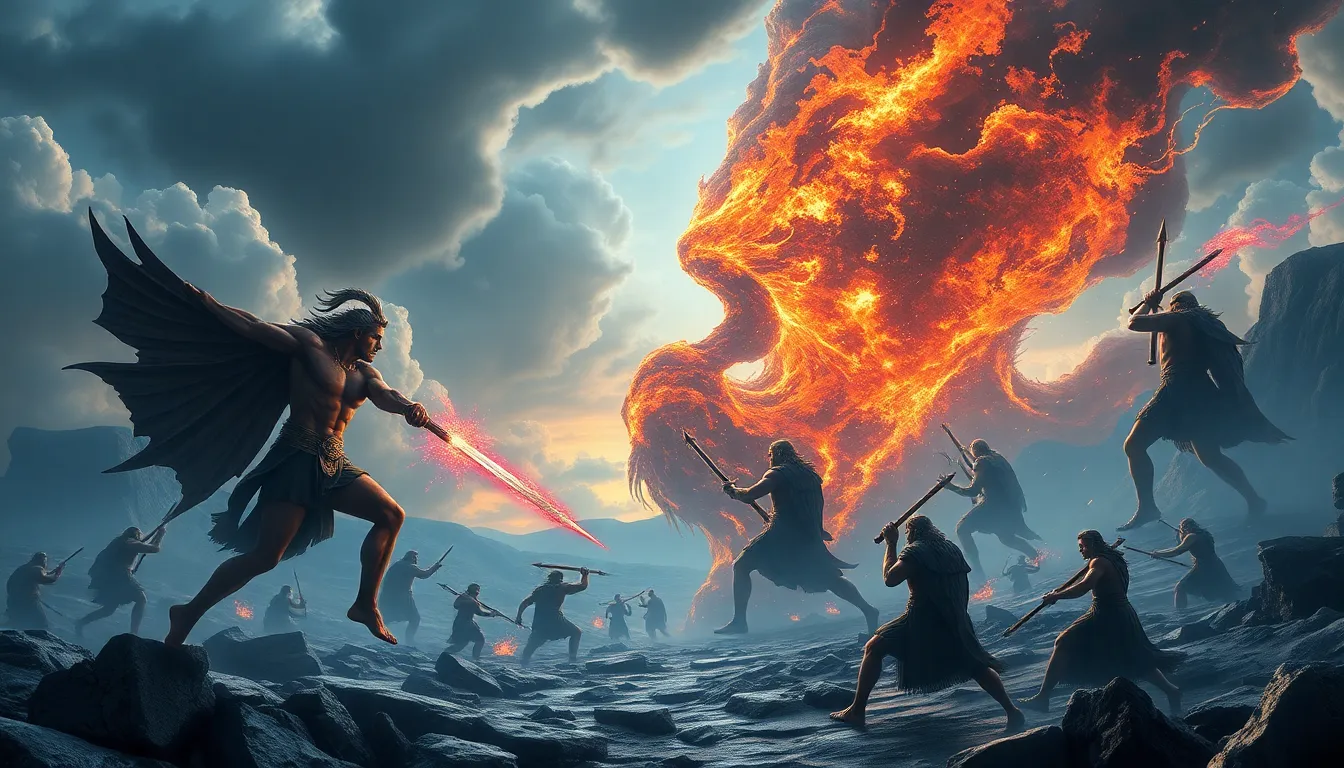
The Titanomachy: The Battle That Defined the Greek Gods
I. Introduction
The Titanomachy, an epic conflict in Greek mythology, represents the struggle between the Titans, the elder gods, and the Olympians, the younger gods led by Zeus. This monumental battle not only determined the fate of the divine hierarchy but also shaped the mythology that has captivated humanity for centuries. Through this article, we will explore the background, causes, key figures, and consequences of the Titanomachy, shedding light on its profound importance in Greek mythology.
II. Background: The Titans and the Olympians
Before delving into the Titanomachy, it is essential to understand the two opposing factions: the Titans and the Olympians.
A. Description of the Titans and their reign
The Titans were powerful deities that ruled during the Golden Age. They were the offspring of Gaia (the Earth) and Uranus (the Sky) and were known for their immense strength and size. Key Titans included:
- Cronus: The leader of the Titans and god of time.
- Rhea: Cronus’ sister and wife, goddess of fertility.
- Oceanus: The Titan of the ocean.
- Tethys: The goddess of the nourishing flow of water.
- Hyperion: The Titan of light.
- Themis: The goddess of divine law and order.

B. Introduction of the Olympian gods
The Olympians were the children of Cronus and Rhea. They were destined to rise against the Titans and reclaim their rightful place in the cosmos. Key figures among the Olympians included:
- Zeus: The god of the sky and thunder, and leader of the Olympians.
- Hera: The goddess of marriage and family, Zeus’ wife and sister.
- Poseidon: The god of the sea and earthquakes.
- Hades: The god of the underworld.
- Demeter: The goddess of the harvest.
- Hestia: The goddess of the hearth and home.
C. Key figures involved in the conflict
Many other beings played significant roles in the Titanomachy, including the Cyclopes and the Hecatoncheires, who aided the Olympians with their strength and skill.
III. The Causes of the Titanomachy
The Titanomachy did not occur in a vacuum; several factors led to this monumental conflict.
A. The prophecy concerning Cronus
According to prophecy, Cronus was foretold to be overthrown by one of his own children. To prevent this fate, he swallowed each of his offspring at birth. However, Rhea managed to save her youngest, Zeus, by hiding him in a cave on Crete.
B. The rise of Zeus and the Olympians
As Zeus grew, he devised a plan to rescue his siblings and lead a revolt against Cronus. He gave Cronus a potion that forced him to regurgitate the swallowed children: Hestia, Demeter, Hera, Hades, and Poseidon. United, they formed a powerful alliance against their father and the Titans.
C. Tensions between the Titans and the younger gods
The Titans, having ruled for eons, were reluctant to give up their power. The tension between the old and new generations of deities set the stage for the impending war, as younger gods sought to establish a new order.
IV. The Course of the Battle
The Titanomachy lasted for ten years and involved fierce battles, strategic alliances, and dramatic confrontations.
A. Initial confrontations and alliances
The battle began with initial confrontations between the two factions. The Olympians, though initially outnumbered, were bolstered by the Cyclopes and the Hecatoncheires, who provided them with weapons and artillery.
B. Key battles and strategies employed
Throughout the war, several key battles took place:
- The Olympians launched surprise attacks against the Titans, utilizing the strength of the Hecatoncheires, who could attack with a hundred hands.
- Zeus wielded the lightning bolt, a gift from the Cyclopes, to devastating effect against the Titans.
- Poseidon used his trident to create earthquakes that disrupted Titan formations.
C. The role of Gaia and Uranus
Gaia, the mother of the Titans, played a complex role in the conflict. Initially supportive of the Titans, she eventually sided with the Olympians, as she wished to see her children live in a world free from Cronus’s tyranny. Uranus, however, remained neutral, having been overthrown by the Titans long before.
V. Major Characters in the Titanomachy
Several key figures emerged from the Titanomachy, each playing a pivotal role in the outcome of the conflict.
A. Zeus: The leader of the Olympians
Zeus, the youngest son of Cronus, emerged as the central figure in the Titanomachy. His leadership, cunning, and strategic prowess were crucial in rallying the Olympians and turning the tide of the battle. After the war, he became the king of the gods, ruling from Mount Olympus.
B. Cronus: The Titan king and his motivations
Cronus, terrified of losing his power, fought fiercely to maintain his reign. His fear of the prophecy drove him to take drastic measures, including the swallowing of his own children, showcasing the darker side of his character.
C. Other significant figures: Prometheus, Atlas, and more
Other notable figures included:
- Prometheus: A Titan who sided with the Olympians, known for his intelligence and for stealing fire for humanity.
- Atlas: A Titan condemned to hold up the sky, representing the burden of defeat.
- Rhea: The mother of the Olympians, whose support for her children was pivotal in their rebellion.
VI. Consequences of the Titanomachy
The outcome of the Titanomachy had far-reaching implications for both the Titans and the Olympians.
A. The fall of the Titans and their imprisonment
After their defeat, the Titans were imprisoned in Tartarus, a deep abyss used as a dungeon of torment. This marked the end of their reign and the beginning of the Olympian era.
B. The establishment of the Olympian order
With the Titans vanquished, the Olympians established a new order, with Zeus as their leader. The Olympian gods became the primary deities worshipped by the Greeks, representing various aspects of life and nature.
C. Changes in the divine hierarchy
The Titanomachy fundamentally altered the divine hierarchy, with the Olympians assuming control over the cosmos. This shift allowed for new myths, stories, and religious practices, replacing the old Titan-centric narratives.
VII. Cultural Impact and Legacy
The Titanomachy has left an indelible mark on ancient Greek culture and continues to influence modern interpretations of mythology.
A. The Titanomachy in ancient Greek art and literature
Artists and writers of ancient Greece often depicted scenes from the Titanomachy, capturing the drama and grandeur of this legendary battle. Notable works include:
- Vase paintings illustrating the struggle between the Titans and Olympians.
- Epic poems such as