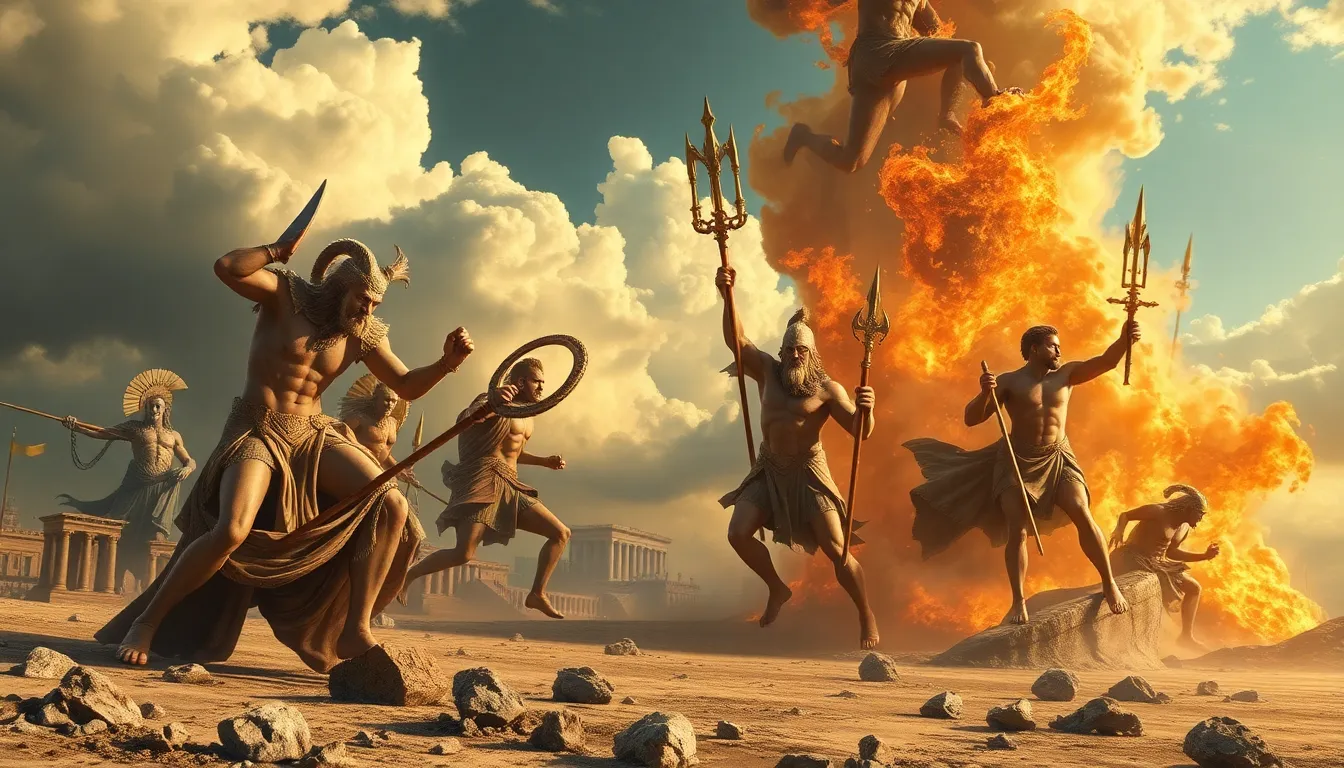
The Titanomachy: The Battle That Gave Birth to the Olympians
I. Introduction
The Titanomachy, a pivotal event in Greek mythology, refers to the legendary battle between the Titans, led by Cronus, and the Olympians, led by Zeus. This epic conflict not only determined the fate of the cosmos but also marked the transition of power from the older generation of gods to the younger one. The significance of the Titanomachy extends beyond mere warfare; it symbolizes the struggle for dominance and the establishment of a new order in the pantheon of Greek deities. This article delves into the origins of the Titans, the rise of Zeus, the causes and events of the Titanomachy, its aftermath, and its enduring cultural legacy.
II. The Origins of the Titans
The Titans were a race of powerful deities who ruled during the Golden Age of Greek mythology. They were the descendants of Uranus (the sky) and Gaia (the earth), and their lineage included several notable figures.
- Cronus: The leader of the Titans, known for his fear of being overthrown by his offspring.
- Rhea: The sister and wife of Cronus, who played a crucial role in the preservation of the Olympians.
- Other key Titans: Oceanus, Hyperion, Coeus, Crius, Iapetus, Theia, Themis, Mnemosyne, and Phoebe.
Under the rule of the Titans, the world was said to be in a state of harmony and abundance, characterized as the Golden Age. However, this idyllic era would soon be challenged by the rise of the Olympians.
III. The Rise of Zeus and the Olympians
Zeus, the youngest son of Cronus and Rhea, was destined for greatness from his birth. Rhea, determined to save her child from Cronus’s fear of a prophecy stating that one of his children would overthrow him, hid Zeus on the island of Crete.
As Zeus grew, he learned of his true heritage and the prophecy that guided his fate. His early life was marked by a desire to liberate his siblings, who were swallowed by Cronus. With the help of Rhea and other allies, Zeus devised a plan to confront his father and rescue his siblings.
- Zeus’s siblings: Hestia, Hera, Demeter, Poseidon, and Hades, who would become key figures in the Olympian pantheon.
- Alliance with allies: Zeus sought the aid of the Cyclopes and Hecatoncheires, who played crucial roles in the impending conflict.

IV. The Outbreak of War: Causes of the Titanomachy
The Titanomachy was not merely a spontaneous conflict; it was fueled by deep-seated fears and ambitions. Cronus, having overthrown his father Uranus, ruled with an iron fist, fearing that his children would do the same to him.
- Tyranny of Cronus: Cronus’s oppressive reign and his act of devouring his children created a climate of fear and resentment.
- The prophecy: The fear of being overthrown by his own offspring drove Cronus to drastic measures, including the consumption of his children.
- Gathering forces: Zeus, along with his siblings and allies, rallied against the Titans, setting the stage for an epic confrontation.
V. The Battle of the Titanomachy
The Titanomachy unfolded over a decade, marked by fierce battles and strategic maneuvering. The war was fought in various locations, including Mount Olympus and the plains of Thessaly.
Key battles included:
- Initial skirmishes: The Titans initially held an advantage, showcasing their immense power and experience.
- Strategic alliances: Zeus’s alliance with the Cyclopes, who gifted him the thunderbolt, and the Hecatoncheires, who provided unmatched strength, turned the tide.
- Decisive battles: Several critical confrontations saw the Olympians gain ground, leading to the eventual defeat of the Titans.
Turning points in the war included the release of the Cyclopes and Hecatoncheires, who fought valiantly alongside Zeus and his siblings, changing the dynamics of the battle.
VI. The Aftermath: Defeat of the Titans
The Titanomachy culminated in the defeat of Cronus and the Titans, leading to their imprisonment in Tartarus, a deep abyss used as a dungeon of torment. This defeat had significant consequences for the Titans and the new order of the Olympians.
- Imprisonment of the Titans: The Titans were confined to Tartarus, ensuring that Cronus could no longer threaten the rule of Zeus.
- Establishment of the Olympian order: Zeus and his siblings ascended to power, establishing a new pantheon of gods who would govern the cosmos.
- New roles of the Olympians: Each Olympian god was assigned a specific domain, such as Zeus as the god of the sky, Poseidon as the god of the sea, and Hades as the god of the underworld.
VII. Cultural Impact and Legacy of the Titanomachy
The Titanomachy has had a profound influence on art, literature, and popular culture throughout the centuries. Its themes of conflict, power, and transformation resonate deeply within human experience.
- Artistic representations:</ The Titanomachy has inspired countless works of art, from ancient pottery to Renaissance paintings, depicting the epic battles and gods involved.
- Literature: The myth has been referenced in various literary works, including Hesiod’s “Theogony,” which chronicles the genealogy of the gods and the events of the Titanomachy.
- Modern interpretations: The themes of rebellion against tyranny and the rise of new powers continue to be relevant, influencing contemporary storytelling in films, books, and other media.
Symbolically, the Titanomachy represents the eternal struggle between old and new, the cyclical nature of power, and the transformative journey of gods and mortals alike.
VIII. Conclusion
In conclusion, the Titanomachy stands as a foundational myth in Greek mythology, encapsulating the epic struggle for power that led to the rise of the Olympian gods. Its significance lies not only in the dramatic battles and events but also in the themes of conflict, transformation, and the cyclical nature of power. The enduring legacy of the Olympians continues to influence our understanding of mythology, art, and culture today. As we reflect on the Titanomachy, we are reminded of the timeless nature of these stories and their ability to resonate with the human experience.