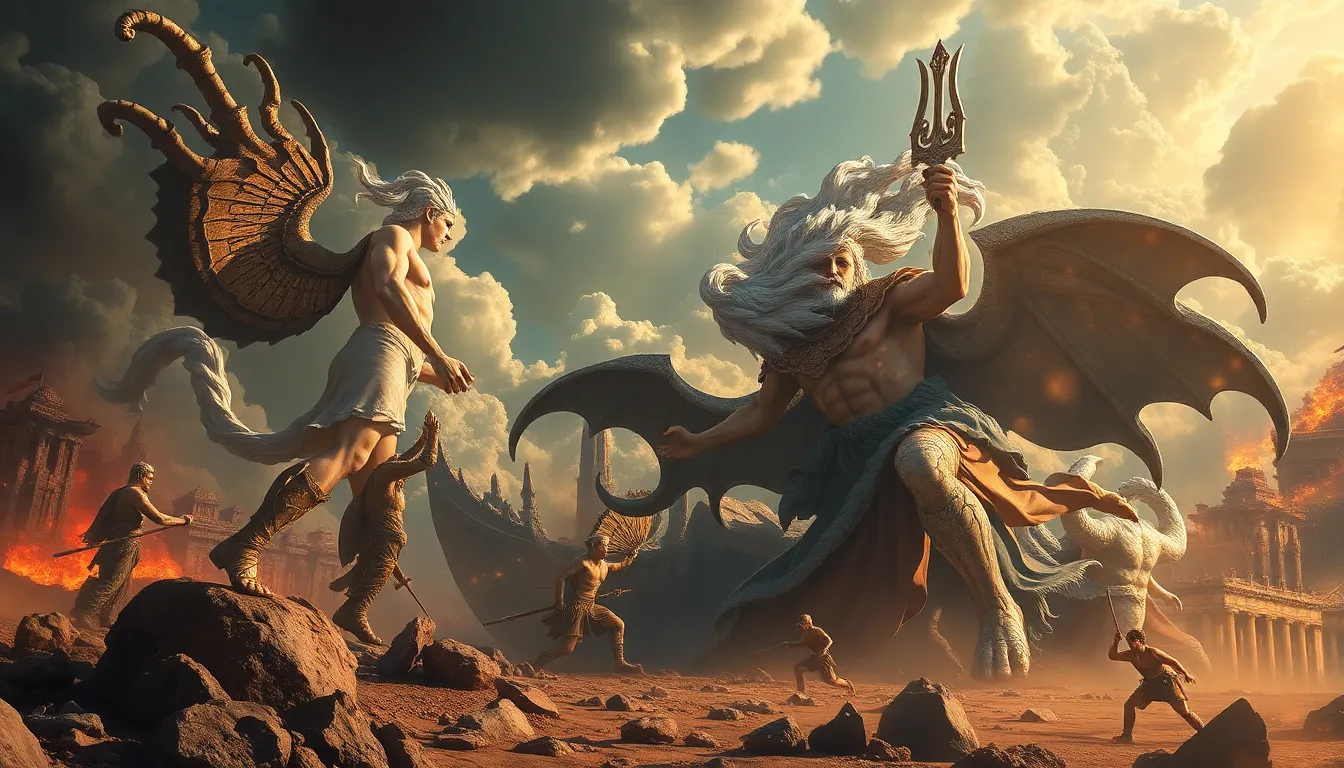
The Titanomachy: The Epic Battle of Divine Proportions
I. Introduction
The Titanomachy, a monumental war in Greek mythology, represents the epic struggle between the Titans, the elder gods, and the Olympians, their successors. This conflict is not merely a tale of battle; it symbolizes the transition from one order of divine beings to another, encapsulating themes of power, rebellion, and the cosmic struggle for supremacy.
At its core, the Titanomachy is significant not only for its dramatic narrative but also for its cultural impact on ancient Greek society and its mythology. The conflict shaped the very foundation of the Greek pantheon and influenced countless works of art, literature, and philosophy throughout history.
II. The Titans: The First Generation of Deities
The Titans were the first generation of deities, born from the primordial beings Gaia (Earth) and Uranus (Sky). They were colossal figures, embodying various aspects of the universe, and were often depicted as powerful and sometimes capricious.
Key figures among the Titans include:
- Cronus – The leader of the Titans and god of time, often associated with harvest.
- Rhea – Sister and wife of Cronus, goddess of fertility and motherhood.
- Oceanus – The Titan god of the ocean, representing the vast, encircling river believed to surround the earth.
- Hyperion – Titan of light, often associated with the sun.
- Themis – Titaness of divine law and order.
The Titans ruled during the Golden Age, a time of prosperity and harmony. However, their relationship with the primordial gods, such as Chaos and Nyx, and later with their children, the Olympians, would lead to turmoil and conflict.
III. The Rise of the Olympians
The birth of Zeus, the youngest son of Cronus and Rhea, marked a pivotal moment in the mythology and the eventual rise of the Olympians. According to prophecy, Cronus learned that one of his children would overthrow him, leading him to swallow each of them at birth. However, Rhea saved Zeus by hiding him in a cave on the island of Crete.
This act of defiance was crucial as it set the stage for the Olympians to rise against the Titans. The prophecy fueled Cronus’s paranoia, leading to increasing tension within the family and the broader divine realm.
As Zeus grew, he formed alliances with his siblings—Hestia, Hera, Demeter, Poseidon, and Hades. Together, they plotted to overthrow their father and the Titans, solidifying their rebellion.

IV. The Prelude to War
The tension between the Titans and Olympians escalated as Zeus and his siblings gathered strength. Key events leading to the Titanomachy included:
- The release of the Cyclopes and Hecatoncheires from Tartarus, who had been imprisoned by Cronus.
- Prometheus, a Titan who sided with the Olympians, played a crucial role in rallying support against Cronus.
- The betrayal of Cronus by his wife Rhea, who provided Zeus with the means to defeat him.
The stage was set for an epic confrontation, as the forces of the old order faced the new generation of gods seeking to claim their rightful place in the heavens.
V. The Epic Battle: Titanomachy Unleashed
The Titanomachy unfolded over ten tumultuous years, characterized by fierce battles and dramatic confrontations. The battlefield was a chaotic realm of mountains, seas, and skies, reflecting the tumult of the conflict.
Key strategies employed during the battle included:
- Zeus wielding his thunderbolts, a gift from the Cyclopes, to strike fear into the Titans.
- Poseidon unleashing his powers over the seas to disrupt the Titans’ formations.
- Hades utilizing the darkness of the Underworld to undermine the Titans’ morale.
Major turning points in the conflict included:
- The Olympians’ initial struggles against the might of the Titans.
- The arrival of the Cyclopes and Hecatoncheires, who fought valiantly for the Olympians, shifting the tide of battle.
- The final confrontation where Zeus, using cunning and brute force, led the charge against Cronus.
VI. Aftermath and Consequences of the Titanomachy
The defeat of the Titans marked a significant transformation in the hierarchy of gods. The once-mighty Titans were imprisoned in Tartarus, a deep abyss used as a dungeon of torment and suffering. This imprisonment symbolized the end of their reign and the establishment of the Olympian order.
With the Titans vanquished, the Olympians emerged as the new rulers of the cosmos. Zeus ascended to the throne of Mount Olympus, where he and his siblings would govern the world. This new order brought about:
- A reorganization of divine responsibilities among the gods.
- The establishment of new myths and legends that would define Greek culture.
- The influence of Olympian gods on human civilization, from religion to governance.
The Titanomachy had profound implications for the cosmos, altering the balance of power among divine beings and setting the stage for future conflicts, including the infamous Gigantomachy.
VII. Cultural Representations and Legacy
The Titanomachy has been a subject of fascination throughout history, inspiring countless artistic interpretations in ancient Greece and beyond. Notable representations include:
- Vase paintings depicting the struggle between the Titans and Olympians.
- Statues and sculptures that celebrate the heroes of the Titanomachy.
- Literary works, such as Hesiod’s “Theogony,” which recount the events of the battle.
In modern media, the Titanomachy continues to resonate, appearing in various forms, including:
- Films and television series that draw upon Greek mythology.
- Video games that incorporate elements of the Titanomachy into their narratives.
- Literature that explores themes of rebellion and the struggle for power.
The enduring themes of power, rebellion, and divinity found in the Titanomachy reflect fundamental human concerns and continue to captivate audiences today.
VIII. Conclusion
In summary, the Titanomachy represents a pivotal moment in Greek mythology, marking the transition from the rule of the Titans to that of the Olympians. The narrative encapsulates themes of power, conflict, and the struggle for supremacy that resonate throughout human history.
As we reflect on the Titanomachy’s relevance today, it serves as a reminder of the complexities of power dynamics, the consequences of rebellion, and the nature of divine conflict. This ancient myth not only shapes our understanding of the Greek pantheon but also offers timeless insights into the human experience.
Ultimately, the Titanomachy illustrates the perpetual struggle between old and new, and the ever-evolving nature of mythology in the context of cultural identity and heritage.