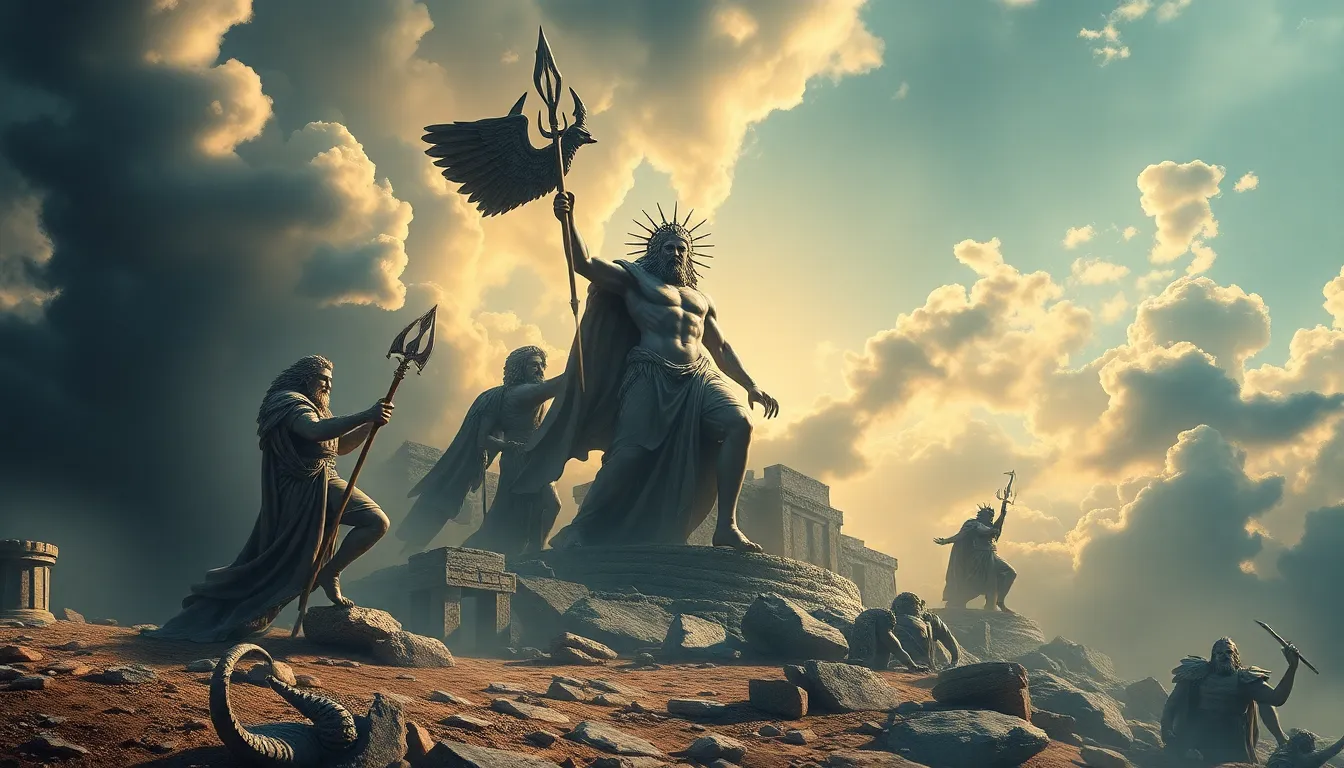
The Titanomachy: The Epic Struggle for Divine Supremacy
I. Introduction
The Titanomachy is one of the most significant myths in Greek mythology, representing the epic struggle between the Titans, the elder gods, and the Olympians, the newer generation of deities led by Zeus. This cataclysmic conflict not only shaped the hierarchy of the gods but also established the framework for the cosmic order that governed the ancient Greek belief system.
Understanding the Titanomachy is crucial for appreciating the complexities of Greek mythology, as it reflects themes of power, justice, and rebellion, which resonate through many myths. This article will explore the historical context of the Titanomachy, the key figures involved, the course of the war, its aftermath, its symbolism, and how it has been represented in art and literature throughout history.
II. Historical Context of the Titanomachy
A. Origins of the Titans and Olympian gods
The Titans were the descendants of Uranus (the sky) and Gaia (the earth), and they ruled during the legendary Golden Age before the rise of the Olympian gods. The most notable Titans included Cronus, Rhea, Oceanus, and Hyperion. The Olympians, on the other hand, were the children of Cronus and Rhea, with Zeus, Hera, Poseidon, and Hades being the most prominent among them.

B. The role of primordial deities in the cosmic order
Before the Titans and Olympians, the primordial deities such as Chaos, Nyx (Night), and Erebus (Darkness) established the cosmic order. The Titans inherited the chaotic energy of their primordial ancestors but sought to impose their own order, which set the stage for the eventual conflict with the Olympians.
C. Prelude to the conflict: Generational tensions
The Titanomachy arose from deep-seated tensions between generations. Cronus, fearing that his own children would overthrow him as he had overthrown his father, Uranus, swallowed each of them at birth. Rhea, desperate to save her youngest child, Zeus, hid him away and eventually led to the rebellion against Cronus.
III. Key Players in the Titanomachy
A. The Titans: Names and roles of prominent figures
- Cronus: The leader of the Titans, known for his ruthless nature.
- Rhea: Cronus’s sister and wife, who played a crucial role in the upbringing of Zeus.
- Oceanus: The Titan of the Ocean, representing the vast waters.
- Hyperion: The Titan of light and observation, associated with the sun.
B. The Olympian gods: Zeus, Hera, and their allies
- Zeus: The king of the Olympian gods, who leads the rebellion against the Titans.
- Hera: Zeus’s wife and sister, who is fiercely loyal to him.
- Poseidon: God of the sea and Zeus’s brother, who plays a key role in the conflict.
- Hades: The god of the underworld, who also joins forces with Zeus.
C. Other significant characters: Prometheus, Atlas, and Typhon
- Prometheus: A Titan who sided with the Olympians and is known for his intelligence and defiance.
- Atlas: A Titan condemned to hold up the heavens, symbolizing eternal punishment.
- Typhon: A monstrous giant who challenged Zeus after the Titanomachy.
IV. The Course of the War
A. Initial skirmishes and battles: Strategies and tactics
The Titanomachy lasted for ten years, characterized by fierce battles and strategic maneuvers. The Titans, led by Cronus, initially had the upper hand due to their strength and experience. However, the Olympians, under Zeus’s leadership, utilized cunning strategies and garnered support from various allies.
B. The turning points of the conflict
One of the significant turning points was Zeus’s alliance with the Hecatoncheires (hundred-handed giants) and the Cyclopes. The Cyclopes supplied the Olympians with powerful weapons, including Zeus’s thunderbolts, which would become crucial in defeating the Titans.
C. The involvement of other mythological beings and entities
Various mythological beings participated in the Titanomachy, shifting the balance of power. The Gigantes, offspring of Gaia, also attempted to aid the Titans, leading to further conflicts that extended the war’s duration.
V. The Aftermath of the Titanomachy
A. The fall of the Titans: Consequences for their leadership
The Titanomachy culminated in the defeat of Cronus and the Titans, who were cast into Tartarus, a deep abyss used as a dungeon of torment. This defeat marked the end of the Titan regime and the ascendancy of the Olympians.
B. Establishment of the Olympian order
With the Titans defeated, Zeus and his siblings established a new order among the gods, with Zeus reigning as the supreme deity. The Olympians created a hierarchy and defined their domains, establishing control over the cosmos.
C. Impact on the balance of power among the gods
The Titanomachy significantly altered the dynamics between the gods. The Olympians, particularly Zeus, became the new arbiters of fate and power, while the Titans were relegated to a state of imprisonment and obscurity.
VI. Symbolism and Themes
A. Exploration of themes such as power, rebellion, and justice
The Titanomachy embodies the struggle for power and the concept of rebellion against tyranny. Zeus represents the new order, while Cronus symbolizes the outdated and oppressive regime. The conflict illustrates the cyclical nature of power and the inevitability of change.
B. Symbolic interpretations of the conflict
Many interpretations suggest that the Titanomachy reflects the transition from chaos to order, with the Olympians symbolizing civilization and progress, while the Titans represent primal forces and chaos. This duality is a recurring theme in myths.
C. The Titanomachy as an allegory for human struggles
Many scholars argue that the Titanomachy serves as an allegory for human struggles against oppression and the quest for justice. It resonates with the timeless conflict between the old and the new, the powerful and the powerless, and the ongoing fight for freedom.
VII. The Titanomachy in Art and Literature
A. Depictions in ancient art: Pottery, sculpture, and frescoes
The Titanomachy has been a popular subject in various forms of art throughout history. Ancient Greek pottery often depicted scenes from the battle, showcasing the dramatic confrontations between the Titans and Olympians. Notable examples include vase paintings that illustrate Zeus wielding his thunderbolts against Cronus.
B. Literary references in classical texts: Hesiod, Homer, and Ovid
Many ancient texts reference the Titanomachy, with Hesiod’s “Theogony” providing one of the most comprehensive accounts of the conflict. Homer and Ovid also allude to the Titanomachy in their works, emphasizing its significance in the larger narrative of Greek mythology.
C. Modern adaptations and interpretations in popular culture
The themes and characters of the Titanomachy have inspired numerous modern adaptations, including films, novels, and video games. The struggle between the Titans and Olympians continues to resonate in contemporary storytelling, illustrating the timeless nature of these myths.
VIII. Conclusion
The Titanomachy stands as a pivotal myth in Greek mythology, symbolizing the eternal struggle for power and the establishment of order. Its significance extends beyond mere storytelling; it reflects the human experience and the complexities of authority, rebellion, and justice.
Through its rich narrative and profound themes, the Titanomachy has left a lasting legacy in literature and art, inspiring countless interpretations and adaptations. Today, its relevance remains, as it continues to inform our understanding of power dynamics and the nature of conflict in both mythology and reality.
As we reflect on the Titanomachy, we recognize its role in shaping not only the pantheon of Greek gods but also the enduring themes that resonate in our lives and cultures today.