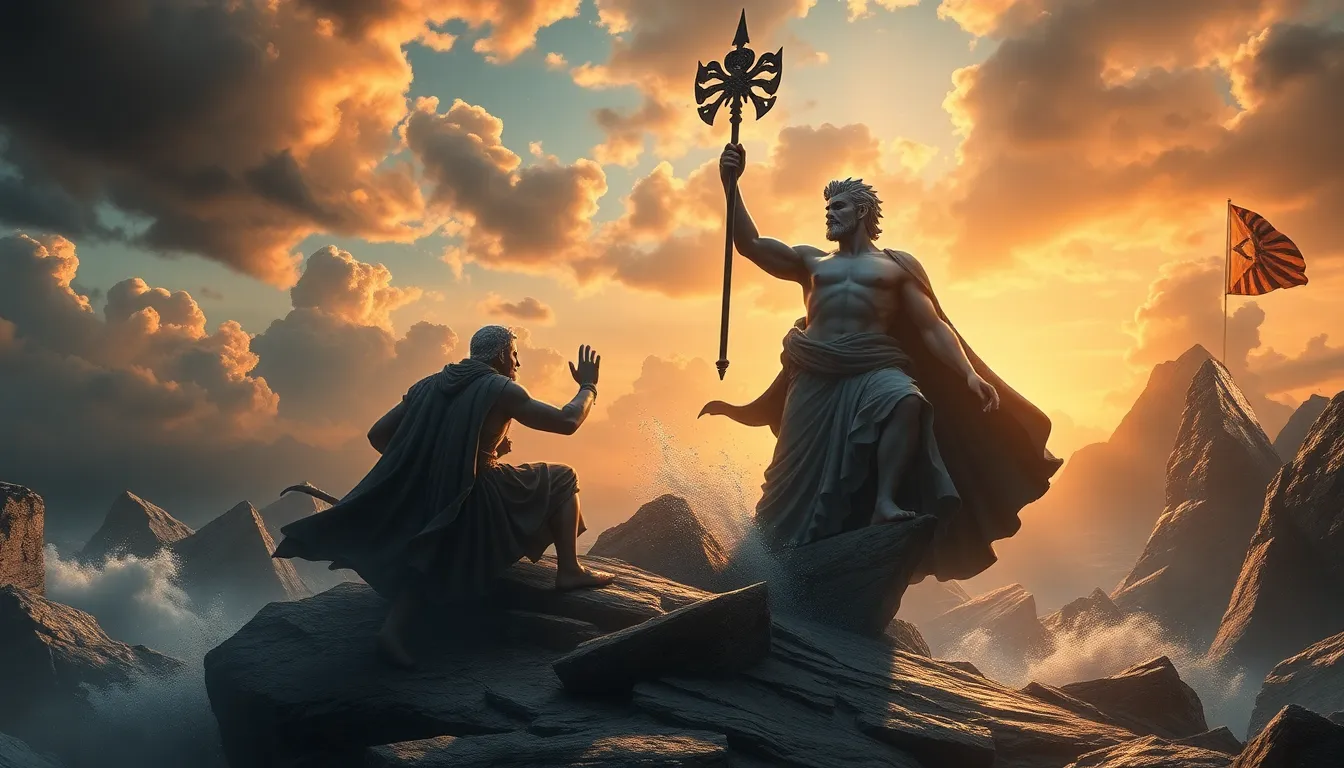
The Titanomachy: The Epic Tale of Betrayal and Triumph
I. Introduction to the Titanomachy
The Titanomachy stands as one of the most significant and dramatic tales in Greek mythology, embodying the themes of betrayal and triumph that resonate throughout ancient stories. This epic conflict, which pitted the Olympian gods against the Titans, marked a pivotal moment in the mythological narrative, symbolizing the transition from primordial chaos to the structured order of the Olympian pantheon.
At its core, the Titanomachy is not just a battle for supremacy; it encapsulates the struggle between generations, the rebellion against tyranny, and the quest for justice. The story is rich with characters whose motivations and relationships provide a deep well of intrigue and emotion.
II. The Titans: Origins and Characteristics
The Titans were the original deities of Greek mythology, born from the primordial entities Gaia (Earth) and Uranus (Sky). They represented various aspects of the natural world and cosmic order. The Titans were known for their immense power and size, often considered the personification of fundamental forces.
Some of the key figures among the Titans include:
- Cronus: The leader of the Titans who overthrew his father Uranus.
- Rhea: Sister and wife of Cronus, known as the mother of the Olympian gods.
- Oceanus: The Titan of the ocean, representing the vast and mysterious waters.
- Hyperion: The Titan of light and observation, often associated with the sun.
- Themis: The Titaness of divine law and order, symbolizing justice.
Each Titan held dominion over specific realms, contributing to the overarching theme of nature and existence in Greek mythology.
III. The Rise of the Olympians
As the Titans reigned supreme, a new generation of gods emerged, known as the Olympians. Led by Zeus, the youngest son of Cronus and Rhea, the Olympians sought to challenge the oppressive rule of the Titans. The rise of the Olympians was characterized by their quest for independence and justice, fueled by the injustices inflicted by Cronus, who was prophesied to be overthrown by one of his children.
The primary factors leading to the Olympians’ rebellion included:
- The prophecy concerning Cronus’ downfall.
- The cruel treatment of his children, whom he swallowed to prevent them from overthrowing him.
- The growing resentment among the younger gods, particularly Zeus, Hestia, Hera, Demeter, Poseidon, and Hades.
These elements combined to ignite a spark of rebellion that would culminate in the Titanomachy.

IV. The Prelude to War
Before the war erupted, a prophecy foretold that Cronus would be defeated by one of his offspring. This prophecy incited fear within Cronus, leading him to devour his children. Rhea, determined to save her youngest child, Zeus, hid him in a cave on Crete and gave Cronus a stone wrapped in swaddling clothes instead.
The stage for conflict was set through a series of key events:
- Rhea’s successful concealment of Zeus and his subsequent upbringing by nymphs.
- Zeus’ eventual return to confront Cronus, armed with the power of the potion given to him by Metis, which forced Cronus to regurgitate his siblings.
- The gathering of allies among the younger gods and other beings, including the Cyclopes and the Hecatoncheires, who would play pivotal roles in the forthcoming battle.
V. The Great Battle: Titans vs. Olympians
The Titanomachy itself was a cataclysmic battle that lasted for ten years. The Titans, led by Cronus, fought fiercely against the Olympians, who were determined to seize control of the cosmos. The conflict was marked by epic confrontations and strategic maneuvers.
Some of the major battles and strategies during the Titanomachy included:
- The Titans, initially confident in their strength, quickly learned that the united front of the Olympians, combined with the aid of the Cyclopes and Hecatoncheires, posed a formidable challenge.
- Zeus wielded thunderbolts, crafted by the Cyclopes, which became a symbol of his power and a decisive weapon against the Titans.
- The Hecatoncheires, with their hundred arms, hurled enormous rocks at the Titans, overwhelming them with sheer force.
The tide of battle finally turned in favor of the Olympians, leading to the eventual defeat of the Titans.
VI. Betrayal and Alliances
Throughout the Titanomachy, betrayal played a crucial role in shaping the outcome of the conflict. Some Titans, disillusioned by Cronus’ tyranny, chose to side with the Olympians. The most notable of these was:
- Prometheus: A Titan known for his intelligence, who sided with Zeus and the Olympians, believing in their vision of a just order.
- Epimetheus: Brother of Prometheus, who also aligned with the new regime.
Additionally, the role of Gaia, the personification of Earth, was significant. She supported the Olympians against Cronus, as she was angered by his actions. These alliances helped to solidify the power of Zeus and his siblings, showcasing the importance of collaboration in the face of tyranny.
VII. The Aftermath: Consequences of the Titanomachy
With the defeat of the Titans, the Olympians established a new order, with Zeus as their king. The Titans were imprisoned in Tartarus, a deep abyss used as a dungeon of torment and suffering. This marked a monumental shift in the divine hierarchy of Greek mythology, as the Olympians assumed control of the cosmos.
The consequences of the Titanomachy were profound:
- The establishment of the Olympian pantheon, which would dominate Greek mythology.
- The creation of a more structured divine order, with defined roles and responsibilities among the gods.
- The enduring themes of justice and retribution that would resonate through future myths and stories.
The Titanomachy not only shaped the landscape of Greek mythology but also influenced cultural narratives about power, rebellion, and the cyclical nature of generations.
VIII. Conclusion: The Legacy of the Titanomachy
The Titanomachy remains a powerful allegory of betrayal and triumph, encapsulating the struggles inherent in the rise of new powers against established authorities. Its legacy is evident in literature, art, and modern storytelling, where themes of rebellion and justice continue to resonate.
As a foundational myth, the Titanomachy reflects the complexities of familial relationships, the consequences of power struggles, and the importance of alliances. It serves as a reminder that every triumph can be traced back to a history of conflict and betrayal, making it a timeless story that continues to inspire and captivate audiences around the world.