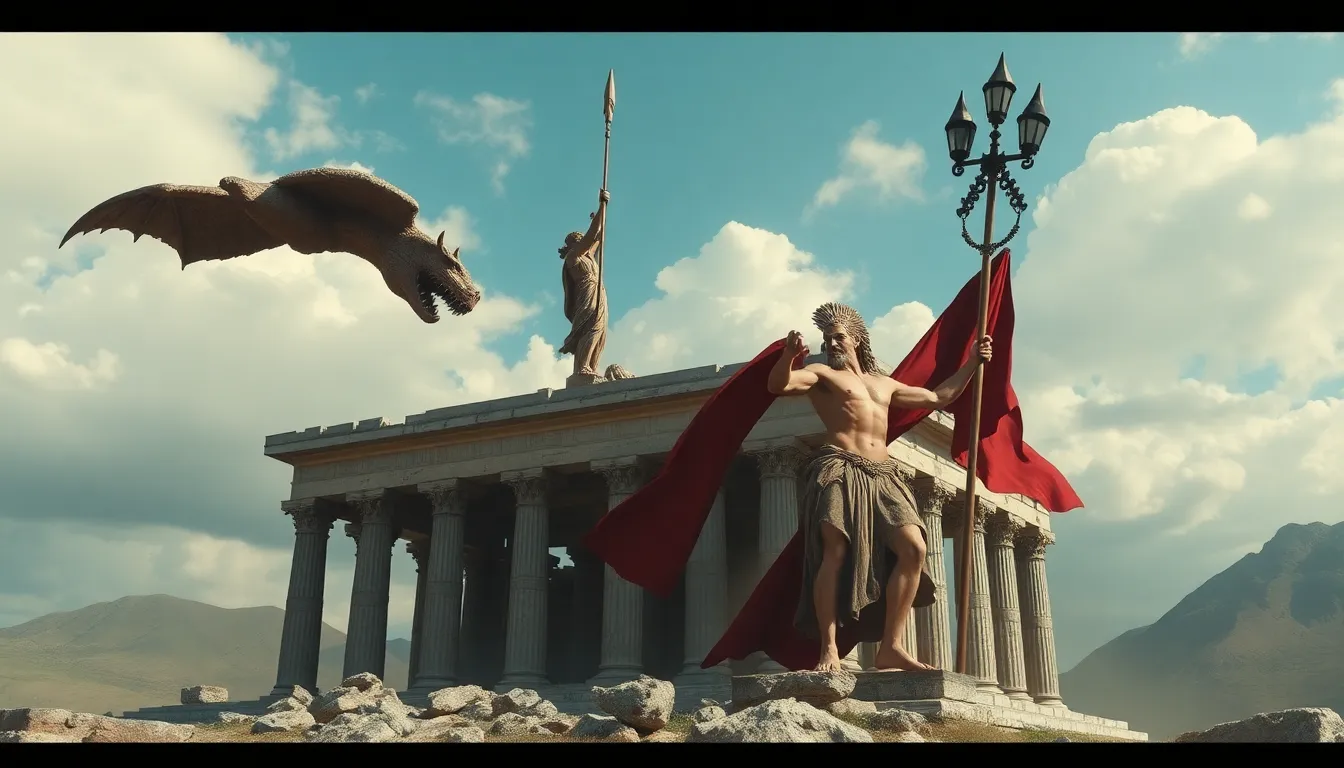
The Titanomachy: The Epic War That Changed Greek History
I. Introduction to the Titanomachy
The Titanomachy, a pivotal war in Greek mythology, represents the epic struggle between the Titans, the old gods, and the Olympians, the new generation of deities. This conflict not only reshaped the divine hierarchy but also laid the groundwork for the myths that would define ancient Greek culture.
Significant for its themes of power, rebellion, and destiny, the Titanomachy serves as a backdrop for understanding the complexities of Greek mythology and the cultural values of ancient Greece. This article aims to delve into the details of the Titanomachy, exploring its key players, causes, battles, aftermath, and cultural impact.
II. The Titans and the Olympians: Key Players in the Conflict
A. Who were the Titans?
The Titans were the offspring of Uranus (Sky) and Gaia (Earth), representing the primal forces of the universe. They were powerful deities who ruled during the Golden Age, a time of peace and prosperity before the advent of the Olympian gods.
1. Description and characteristics
The Titans were often depicted as gigantic figures, embodying natural elements and cosmic forces. They were characterized by their immense strength and longevity, often associated with various aspects of life and nature.
2. Notable Titans
- Cronus: The leader of the Titans, known for his ruthless rule and paranoia about being overthrown by his children.
- Rhea: The sister and wife of Cronus, she played a crucial role in the protection of her son Zeus.
- Oceanus: The Titan of the ocean, representing the vast waters encircling the earth.
- Hyperion: The Titan of light, often associated with the sun.
- Themis: The Titaness of divine law and order, representing justice.
B. The Olympians and their rise to power
The Olympians were the descendants of Cronus and Rhea. This new generation of gods represented the forces of change and chaos, challenging the established order of the Titans.
1. Key figures
- Zeus: The king of the Olympians, god of the sky, and wielder of the thunderbolt.
- Hera: The queen of the Olympians, goddess of marriage and family, and Zeus’s wife.
- Poseidon: The god of the sea and earthquakes, brother to Zeus.
- Hades: The god of the underworld, another brother of Zeus.
- Athena: The goddess of wisdom and war, born from Zeus’s forehead.
2. The role of prophecy and rebellion
Prophecies foretold that Cronus would be overthrown by his own son, leading to a deep-seated fear that fueled his tyrannical reign. This fear of prophecy and the desire for freedom catalyzed the rebellion of Zeus and his siblings against their father and the Titans.
III. The Causes of the Titanomachy
A. Cronus’s reign and the fear of being overthrown
As the ruler of the Titans, Cronus was deeply paranoid about losing his power. To prevent the prophecy from coming true, he swallowed each of his children at birth, including Hestia, Demeter, Hera, Hades, and Poseidon.
B. The prophecy of Zeus and the birth of rebellion
Rhea, desperate to save her youngest child, Zeus, hid him in a cave on Crete and gave Cronus a stone wrapped in swaddling clothes instead. Zeus grew up, eventually returning to confront his father and liberate his siblings, sparking the rebellion that would lead to the Titanomachy.
C. Key events leading up to the war
Prior to the war, several key events unfolded:
- Rhea’s clever deception of Cronus.
- Zeus’s gathering of allies, including the liberated siblings and other mythical creatures.
- Strategic alliances with the Cyclopes and the Hecatoncheires, who would play vital roles in the impending conflict.
IV. The Outbreak of War: Major Battles and Strategies
A. Overview of the initial confrontations
The Titanomachy lasted for ten years, characterized by fierce battles between the Olympians and the Titans. The conflict erupted when Zeus led a surprise attack against the Titans, marking the beginning of the war.
B. Key battles and turning points
Several battles defined the course of the Titanomachy:
- The Battle of the First Day: This initial clash showcased the might of the Olympians, with Zeus leading the charge against Cronus’s forces.
- The Siege of Olympus: The Titans attempted to reclaim their territory, but the Olympians held strong, aided by their newfound allies.
- The Turning Point: The Cyclopes forged powerful weapons for the Olympians, including Zeus’s thunderbolt, which shifted the tide of battle.
C. The role of allies and monsters in the conflict
The Olympians received crucial assistance from various creatures, including:
- The Cyclopes: Skilled forgers who created the thunderbolt and other divine weapons.
- The Hecatoncheires: Giants with a hundred hands who fought valiantly for the Olympians.
- Various monsters: Creatures such as the Chimera and the Griffon were summoned to aid in battles.
V. The Role of Divine Weapons and Magic
A. The significance of divine intervention
The Titanomachy was not just a battle of might but also a contest of divine will. The gods’ intervention played a crucial role in the outcome of the war, with powerful weapons and magical abilities influencing the tide of battle.
B. Notable weapons and artifacts
Several key weapons emerged during the Titanomachy:
- The Thunderbolt: Zeus’s primary weapon, capable of unleashing devastating power.
- The Trident: Poseidon’s weapon, used to cause earthquakes and tsunamis.
- The Helm of Darkness: Worn by Hades, granting him invisibility in battle.
C. Magic and the influence of the Fates
The Fates, personifications of destiny, were believed to weave the threads of fate for gods and mortals alike. Their influence was felt throughout the Titanomachy, as the outcome was thought to be preordained by their decrees.
VI. The Aftermath of the Titanomachy
A. The defeat of the Titans and their consequences
The Titanomachy culminated in the defeat of the Titans, who were imprisoned in Tartarus, a deep abyss used as a dungeon of torment. This marked the end of their reign and the rise of the Olympians.
B. The establishment of the Olympian rule
With the victory of the Olympians, Zeus became the king of the gods, establishing a new order. The Olympians took residence on Mount Olympus, setting the stage for their rule over both gods and mortals.
C. Changes in the world order and mythology
The Titanomachy not only transformed the pantheon of Greek gods but also altered the cosmic order. The Olympians governed various aspects of life and nature, creating a more structured and