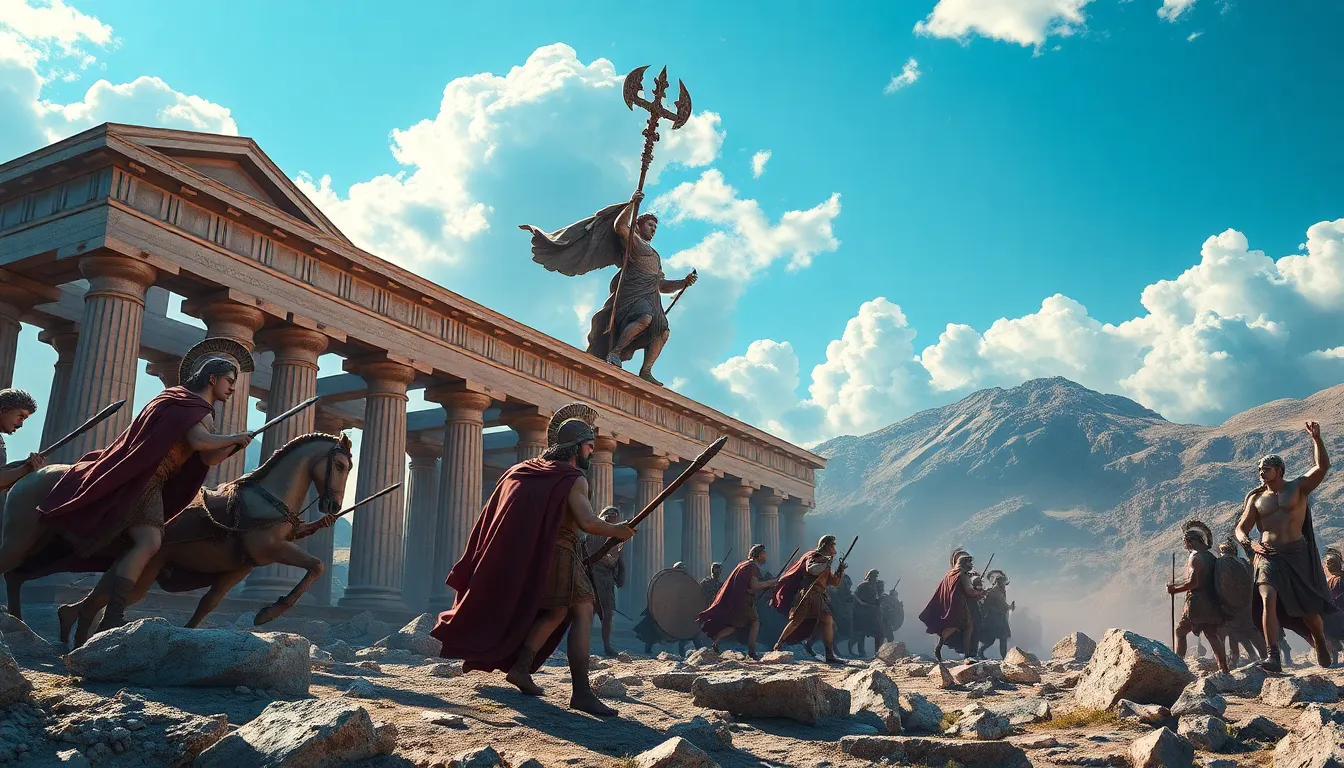
The Titanomachy: The Legendary War That Shaped Greek History
I. Introduction to the Titanomachy
The Titanomachy, often referred to as the great war between the Titans and the Olympians, is a central narrative in Greek mythology that symbolizes the struggle for power and order in the cosmos. This epic conflict is not merely a tale of gods at war; it represents the transition from primordial chaos to structured divinity and governance, marking a significant cultural and mythological shift in ancient Greek history.
The Titanomachy is characterized by the battle between the elder generation of gods, the Titans, led by Cronus, and the younger Olympian gods, spearheaded by Zeus. This legendary war is pivotal in understanding the dynamics of power within the pantheon of Greek mythology, illustrating themes of rebellion, prophecy, and the inevitable rise of a new order.
In examining the Titanomachy, one gains insight into the complexities of Greek cultural identity, where the narratives of gods and mortals intertwine, shaping their understanding of the world, morality, and the divine. The story of the Titanomachy serves as a foundational myth that continues to influence literature, art, and philosophy to this day.
II. The Titans: Rulers of the Primordial Era
The Titans were the first generation of divine beings in Greek mythology, born from the primordial entities Gaia (Earth) and Uranus (Sky). They represent the forces of nature and the raw, untamed aspects of the universe. The Titans, with their immense power and size, ruled during the Golden Age, a time characterized by peace and prosperity.
A. Origins and characteristics of the Titans
Each Titan embodied different aspects of the cosmos and human experience. Some of the notable Titans include:
- Cronus: The leader of the Titans, known for his role in the prophecy that foretold his downfall.
- Rhea: The sister and wife of Cronus, she played a crucial role in preserving the future Olympians.
- Oceanus: The Titan of the ocean, representing the vastness and depth of the sea.
- Tethys: The wife of Oceanus, personifying the nourishing aspects of freshwater.
- Hyperion: The Titan of light, often associated with the sun.

B. Key Titans and their roles in mythology
The Titans held significant power and influence over the cosmos. Cronus, fearing a prophecy that he would be overthrown by his children, swallowed each of them at birth. Rhea, distressed by this, saved Zeus and hid him away, setting the stage for the eventual conflict.
C. The reign of the Titans and their impact on the cosmos
The Titans ruled with a heavy hand, often depicted as tyrannical. Their reign is seen as a period of chaos, leading to the need for a new order, which the Olympians would eventually establish. The Titans’ governance over the universe laid the groundwork for the eventual rise of the Olympian gods, who sought to replace the old order with a more benevolent rule.
III. The Rise of the Olympians
As the Titans ruled, a new generation of gods began to emerge, led by Zeus, the youngest son of Cronus and Rhea. This new order of gods, known as the Olympians, would challenge the Titans and reshape the cosmos.
A. Introduction to the Olympian gods
The Olympians are a group of twelve major deities who reside on Mount Olympus. They are known for their distinct personalities and domains:
- Zeus: God of the sky and thunder, he emerged as the leader of the Olympian gods.
- Hera: Goddess of marriage and family, and wife of Zeus.
- Poseidon: God of the sea, earthquakes, and horses.
- Athena: Goddess of wisdom and warfare.
- Apollo: God of the sun, music, and prophecy.
- Aphrodite: Goddess of love and beauty.
B. Zeus’s emergence as a leader and his motivations for war
Zeus, having been raised in secrecy, learned of his siblings’ fate and was determined to confront his father, Cronus. His motivations were driven by a desire for justice and the need to liberate his siblings and restore balance to the cosmos. With the support of his siblings and allies, Zeus set the stage for the Titanomachy.
C. The alliances formed by the Olympians before the conflict
In preparation for the impending war, Zeus formed critical alliances:
- He freed the Cyclopes and Hecatoncheires, powerful beings imprisoned by Cronus, who would later aid the Olympians in battle.
- He garnered support from various other deities and creatures, creating a formidable coalition against the Titans.
IV. The Prelude to War: Events Leading Up to the Titanomachy
The Titanomachy did not erupt spontaneously; it was the culmination of events and prophecies that foretold the downfall of the Titans.
A. The prophecy surrounding the downfall of the Titans
A prophecy foretold that Cronus would be overthrown by one of his own children. This knowledge haunted Cronus, driving him to commit the terrible act of swallowing his offspring, which set the stage for conflict.
B. Key events that incited the war
As the Olympians grew stronger, tensions escalated:
- Zeus’s rebellion was sparked by the desire to free his siblings and fulfill the prophecy.
- The Titans’ oppressive rule and Cronus’s fear of losing power fueled the conflict.
C. Initial skirmishes and the gathering of forces
Before the full-scale war, there were several minor confrontations as both sides gathered their forces. The Olympians, bolstered by the support of the Cyclopes and Hecatoncheires, began to strategize for the ultimate battle against the Titans.
V. The Titanomachy: The Great Battle
The Titanomachy was a cataclysmic battle that shook the foundations of the universe. It was fought over a period of ten years, marked by fierce combat and strategic maneuvers.
A. Description of the battlefield and the scale of the conflict
The battle took place in a vast expanse, with the forces of the Titans and Olympians clashing in a struggle that involved not just the gods but also mythical creatures and natural elements. The very earth trembled as the Titans, with their immense size and strength, faced off against the cunning and agility of the Olympians.
B. Major battles and strategies employed by both sides
Throughout the Titanomachy, several significant battles took place, with each side employing unique strategies:
- The Olympians utilized their cunning and intelligence, launching surprise attacks and using the Cyclopes’ weapons.
- The Titans relied on their brute strength and numbers, attempting to overpower the younger gods.
C. The role of significant figures and creatures in the war
Key figures played pivotal roles in the Titanomachy:
- The Cyclopes: Gifted craftsmen who forged powerful weapons for the Olympians, including Zeus’s lightning bolts.
- The Hecatoncheires: Hundred-handed giants who fought valiantly for the Olympians, hurling massive rocks at the Titans.
VI. Consequences of the Titanomachy
The aftermath of the Titanomachy was profound, leading to significant changes in the divine order of the cosmos.
A. The defeat of the Titans and imprisonment in Tartarus
Ultimately, the Titans were defeated, and Cronus was overthrown. The defeated Titans were imprisoned in Tartarus, a deep abyss used as a dungeon of torment, where they would remain for eternity, symbolizing the consequences of their tyranny.
B. Establishment of the Olympian order and its implications for the cosmos
With the Titans defeated, the Olympians established a new order, leading to a more balanced governance of the universe. Zeus became the