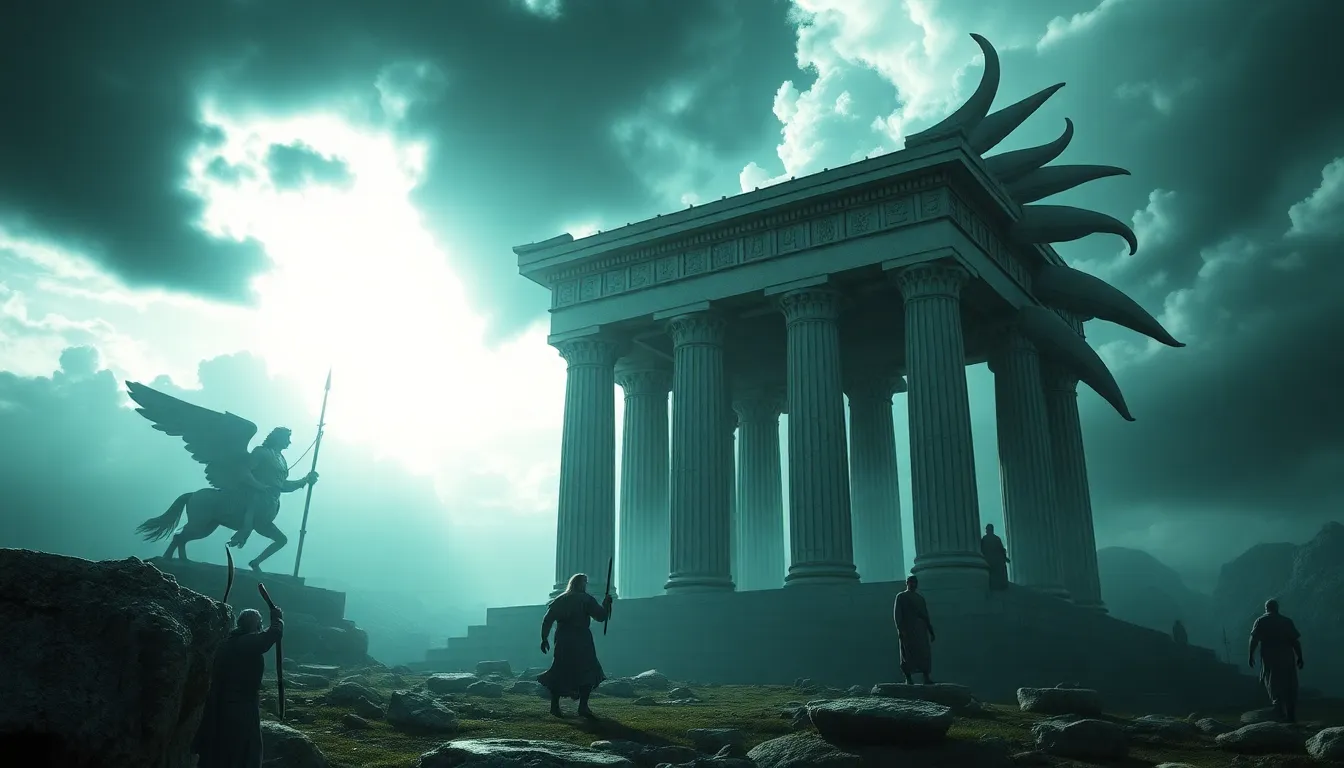
The Titanomachy: The Myths Behind the Legendary Conflict
I. Introduction to the Titanomachy
The Titanomachy is one of the most significant conflicts in Greek mythology, representing the epic battle between the Olympian gods and the Titans. This legendary struggle not only shaped the hierarchy of the divine but also symbolized the transition from primordial chaos to ordered civilization. It serves as a foundational myth that explains the origins of the gods and their dominion over the universe.
Key themes of the Titanomachy include power, betrayal, and the cyclical nature of conflict. The central characters of this myth include the Titans, who were the original divine beings, and the Olympians, who emerged victorious and established a new order of gods.
II. The Titans: Origins and Characteristics
A. The birth of the Titans from Gaia and Uranus
The Titans originated from the primordial deities Gaia (the Earth) and Uranus (the Sky). According to myth, Gaia gave birth to twelve original Titans, each representing various aspects of the natural world. These Titans included:
- Oceanus – the Titan of the ocean
- Hyperion – the Titan of light
- Coeus – the Titan of intellect
- Crius – the Titan of the constellations
- Iapetus – the Titan of mortality
- Theia – the Titaness of sight
- Rhea – the Titaness of fertility
- Themis – the Titaness of divine law and order
- Mnemosyne – the Titaness of memory
- Phoebe – the Titaness of prophecy
- Tethys – the Titaness of the sea
- Atlas – the Titan condemned to hold up the sky
These Titans were powerful and represented the primal forces of nature, embodying both creation and destruction.

B. Notable Titans and their attributes
Among the Titans, several figures stand out due to their unique attributes and roles in mythology:
- Chronos: Not to be confused with Cronus, Chronos represents time and is often depicted as an incorporeal god.
- Cronus: The leader of the Titans and father of Zeus, he is known for his fear of being overthrown and his tragic downfall.
- Oceanus: The personification of the ocean, he was both a boundary and a source of life, representing the fluidity of existence.
- Rhea: As the mother of the Olympians, she played a crucial role in the rise of Zeus against Cronus.
III. The Rise of the Olympians
A. Introduction to the Olympian deities
The Olympians were the younger generation of gods who would eventually overthrow the Titans. They were led by Zeus, the god of the sky and thunder, and included other significant deities such as Hera, Poseidon, Demeter, Hestia, and Hades. The Olympians represented various aspects of human experience and nature, bringing a new order to the cosmos.
B. Key figures: Zeus, Hera, Poseidon, and others
The rise of the Olympians can be attributed to several key figures:
- Zeus: The youngest son of Cronus, he was prophesied to overthrow his father and lead the Olympian rebellion.
- Hera: Zeus’s sister and wife, she was the goddess of marriage and family and played a pivotal role in supporting Zeus.
- Poseidon: The god of the sea, he was a powerful ally in the Titanomachy, wielding the trident to aid in battle.
- Hades: The god of the underworld, he initially remained neutral but later aligned with the Olympians.
C. The prophecy and the rise against the Titans
The prophecy foretold that Cronus would be overthrown by one of his children. To prevent this, Cronus swallowed his offspring at birth. However, Rhea saved Zeus by hiding him and giving Cronus a stone wrapped in swaddling clothes. When Zeus grew up, he returned to free his siblings and initiated the war against the Titans, marking the rise of the Olympians.
IV. The Prelude to War: Causes of the Conflict
A. The role of power and dominion in the Titanomachy
The Titanomachy was fundamentally a struggle for power. The Titans, who had ruled the cosmos since its inception, represented a stagnation of authority. In contrast, the Olympians symbolized change and progress. This clash of ideologies set the stage for the epic conflict.
B. Familial strife and betrayal among the Titans
Familial betrayal played a crucial role in the Titanomachy. Cronus’s fear of being overthrown led to his tyrannical rule, causing strife among the Titans. Notably, the betrayal of Cronus by his own children, particularly Zeus, was a pivotal moment in this myth. Rhea’s support of Zeus against Cronus exemplified the fractures within the Titan family.
C. The influence of prophecy and fate
Prophecy and fate are central themes in Greek mythology, and the Titanomachy is no exception. The foretelling of Cronus’s downfall created a sense of inevitability. The characters in this myth were often caught in the web of fate, demonstrating the tension between free will and destiny.
V. The War Itself: Major Battles and Strategies
A. Description of the key battles during the Titanomachy
The Titanomachy lasted for ten years, characterized by fierce battles between the Titans and the Olympians. The most significant battles took place on Mount Olympus and in the depths of Tartarus, where the Titans were ultimately defeated.
B. The strategies employed by both sides
The strategies during the Titanomachy involved both brute strength and cunning tactics. The Olympians, led by Zeus, employed their wits and the power of alliances:
- Alliances with the Cyclopes: The Cyclopes, who forged Zeus’s thunderbolts, became crucial allies, providing the Olympians with powerful weapons.
- Release of the Hecatoncheires: The hundred-handed giants were unleashed from Tartarus to fight alongside the Olympians, using their immense strength to overpower the Titans.
C. The role of allies and monsters in the conflict
Allies played a significant role in the Titanomachy. The Olympians were aided by various mythical creatures, including:
- The Cyclopes: Known for their craftsmanship, they provided Zeus with thunderbolts, Poseidon with a trident, and Hades with a helmet of invisibility.
- The Hecatoncheires: These hundred-handed giants aided the Olympians with their formidable strength, turning the tide of battle.
VI. Aftermath of the Titanomachy
A. The fate of the Titans post-conflict
Following their defeat, the Titans faced severe consequences. Most were imprisoned in Tartarus, a deep abyss used as a dungeon of torment and suffering. Their leader, Cronus, was also cast into this prison, where he would remain for eternity, symbolizing the end of the old order.
B. The establishment of the Olympian order
With the Titans defeated, the Olympians established a new order, with Zeus as their king. This marked the beginning of a new era in Greek mythology, where the Olympian gods ruled over both gods and mortals, bringing order and civilization to the world.
C. Impacts on the world of gods and mortals
The aftermath of the Titanomachy reshaped the relationships between gods and humans. The Olympians, now in power, interacted with mortals, influencing their lives through divine interventions, blessings, and curses. This new dynamic established the foundation for many myths that followed, including the stories of heroes, demigods, and mortal struggles.
VII. Symbolism and Themes in the Titanomachy</h2