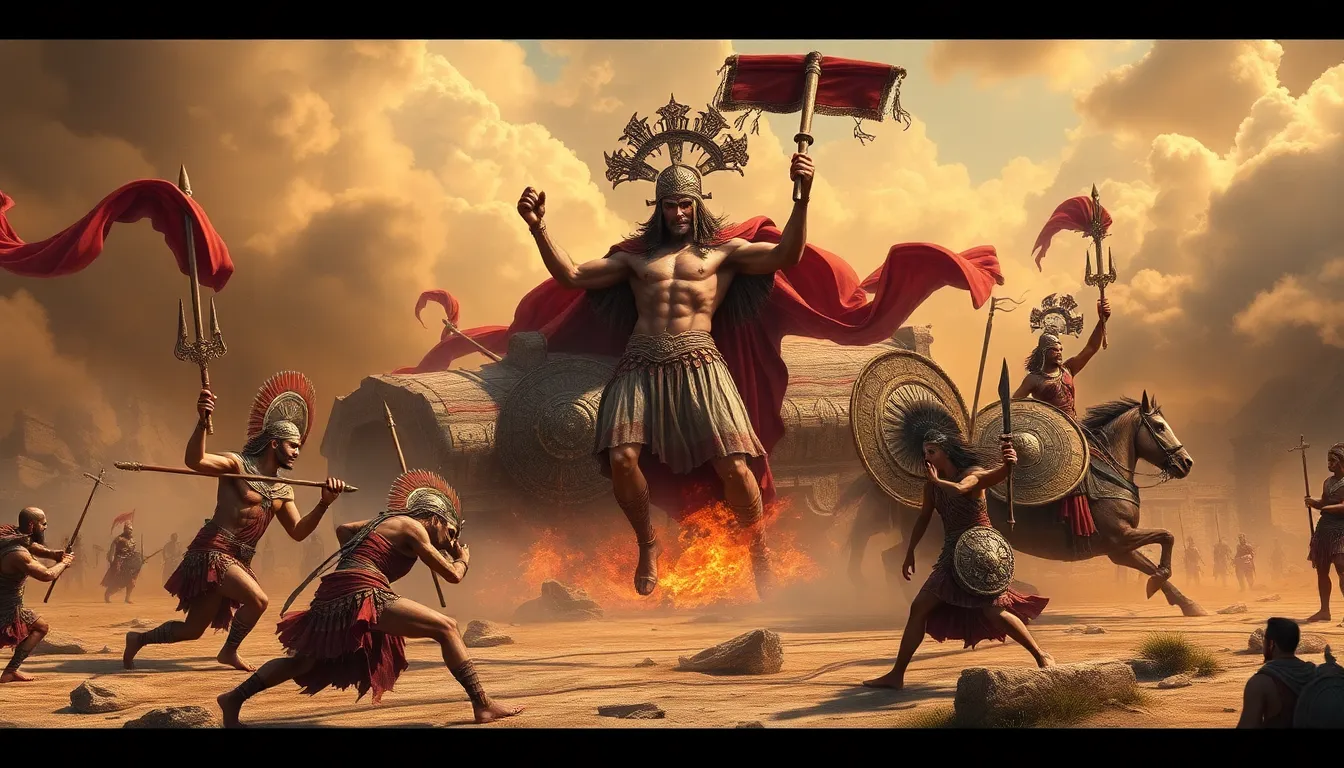
The Titanomachy: The Myths That Inspired Ancient Warfare
I. Introduction
The Titanomachy, a legendary battle in Greek mythology, represents the conflict between the Olympian gods led by Zeus and the Titans, their predecessors. This epic struggle is not just a fascinating tale of gods and monsters but also serves as a profound source of inspiration and reflection for ancient warfare. The importance of mythology in shaping the minds and motives of warriors cannot be overstated, as these stories provided both moral guidance and a framework for understanding the chaos of battle. This article will explore the Titanomachy, its key figures, its impact on military ideology, its historical context, its representations in art and literature, and its legacy in modern culture.
II. The Titanomachy: A Brief Overview
A. Origins of the Titanomachy in Greek mythology
The Titanomachy is rooted in the ancient Greek belief system, depicting the transition of power from the Titans, who were the first generation of gods, to the Olympians. The Titans, led by Cronus, ruled during the Golden Age but feared that they would be overthrown by their own offspring. To prevent this, Cronus swallowed each of his children at birth. However, Rhea, his wife, saved their youngest son, Zeus, by hiding him in a cave and giving Cronus a stone wrapped in swaddling clothes instead.
B. Key figures and deities involved
- Zeus: The leader of the Olympians who ultimately defeats Cronus and the Titans.
- Cronus: The leader of the Titans and father of Zeus, known for his tyrannical rule.
- Rhea: The mother of Zeus and protector of her children.
- Prometheus: A Titan who sided with the Olympians and is known for his intelligence and foresight.
- Themis: A Titaness associated with divine law and order who supported the Olympians.
C. Summary of the conflict and its resolution
The Titanomachy lasted for ten years, marked by intense battles between the two factions. The Olympians, with the help of allies such as the Cyclopes and the Hecatoncheires, ultimately triumphed over the Titans. The resolution saw the Titans imprisoned in Tartarus, a deep abyss used as a dungeon of torment, while Zeus and the Olympians established their reign on Mount Olympus, marking the beginning of a new era in Greek mythology.
III. The Role of Myths in Shaping Military Ideology
A. Myths as a source of inspiration for warriors
Myths like the Titanomachy provided warriors with narratives that exemplified bravery, loyalty, and the struggle against tyranny. These stories inspired soldiers to emulate the qualities of the gods they revered, thus shaping their conduct in warfare.
B. The moral and ethical lessons derived from the Titanomachy
- Justice: The victory of Zeus over Cronus symbolizes the triumph of justice over tyranny.
- Courage: The Olympians’ perseverance against overwhelming odds teaches the value of bravery in battle.
- Unity: The alliance of different factions against a common foe illustrates the importance of unity in achieving a greater goal.
C. Symbolism of the gods in battle
The gods in the Titanomachy represent various human traits and ideals. For instance, Zeus embodies authority and justice, while Prometheus represents intelligence and foresight. This symbolism provided warriors with archetypes to aspire to, shaping their identity and purpose on the battlefield.
IV. Historical Context: Warfare in Ancient Greece
A. Overview of warfare practices in ancient Greece
Warfare in ancient Greece was characterized by city-states (poleis) engaging in frequent conflicts, driven by competition for resources, land, and power. The hoplite phalanx formation, where heavily armored infantry soldiers fought in coordinated lines, became a standard military tactic.
B. Influence of mythology on military strategy and tactics
Mythology influenced not only the morale of soldiers but also their strategies. The belief in divine favor and the interpretation of omens were critical to military planning. Generals often invoked the gods for support, believing that their success in battle was intertwined with the will of the deities.
C. Case studies of battles influenced by mythological narratives
- The Battle of Marathon: Greek soldiers drew inspiration from the stories of heroes and gods, believing that their victory over the Persian forces was a manifestation of divine will.
- The Peloponnesian War: The narratives surrounding the Titanomachy were evoked to rally troops and justify actions against rivals, portraying the conflict as a struggle between order and chaos.
V. The Titanomachy in Art and Literature
A. Depictions in ancient Greek art and sculpture
The Titanomachy has been a popular subject in ancient Greek art, represented in pottery, murals, and sculptures. Artists depicted the struggle between the gods and Titans, often illustrating the dramatic moments of the battle. Notable examples include vase paintings showing Zeus hurling lightning bolts at Titans and the Cyclopes forging weapons for the Olympians.
B. References in classical literature and poetry
Classical poets like Hesiod and Homer referenced the Titanomachy in their works. Hesiod’s “Theogony” details the origins of the gods and the Titan War, while Homer implies the significance of the myth in the context of heroism and divine intervention in battles.
C. The impact of these depictions on the perception of war
These artistic and literary representations reinforced the perception of warfare as a battleground not only for humans but also for divine entities, thus elevating the significance of military conflict in the societal consciousness of ancient Greece. They fostered a culture that revered the heroic ideals of courage, sacrifice, and the struggle for justice.
VI. The Legacy of the Titanomachy in Later Cultures
A. Influence on Roman warfare and mythology
The Titanomachy influenced Roman culture, particularly in the way Roman mythology absorbed and adapted Greek stories. Roman poets and historians referenced the Titanomachy, using it to frame their own narratives of victory and valor in warfare.
B. The Titanomachy in Renaissance art and literature
During the Renaissance, the Titanomachy inspired numerous artists and writers. The revival of classical themes led to dramatic interpretations of the myth in paintings and sculptures. Artists like Michelangelo and Raphael drew inspiration from the epic battle, embedding the story within broader themes of human struggle and divine influence.
C. Modern interpretations and adaptations of the myth
Today, the Titanomachy has found its way into popular culture, influencing literature, films, and video games. The themes of struggle against oppressive forces and the rise of new powers resonate in contemporary narratives, showcasing the enduring relevance of ancient myths.
VII. Lessons from the Titanomachy for Contemporary Warfare
A. The psychological impact of mythology in modern conflicts
In modern warfare, the psychological aspect of mythology remains significant. Narratives of past heroes and divine intervention can serve to motivate troops and create a sense of purpose, echoing the ancient practices of invoking the gods for support.
B. Utilization of mythological narratives in military propaganda
Modern military propaganda often employs mythological narratives to frame conflicts. By drawing parallels between contemporary struggles and ancient myths, military leaders can inspire national pride and unity among the populace, reinforcing the idea that they are engaged in a righteous battle.
C. Comparing ancient and modern warfare motivations
- Honor and Glory: Both ancient and modern warriors are driven by the pursuit of honor and glory.
- Divine Favor: The belief in a higher cause or divine support persists in many cultures, influencing soldiers’ motivations.
- Collective Identity: Myths foster a collective identity among soldiers, uniting them under a common narrative.
VIII. Conclusion
In summary, the Titanomachy holds a significant place in the tapestry of ancient warfare, serving as both a mythological narrative and a source of inspiration for warriors throughout history. Its themes of struggle, justice, and the triumph of the righteous continue to resonate in modern military culture. As we reflect on the lasting impact of mythology on our understanding of warfare, it becomes clear that ancient myths, such as the Titanomachy, provide invaluable insights into the human experience, shaping our perceptions of conflict and heroism even today.