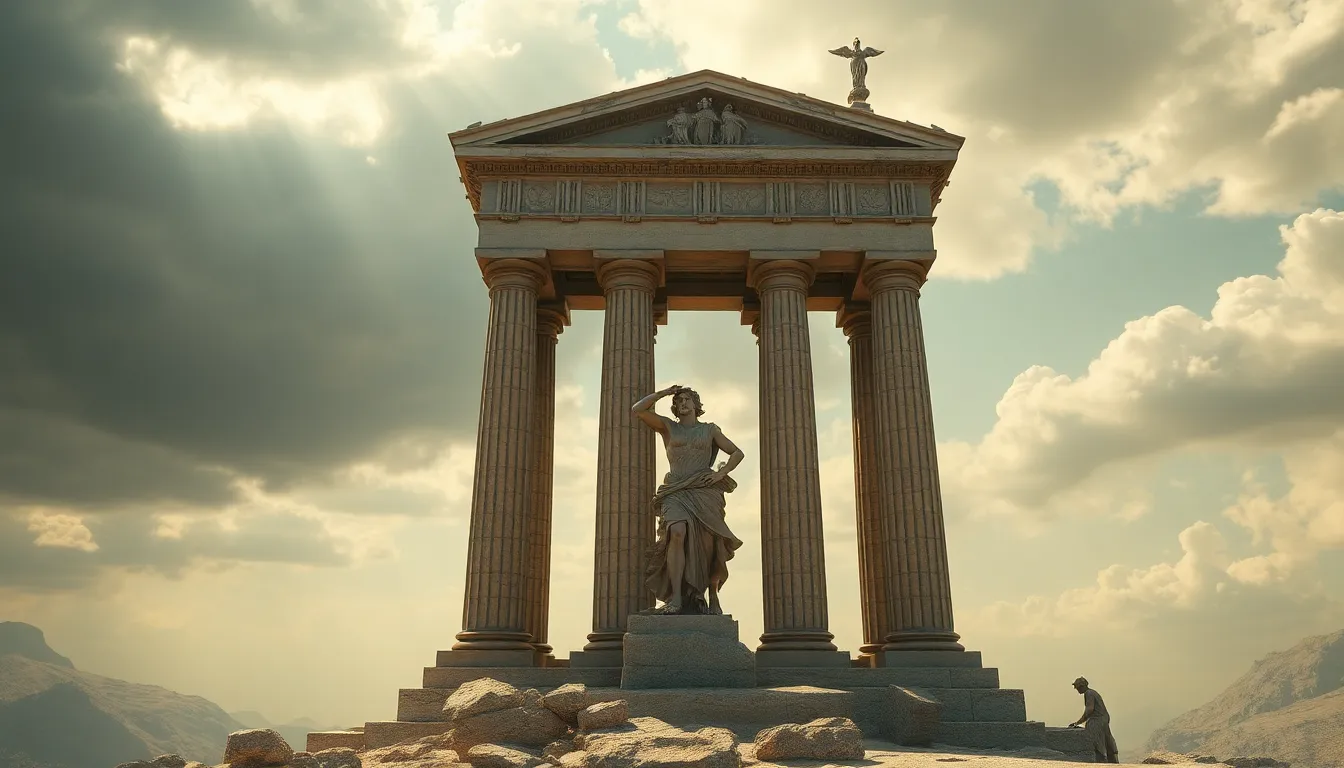
The Titanomachy: The Myths That Inspired Generations
I. Introduction to the Titanomachy
The Titanomachy, a monumental conflict in Greek mythology, represents the battle between the Titans and the Olympian gods. This epic struggle not only signifies a dramatic shift in divine power but also embodies the themes of rebellion, fate, and the cyclical nature of generational conflict. The narratives surrounding the Titanomachy have inspired countless generations, influencing art, literature, and cultural philosophies.
In Greek mythology, the Titans were the predecessors of the Olympian gods. This clash defined the transition from the old order of the Titans to the new order of the Olympians, establishing a hierarchy that would govern the cosmos. The Titanomachy has left a profound cultural impact, shaping various aspects of Western thought and creativity.
II. The Origins of the Titans
The Titans emerged from the primordial deities Gaia (Earth) and Ouranos (Sky). According to myth, they were the first generation of divine beings, embodying various aspects of the natural world and cosmic forces. The lineage of the Titans is significant, as it sets the stage for the eventual conflict with the Olympians.
A. The Creation of the Titans and Their Lineage
Gaia and Ouranos gave birth to twelve original Titans, including:
- Cronus
- Rhea
- Oceanus
- Tethys
- Hyperion
- Theia
- Coeus
- Phoebe
- Krios
- Iapetus
- Themis
- Mnemosyne
B. Key Figures Among the Titans
Among these Titans, Cronus and Rhea play pivotal roles. Cronus, the youngest Titan, led the revolt against his father Ouranos, castrating him and taking control of the universe. Rhea, his sister and wife, became the mother of the first generation of Olympian gods, including Zeus, Hera, and Poseidon.
C. The Role of Gaia and Ouranos in Titan Mythology
Gaia, as the personification of Earth, is often portrayed as a nurturing force, while Ouranos represents the heavens. Their relationship is complex, marked by both creation and conflict. After being overthrown by Cronus, Ouranos was imprisoned, reflecting the themes of power struggle and the cyclical nature of mythology.
III. The Rise of the Olympians
The Olympian gods, who would eventually triumph over the Titans, are central figures in Greek mythology. Their rise is marked by prophecy, rebellion, and the relentless pursuit of power.
A. The Birth of the Olympian Gods
Zeus, Hera, Poseidon, Hades, Demeter, and Hestia are the main Olympians who emerged from the union of Cronus and Rhea. Zeus was hidden at birth to avoid being swallowed by Cronus, who feared that his children would overthrow him, just as he had overthrown Ouranos.
B. Key Figures Among the Olympians
The Olympians are characterized by their distinct personalities and domains:
- Zeus: King of the gods, god of the sky and thunder.
- Hera: Queen of the gods, goddess of marriage and family.
- Poseidon: God of the sea, earthquakes, and horses.
- Hades: God of the underworld.
- Demeter: Goddess of agriculture and harvest.
- Hestia: Goddess of the hearth and domesticity.
C. The Significance of Prophecy and Rebellion against the Titans
Prophecy played a crucial role in the rise of the Olympians. It foretold that one of Cronus’ children would dethrone him. This fear drove Cronus to swallow his offspring, but Rhea’s cleverness allowed Zeus to escape, marking the beginning of the rebellion against the Titans.
IV. The Conflict: Battle of the Titans
The Titanomachy itself was a brutal and protracted conflict that raged for ten years. It was characterized by fierce battles, divine strategies, and the involvement of various mythological creatures.
A. The Buildup to the Titanomachy
The buildup to the Titanomachy involved Zeus rallying the Olympians and their allies. After freeing his siblings from Cronus’ stomach, Zeus sought to challenge the Titans for control of the cosmos.
B. Key Battles and Strategies Employed by Both Sides
The battles of the Titanomachy were marked by incredible feats of strength and cunning:
- The Titans, led by Cronus, fought fiercely to maintain their dominion.
- The Olympians, using lightning bolts and divine tactics, countered the Titans’ brute strength.
- Prometheus and Epimetheus, Titan brothers, switched sides, aiding the Olympians with their knowledge.
C. The Role of Allies and Other Mythological Creatures
During the Titanomachy, the Olympians were aided by various creatures and deities:
- The Cyclopes provided Zeus with thunderbolts.
- The Hecatoncheires, hundred-handed giants, fought valiantly for the Olympians.
- Gaea, the Earth, supported her children, the Olympians, against the Titans.
V. Aftermath of the Titanomachy
The aftermath of the Titanomachy saw a significant restructuring of divine power and the establishment of a new order among the gods.
A. The Defeat of the Titans and Their Punishment
After a prolonged and fierce battle, the Olympians triumphed. The Titans were defeated and punished severely, with many, such as Cronus, imprisoned in Tartarus, a deep abyss used as a dungeon of torment.
B. The Establishment of the Olympian Order
With the Titans defeated, Zeus and his siblings established their reign on Mount Olympus, creating a new hierarchy among the gods. This era marked the establishment of the Olympian order, characterized by a more organized and structured pantheon.
C. The Implications for the Cosmos and Humanity
The victory of the Olympians had far-reaching implications for both the cosmos and humanity. It established the Olympians as the new governing deities, responsible for maintaining order and justice in the world. The myths surrounding this new order would shape the cultural and religious practices of ancient Greece.
VI. Symbolism and Themes in the Titanomachy
The Titanomachy is rich with symbolism and themes that resonate throughout human experience. It reflects the eternal struggle between order and chaos, the nature of power, and the complexities of fate.
A. The Struggle Between Order and Chaos
The conflict between the Titans and the Olympians symbolizes the struggle between chaos, represented by the Titans, and order, represented by the Olympians. This theme is central to many mythological narratives worldwide.
B. Themes of Power, Fate, and Destiny
The Titanomachy illustrates the dynamics of power and the inevitability of fate. The prophecy that foretold Cronus’ downfall exemplifies how destiny plays a crucial role in the lives of the gods.
C. The Titanomachy as a Metaphor for Generational Conflict
The Titanomachy can also be viewed as a metaphor for generational conflict. The overthrow of the Titans by their children reflects the common theme of younger generations challenging the status quo established by their predecessors.
VII. The Titanomachy in Art and Literature