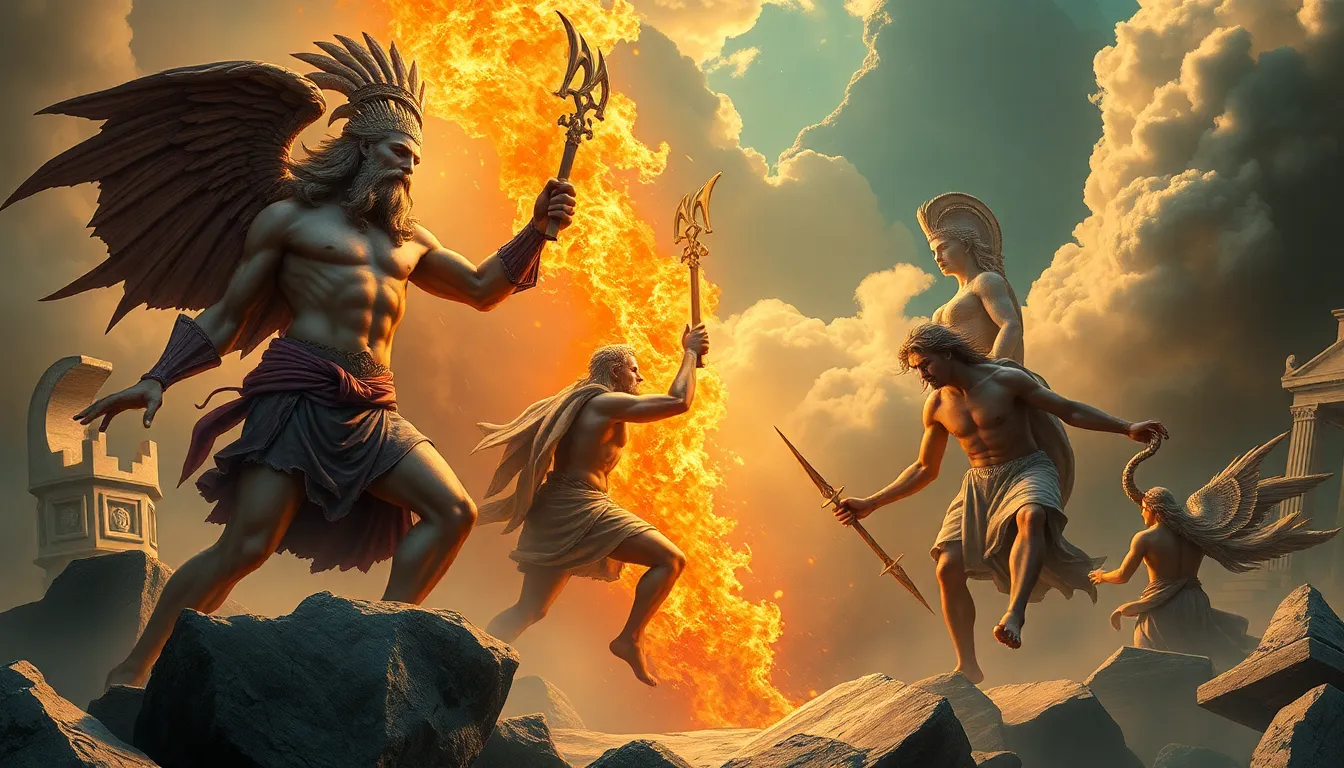
The Titanomachy: The Power Struggle That Shaped Greek Myths
I. Introduction to the Titanomachy
The Titanomachy is one of the most significant events in Greek mythology, representing a monumental struggle between two generations of divine beings: the Titans and the Olympians. This epic battle serves as a foundation for much of Greek mythology, encapsulating themes of power, rebellion, and the cyclical nature of authority.
The narrative of the Titanomachy is not merely a story of war; it is a rich tapestry that explores the dynamics of familial relationships, the fear of dethronement, and the quest for supremacy. As the Olympians sought to overthrow the Titans, the events that unfolded would shape the pantheon of Greek gods and set the stage for countless myths that followed.
II. The Background: Titans vs. Olympians
To understand the Titanomachy, one must first explore the origins of its key players: the Titans and the Olympians.
A. Origins of the Titans and their reign
The Titans were primordial deities born from Gaia (Earth) and Uranus (Sky). They represented various aspects of the natural world and were often seen as embodiments of the forces of nature. The original Titans included:
- Cronus – Leader of the Titans, god of time and harvest.
- Rhea – Mother of the Olympians, goddess of fertility and motherhood.
- Oceanus – Titan of the ocean.
- Hyperion – Titan of light.
- Themis – Titaness of divine law and order.
Under Cronus’s rule, the Titans enjoyed a golden age, but their reign was marked by tyranny and fear, particularly as Cronus feared being overthrown by his own children.

B. The rise of the Olympians and key figures involved
The Olympians, led by Zeus, were the younger generation of gods who sought to challenge the authority of the Titans. They were born from Cronus and Rhea, and included:
- Zeus – King of the gods, god of the sky and thunder.
- Hera – Queen of the gods, goddess of marriage and family.
- Poseidon – God of the sea.
- Demeter – Goddess of the harvest.
- Hestia – Goddess of the hearth and home.
The rise of the Olympians was marked by their desire to bring about a new order, free from the oppressive rule of the Titans.
III. Key Players in the Titanomachy
The Titanomachy was defined by the opposing forces of the Titans and the Olympians, each with their own strengths and weaknesses.
A. The Titans: Cronus, Rhea, and their allies
Cronus and Rhea, as the leaders of the Titans, were pivotal figures in the conflict. Cronus, having swallowed his children to prevent his downfall, was both powerful and paranoid. Rhea, in contrast, represented a more nurturing aspect, yet she played a crucial role in the rebellion against Cronus by saving her youngest son, Zeus.
Other Titans, such as Atlas and Prometheus, would also play significant roles in the conflict, with some choosing to support their leader while others would eventually side with the Olympians.
B. The Olympians: Zeus, Hera, and their supporters
The Olympians, particularly Zeus, were determined to reclaim their rightful place in the cosmos. Zeus’s leadership was characterized by his cunning and strategic thinking, rallying his siblings and allies to his cause. Hera, though initially a supporter, often found herself in tumultuous relationships with her husband, Zeus, as they navigated the aftermath of war.
Other supporters of the Olympians included powerful allies such as the Cyclopes, who forged Zeus’s thunderbolts, and the Hecatoncheires, creatures of immense strength who played a critical role in the battle.
IV. The Prelude to War
Before the battle commenced, a series of key events set the stage for the Titanomachy.
A. The prophecy of Cronus and the fear of overthrow
According to prophecy, Cronus was destined to be overthrown by one of his own children. This fear led him to swallow each of his offspring at birth, but Rhea’s decision to save Zeus would ultimately lead to his downfall. She hid Zeus in a cave on Mount Dicte in Crete and gave Cronus a stone wrapped in swaddling clothes instead.
B. Key events leading up to the conflict
As Zeus grew, he became aware of his identity and purpose. He eventually confronted Cronus, forcing him to regurgitate his siblings. This act of rebellion ignited the conflict between the two factions and marked the beginning of the Titanomachy.
V. The Great Battle: Key Events and Strategies
The Titanomachy was not just a simple battle; it was a cataclysmic war that lasted for ten years, filled with strategic maneuvers and alliances.
A. Description of the Titanomachy battle
When the battle began, the Titans and Olympians clashed on the plains of Phthia. The Titans were initially powerful, wielding their mastery over the elements and employing their strength. However, the Olympians, with the aid of the Cyclopes and Hecatoncheires, fought back fiercely.
Zeus, using his thunderbolts, became a symbol of hope for the Olympians, rallying them during the darkest moments of battle. The Hecatoncheires, with their hundred arms, hurled massive boulders at the Titans, creating chaos among their ranks.
B. The role of mythical creatures and divine interventions
Throughout the battle, many mythical creatures joined the fray, either aiding the Olympians or remaining neutral. Notably, the allies of the Olympians included:
- The Cyclopes, who forged weapons of immense power, including Zeus’s thunderbolts.
- The Hecatoncheires, who provided brute strength and strategic advantages.
Divine interventions played a crucial role as well, with various gods and goddesses influencing the outcome of the battle through cunning strategies and unexpected alliances.
VI. The Aftermath: Consequences of the War
The conclusion of the Titanomachy marked a significant turning point in Greek mythology.
A. The defeat of the Titans and their fate
The Titans ultimately fell to the Olympians, leading to their imprisonment in Tartarus, a deep abyss used as a dungeon of torment. Cronus, once the ruler of the cosmos, was now defeated and bound by Zeus, who took his place as the supreme deity.
B. The establishment of the Olympian order and its impact on mythology
With the defeat of the Titans, the Olympians established a new order of gods, each taking on their respective realms. Zeus ruled the sky, Poseidon the sea, and Hades the underworld. This restructuring of the divine hierarchy laid the groundwork for a new era of myths, emphasizing themes of justice, order, and the importance of balance in the universe.
VII. Cultural Interpretations and Symbolism
The Titanomachy has been interpreted in various ways throughout history, reflecting the human experience of power struggles and generational conflict.
A. The Titanomachy as a metaphor for power and generational conflict
Many scholars view the Titanomachy as a metaphor for the natural order of succession. It illustrates the inevitable conflict between the old and the new, highlighting the struggles between authority and rebellion. This theme resonates with the human experience of familial and societal change.
B. Its influence on later Greek literature and art
The Titanomachy has left a profound mark on Greek literature and art. It has been depicted in various forms, from ancient pottery to epic poems like Hesiod’s “Theogony.” Artists have captured the drama of the battle, showcasing the valor of the Olympians and the tragic fate of the Titans.
VIII. Conclusion: The Legacy of the Titanomachy
In summary, the Titanomachy is a central narrative in Greek mythology, encapsulating themes of power, rebellion, and the cyclical nature of authority. Its significance extends beyond mere storytelling; it reflects the complexities of human relationships and societal change.
The legacy of the Titanomachy continues to resonate