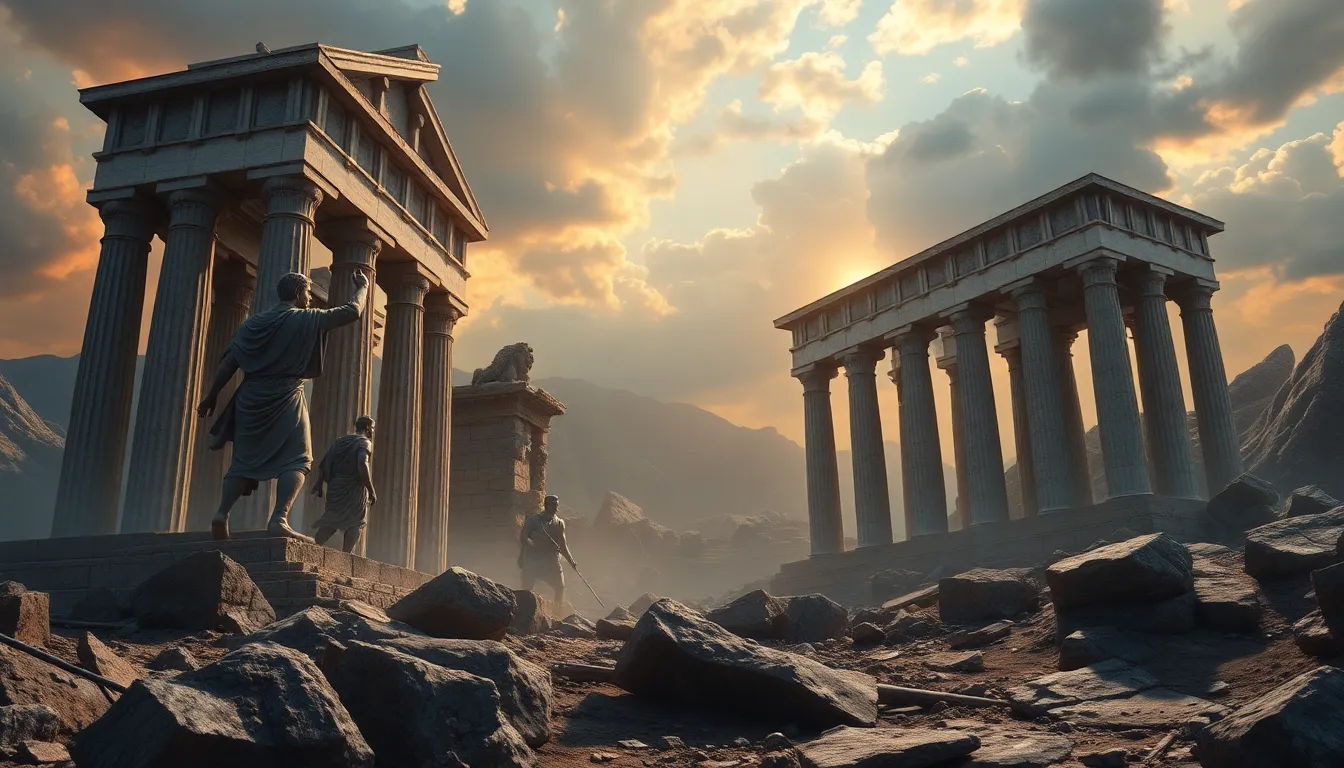
The Titanomachy: The Struggle for Supremacy Among the Gods
I. Introduction
The Titanomachy stands as one of the most significant events in Greek mythology, representing the epic struggle between the Titans, the primordial beings who ruled the cosmos, and the younger generation of gods known as the Olympians. This monumental conflict not only shaped the hierarchy of divine beings but also set the stage for the myths and stories that followed in ancient Greek culture.
Understanding the Titanomachy is crucial for comprehending the evolution of divine power in Greek mythology. It encapsulates themes of rebellion, authority, and the transition from one order of gods to another, highlighting the complexities of deities and their interactions.
II. The Titans: Origins and Characteristics
The Titans were the first generation of divine beings, born from the primordial entities Uranus (the Sky) and Gaia (the Earth). Often depicted as powerful and colossal figures, the Titans possessed immense strength and were associated with various aspects of the cosmos and nature.
A. Description of the Titans and Their Lineage
The Titans are often depicted as embodiments of natural forces and concepts. They were twelve in number, with notable figures including:
- Cronus: The leader of the Titans, associated with time and harvest.
- Rhea: The mother of the Olympian gods, representing fertility and motherhood.
- Oceanus: The personification of the ocean, encircling the Earth.
- Tethys: The goddess of the nourishing flow of water.
- Hyperion: The Titan of light, often associated with the sun.
- Theia: The goddess of sight and the shining light of the blue sky.
- Coeus: The Titan of intellect and the axis of heaven.
- Phoebe: The Titaness of prophecy and the moon.
- Crius: The Titan of the constellations.
- Iapetus: The father of Prometheus and Epimetheus, associated with mortality.
- Mnemosyne: The goddess of memory and the mother of the Muses.
- Themis: The Titaness of divine law and order.
B. Key Titans and Their Roles in Mythology
Each Titan played a specific role in the mythological narratives, showcasing various aspects of existence. For instance, Cronus, fearing a prophecy that he would be overthrown by one of his children, swallowed each of them at birth. This act of paranoia and tyranny set the stage for the eventual rise of the Olympians, particularly Zeus, who would lead the revolt against him.
III. The Rise of the Olympian Gods
The Olympian gods emerged as the new generation of deities, born from the union of Cronus and Rhea. These gods represented a new order, one characterized by more human-like traits and personalities, making them relatable to mortals.
A. Introduction of the Olympians and Their Lineage
The Olympians were initially six siblings who were saved from Cronus’s tyranny by Zeus. They included:
- Zeus: The king of the gods and ruler of Mount Olympus, associated with thunder and justice.
- Hera: The queen of the gods, goddess of marriage and family.
- Poseidon: The god of the sea, earthquakes, and horses.
- Demeter: The goddess of agriculture and fertility.
- Hestia: The goddess of the hearth and domestic life.
- Hades: The god of the underworld, though often not considered one of the Olympians in the same sense.
B. Key Figures Among the Olympians
Among the Olympians, Zeus emerged as the most powerful, playing a pivotal role in the Titanomachy. His siblings, each with distinct domains, contributed to the strength and unity of the Olympians in their rebellion against the Titans.
IV. The Prelude to War: Tensions Between Titans and Olympians
The Titanomachy did not erupt spontaneously; it was the culmination of deep-rooted tensions and power struggles among the divine beings. Several factors contributed to the impending conflict.
A. Factors Leading to the Conflict
Key factors that led to the Titanomachy included:
- Paranoia and Control: Cronus’s fear of being overthrown led to the oppression of his children.
- Prophecy: A prophecy foretold that one of Cronus’s offspring would dethrone him, which fueled his tyranny.
- Desire for Freedom: The Olympians sought liberation from their father’s oppressive rule.
B. Key Events that Ignited the Titanomachy
The final spark for the war came when Zeus, saved from being swallowed by Cronus, decided to lead a revolt. With the help of his siblings and allies, he sought to free his siblings and overthrow the tyrannical rule of the Titans.
V. The Titanomachy: The Great Battle Unfolds
The Titanomachy was not merely a battle; it was a colossal clash of divine powers that shook the foundations of the universe. The war lasted for ten years, filled with fierce confrontations and strategic maneuvers.
A. Description of the Epic Battle
The battlefield was described as a chaotic and tumultuous arena where mountains trembled and the skies darkened. The Titans and Olympians engaged in fierce combat, utilizing their unique powers:
- Zeus: Wielded thunderbolts, striking fear into the hearts of the Titans.
- Poseidon: Created monstrous sea creatures and caused earthquakes to disrupt the Titans.
- Hera: Used her cunning to rally allies among the gods.
B. Strategies and Alliances Formed During the Conflict
During the conflict, alliances were crucial. The Titans, despite their strength, were ultimately outmaneuvered by the strategic brilliance of the Olympians and their allies, such as the Cyclopes and the Hecatoncheires, who possessed incredible strength and capabilities.
VI. The Aftermath: Consequences of the Titanomachy
The Titanomachy concluded with a decisive victory for the Olympians, leading to profound consequences for both the Titans and the new regime of gods.
A. The Defeat of the Titans and Their Subsequent Imprisonment
After their defeat, the Titans were imprisoned in Tartarus, a deep abyss used as a dungeon of torment. This imprisonment signified the end of their reign and the establishment of a new order under the Olympians.
B. Establishment of the Olympian Rule and Its Significance
The triumph of the Olympians marked the beginning of a new era in Greek mythology. Zeus became the supreme deity, and the Olympians established their rule on Mount Olympus, where they would govern humanity and interact with mortals in various myths.
VII. Cultural Impact and Legacy of the Titanomachy
The Titanomachy has left an indelible mark on ancient Greek culture, influencing art, literature, and religious practices. The themes of conflict, power, and rebellion resonate throughout various forms of expression.
A. Influence on Ancient Greek Culture, Art, and Literature
Artists and playwrights drew inspiration from the Titanomachy, depicting the epic battles and characters in sculptures, pottery, and theater. Notable works include:
- Hesiod’s “Theogony”: A foundational text that narrates the genealogy of the gods and the Titanomachy.
- Vase Paintings: Many ancient vases depict scenes from the battle, showcasing the grandeur of the conflict.
B. Modern Interpretations and Adaptations of the Titanomachy
In contemporary times, the Titanomach