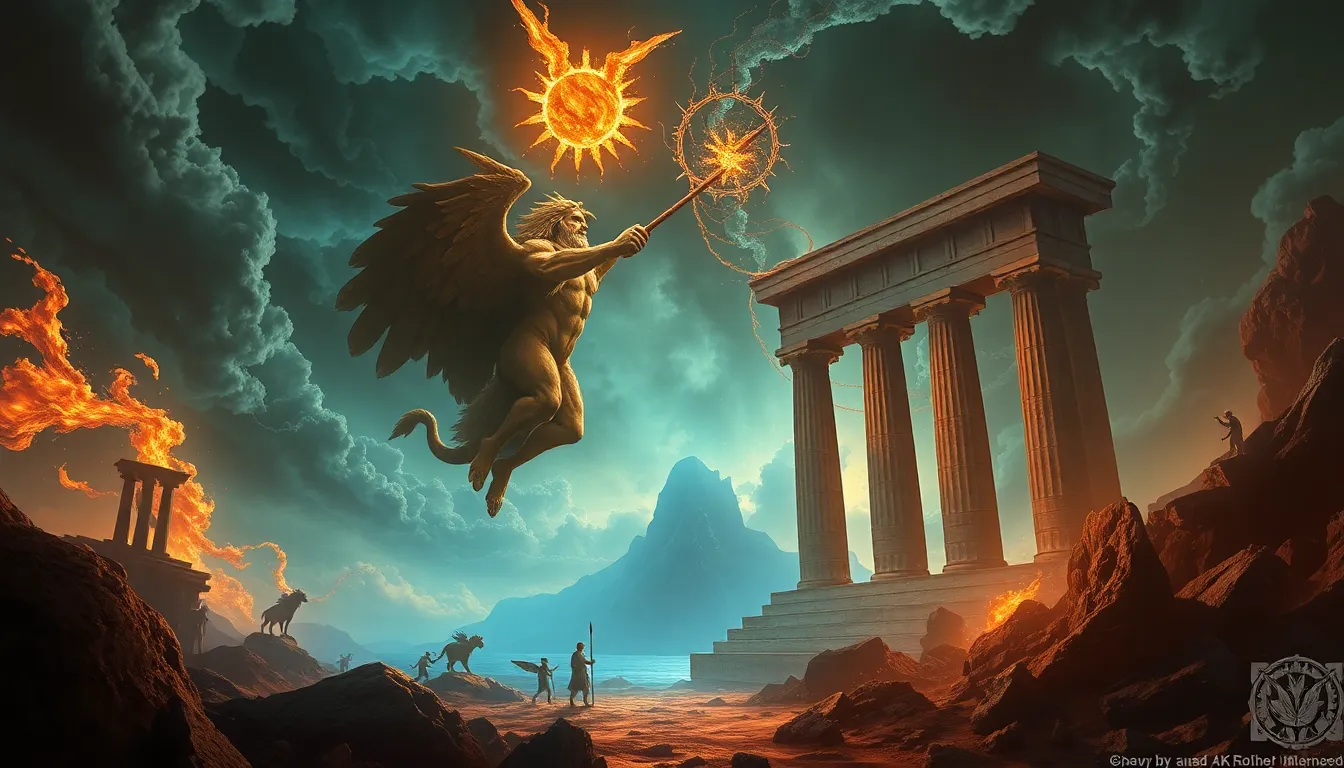
The Titanomachy: The Titans’ Last Attempt to Reclaim Power
I. Introduction
The Titanomachy, often referred to as the War of the Titans, is one of the central epic tales in Greek mythology. This monumental conflict pitted the Titans, the elder gods of Greek lore, against the younger generation of gods known as the Olympians, led by Zeus. The myth holds immense significance in Greek mythology as it represents the struggle for power, the cyclical nature of authority, and the clash between generations.
In this article, we will explore the origins of the Titans, the rise of the Olympians, the events leading up to the Titanomachy, the battle itself, and its aftermath. We will also examine the themes and interpretations that arise from this epic tale, reflecting on its relevance in modern storytelling and culture.
II. The Origins of the Titans
The Titans are a primordial race in Greek mythology, born from the primordial deities Gaia (the Earth) and Uranus (the Sky). They are often depicted as powerful and colossal beings who ruled during the Golden Age of myth, a time characterized by peace and prosperity.
Key figures among the Titans include:
- Cronus: The leader of the Titans, known for his violent overthrow of his father Uranus.
- Rhea: Cronus’s sister and wife, who bore him several children, including Zeus, Poseidon, and Hades.
- Oceanus: The Titan of the ocean, representing the vast waters that encircled the world.
- Tethys: The Titaness of the nourishing flow of water, wife of Oceanus.
- Themis: The Titaness of divine law and order.
During their reign, the Titans ruled over the cosmos, maintaining a semblance of order. However, their rule was marked by Cronus’s fear of being overthrown, leading him to devour his children to prevent them from challenging him.
III. The Rise of the Olympians
The tale of the Olympians begins with the birth of Zeus, the youngest child of Cronus and Rhea. According to prophecy, one of Cronus’s children would overthrow him, prompting Rhea to hide Zeus in a cave on Crete and give Cronus a stone wrapped in swaddling clothes instead.
As Zeus grew, he formed alliances that would prove crucial in the impending conflict:
- He freed his siblings—Hestia, Demeter, Hera, Hades, and Poseidon—from Cronus’s stomach.
- He secured the support of powerful beings, including the Cyclopes and the Hecatoncheires, who would later play significant roles in the Titanomachy.
The initial conflict began when Zeus, now determined to reclaim his rightful place, challenged Cronus and the Titans. This confrontation marked the beginning of the Titanomachy.

IV. The Prelude to War
Several events led to the eruption of the Titanomachy. The prophecy of Cronus’s downfall loomed over him, creating an atmosphere of tension and paranoia. The betrayal of the Titans, particularly by allies of Zeus, played a crucial role in the pre-war dynamics.
Key events include:
- Rhea’s support of Zeus, which was a significant act of betrayal against Cronus.
- Zeus’s strategic gathering of allies, including the aforementioned Cyclopes, who provided him with formidable weapons like the thunderbolt.
As both sides prepared for war, the Titans fortified their position in Tartarus, while the Olympians rallied on Mount Olympus, setting the stage for an epic confrontation.
V. The Titanomachy: The Great Battle
The Titanomachy was fought in a tumultuous setting, with the Titans emerging from Tartarus to clash against the Olympians on Mount Olympus. The battle was fierce and chaotic, characterized by the use of immense strength and cunning strategies.
Some key elements of the battle include:
- Battlefield: The conflict raged between the heights of Olympus and the depths of Tartarus, symbolizing the clash of power and authority.
- Key Battles: Various skirmishes occurred, with notable confrontations between Zeus and Cronus, as well as between other gods and Titans.
- Turning Point: The battle turned in favor of the Olympians when Zeus unleashed the thunderbolt, a gift from the Cyclopes, striking fear into the hearts of the Titans.
Ultimately, the combined might of the Olympians, along with their strategic advantage, led to their victory over the Titans, marking a significant shift in divine power.
VI. The Aftermath of the Titanomachy
The aftermath of the Titanomachy saw the Titans defeated and imprisoned within Tartarus, a dark abyss used as a dungeon of torment. The fate of the Titans was sealed, and they became symbols of a bygone era.
Key outcomes included:
- Establishment of Olympian Rule: With the Titans defeated, Zeus and his siblings established their rule over the cosmos, creating a new order.
- Legacy of the Conflict: The Titanomachy became a foundational myth that explained the transition of power and the establishment of the Olympian pantheon.
The cultural impact of this conflict resonated throughout ancient Greece, influencing art, literature, and religious practices. The stories of the Titanomachy were recounted in various forms, highlighting the conflict’s significance.
VII. Themes and Interpretations
The Titanomachy encapsulates several themes that are relevant both in ancient and modern contexts:
- Power Dynamics: The struggle between the Titans and Olympians reflects the cyclical nature of power and the inevitability of change in leadership.
- Rebellion: The conflict serves as a metaphor for rebellion against tyranny, with Zeus symbolizing the overthrow of oppressive rule.
- Symbolism: The Titans represent the old order while the Olympians embody the new, illustrating the tension between tradition and progress.
In contemporary contexts, the lessons derived from the Titanomachy can be seen in various narratives that explore the complexities of power, authority, and rebellion.
VIII. Conclusion
The Titanomachy is more than just a myth; it is a rich narrative that encapsulates themes of power, rebellion, and the cyclical nature of leadership. Its significance in Greek mythology cannot be understated, as it laid the groundwork for the Olympian pantheon and shaped cultural narratives for centuries.
This epic conflict continues to resonate in modern storytelling, providing timeless lessons about authority and the human condition. The Titanomachy remains a testament to the enduring nature of myth and its ability to reflect the complexities of life across generations.